Integrated Flat Cap Routel BTFD11 | Point Fixed Glass Fitting
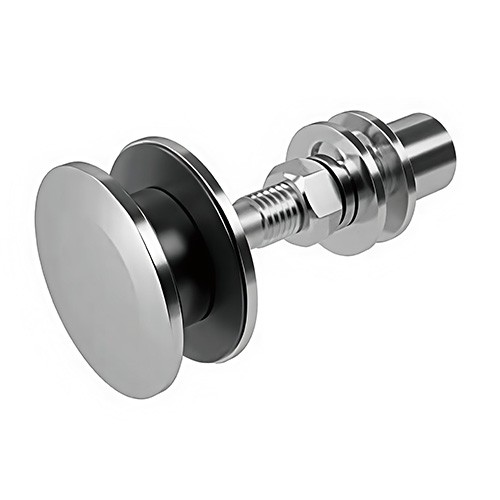
Discover the premium BTFD11 integrated flat cap routel. Made of SUS304 stainless steel, supporting 8-18mm glass with ±5° articulation for structural glass facades.
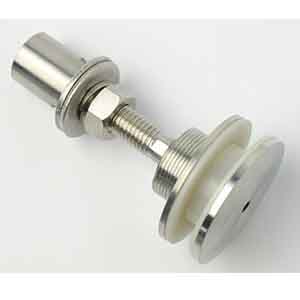
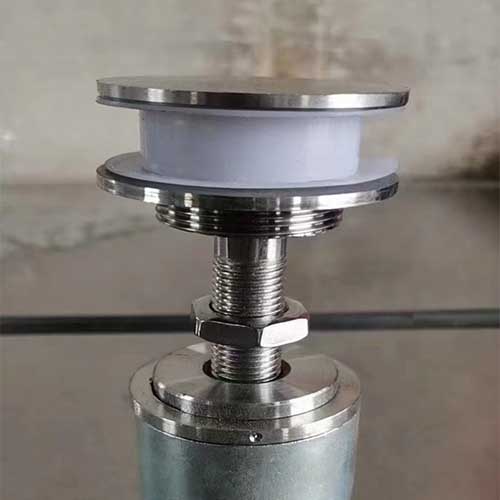
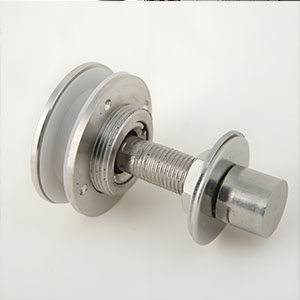
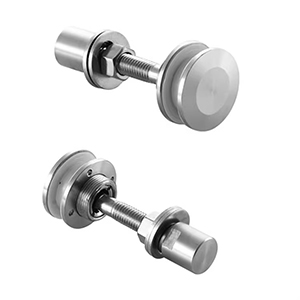
The BTFD11 Integrated Flat Cap Routel is an advanced point-fixed hardware component designed for frameless glass facades. Manufactured from high-grade SUS304 stainless steel, it accommodates glass thicknesses of 8-18mm with an M14 thread. Its defining feature is a ±5° articulated joint that absorbs wind loads and thermal expansion, boasting an axial load capacity of 4500N.
Why Choose the BTFD11 Integrated Flat Cap Routel? (Key Features & Benefits)
In the realm of modern architectural design, achieving maximum transparency and a sleek, uninterrupted aesthetic is the ultimate goal for frameless glass facades. The BTFD11 integrated flat cap routel is meticulously engineered to meet and exceed these demanding structural and aesthetic requirements.
First and foremost, the Flush Finish Design is a primary selling point. By utilizing a countersunk hole in the glass panel, the flat cap of this routel sits perfectly flush with the exterior surface of the glass. This completely flat profile is highly sought after by architects for its minimalist beauty. Furthermore, from a practical standpoint, this seamless integration prevents dirt, dust, and rainwater from accumulating around the fixing points, drastically reducing long-term maintenance and cleaning costs for building owners.
Secondly, the ±5° Articulated Joint Mechanism (Universal Rotation) provides crucial safety and structural integrity. In real-world environments, structural glass facades are subjected to severe dynamic forces, including strong wind loads, building sway, seismic activity, and thermal expansion. The ball-and-socket mechanism inside this integrated flat cap routel allows the glass panel to articulate freely within a ±5° range. This flexibility ensures that dangerous bending stresses are not transferred directly to the rigid glass hole, effectively preventing spontaneous glass breakage.
Finally, the Exceptional Load Capacity and Durability make it a reliable choice for commercial applications. Forged from premium ordinary SUS304 stainless steel, it offers outstanding corrosion resistance. With a recommended axial load capacity (Fx) of up to 4500N and a radial shear load capacity (Fy) of 2000N, this hardware guarantees absolute stability and safety in large-span, high-rise architectural applications.
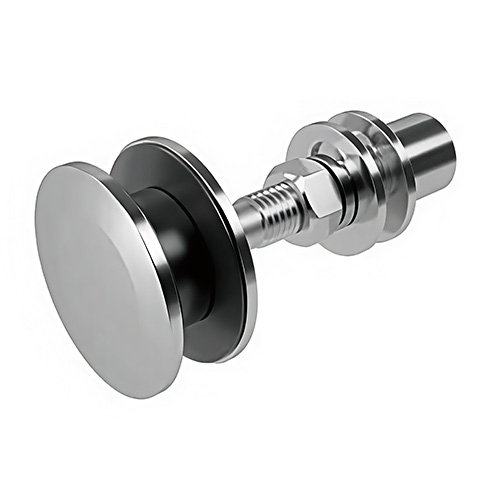
Comprehensive Technical Specifications
Accurate engineering data is vital for architectural structural calculations. Below are the precise technical specifications for the BTFD11 integrated flat cap routel:
Specification Name Value / Description
Product Model BTFD11
Component Type Integrated Flat Cap Routel (Articulated Glass Bolt)
Main Material Premium Ordinary 304 Stainless Steel (SUS304)
Surface Finish Satin / Mirror Polished Available
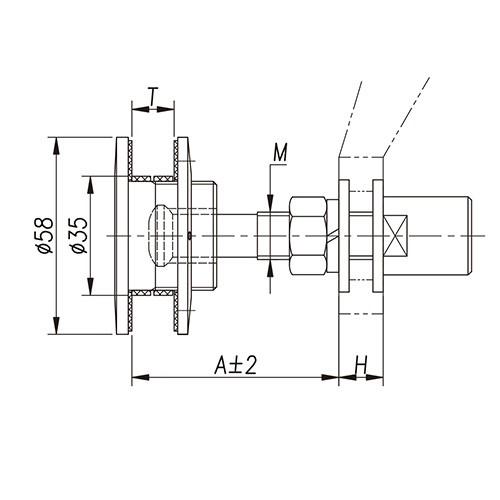
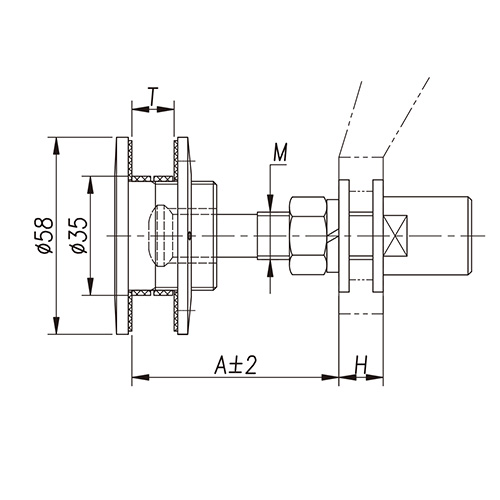
Glass Hole Diameter Ø 35 mm (Requires Countersunk Glass Machining)
Outer Cap Diameter Ø 58 mm
Applicable Glass Thickness (T) 8 mm - 18 mm (Suitable for Monolithic or Laminated Glass)
Thread Size (M) M14
Base Total Length (A) 61 mm (±2 mm tolerance)
Available Rotation Angle ±5° (Articulated Ball Joint Design)
Recommended Axial Load Capacity (Fx ≤) 4500 N
Recommended Radial Load Capacity (Fy ≤) 2000 N
The design of the BTFD11 integrated flat cap routel is a perfect marriage of structural physics and aesthetic manufacturing. Its operational principle is rooted in point-fixed flexible connection technology. Unlike rigid glass standoffs, this routel incorporates a highly precision-engineered ball-and-socket joint within its main body.
When installed, specialized non-metallic isolation gaskets (typically Nylon or EPDM) grip the glass securely. These gaskets serve a dual purpose: they prevent harmful metal-to-glass contact and distribute clamping forces evenly. When a strong gust of wind hits the facade, or the building settles slightly, the glass panels flex. Because of the ±5° articulation built into our routel, the bolt can move synchronously with the glass deflection. This prevents rigid levering against the glass hole edge, dissipating stress that would otherwise cause catastrophic failure.
To understand more about the engineering principles behind large-scale glazing, we recommend reading the authoritative engineering overview on Curtain wall (architecture) on Wikipedia.
In terms of manufacturing excellence, our hardware is machined using advanced CNC (Computer Numerical Control) lathes, ensuring that the M14 threading and the flush cap dimensions are accurate to the micron. The SUS304 stainless steel undergoes a proprietary passivation process, thickening the natural chromium oxide layer to provide superior rust resistance. To dive deeper into our manufacturing processes and see this product in action, we invite you to watch our exclusive YouTube Product Showcase Video Playlist.
Global Applications & Environmental Adaptability
We designed the integrated flat cap routel to excel across diverse geographical locations and challenging environmental conditions worldwide:
Extreme Heat Climates (e.g., Dubai, UAE or Riyadh, Saudi Arabia): In scorching desert climates, the thermal expansion of thick facade glass is immense. The ±5° articulation of the BTFD11 perfectly accommodates this daily thermal movement, ensuring that structural stress does not build up in skylights or mall facades.
High Wind & Typhoon Zones (e.g., Manila, Philippines or Miami, USA): Facing extreme wind pressure loads, the massive 4500N axial pull-out resistance of this routel ensures that hurricane-force winds will not strip the glass panels from the building structure.
Sub-Zero Environments (e.g., Calgary, Canada or Oslo, Norway): The SUS304 stainless steel retains high impact toughness and avoids low-temperature embrittlement even at -30°C. When paired with cold-resistant internal gaskets, it ensures winter stability for commercial glass canopies.
Installation Overview & Maintenance Guide
Installation Preparation:
Glass Processing: The glass must be fully toughened (tempered). Critical step: The countersunk hole (35mm inner hole expanding to accommodate the 58mm cap) must be accurately drilled before the tempering process.
Structural Alignment: Before connecting the routel to the supporting structure, ensure your backing steelwork is perfectly leveled. We highly recommend you browse our complete range of Spider Fittings to ensure seamless systemic compatibility and structural integrity.
Torque Application: Always use a calibrated torque wrench to tighten the M14 nut. Over-tightening can crush the nylon washers and induce pre-stress into the glass; follow standard glass hardware torque guidelines.
Maintaining an integrated flat cap routel is exceptionally simple thanks to its flush design. For standard urban environments, wiping the flat caps semi-annually with a mild, non-abrasive neutral cleaner and a soft microfiber cloth is sufficient. In coastal areas, we advise increasing the cleaning frequency to wash away corrosive salt spray deposits, ensuring a lifetime of brilliant finish.
Frequently Asked Questions
A1: No, it will not. We understand the intense thermal conditions in Sharjah. The BTFD11 routel is equipped with compressible isolation gaskets, and more importantly, its core ±5° universal articulation is explicitly engineered to absorb the dimensional changes (thermal expansion and contraction) of the glass panel. This prevents stress concentrations around the drilled hole entirely.
Q2 (From a buyer in Novosibirsk, Russia): "Winter temperatures in Novosibirsk drop well below -30°C. Is the Ordinary 304 stainless steel of this glass routel prone to low-temperature brittleness and failure under snow loads?"
A2: SUS304 stainless steel is an austenitic alloy, meaning it maintains excellent structural stability and impact toughness even in cryogenic temperatures, well beyond the -30°C seen in Novosibirsk. It will not suffer from cold embrittlement. However, for extreme cold projects, please inform us so we can ensure the internal nylon/EPDM isolation gaskets supplied are rated for deep-freeze flexibility.
Q3 (From a buyer in Bristol, UK): "I am working on a coastal port renovation project in Bristol. Since the building is exposed to the sea breeze, is the SUS304 sufficient, or do you recommend 316 for this flat cap routel?"
A3: Bristol's coastal environment presents a high-humidity atmosphere combined with corrosive airborne chlorides (salt spray). While SUS304 offers good general rust resistance, for a completely maintenance-free lifespan in a marine environment, we highly recommend upgrading to SUS316 marine-grade stainless steel for your integrated flat cap routels. We can easily manufacture the BTFD11 in 316 upon request.
Q4 (From a buyer in Vancouver, Canada): "Our local building code requires specific high wind load resistance for commercial canopy glazing. Can the M14 thread on this routel handle the strong winter coastal gusts in Vancouver?"
A4: Absolutely. The BTFD11 utilizes a high-tensile solid M14 threaded rod. Its recommended maximum axial load (Fx) is 4500N, and the radial shear load (Fy) is 2000N per fixing point. This load rating comfortably exceeds the wind load requirements for standard medium-sized canopy panels under most North American building codes. We advise sharing these specs with your local structural engineer for final node calculations.
Q5 (From a buyer in Da Nang, Vietnam): "What is the exact lead time if I need to order 1,000 units of the BTFD11 glass routel for a luxury hotel resort project currently under construction in Da Nang?"
A5: For a volume order of 1,000 standard units of the BTFD11 (in 304 stainless steel), our standard manufacturing lead time is 15-20 business days. Ocean freight shipping from our facility to the Port of Da Nang typically takes an additional 5-7 days. If your resort project is on a tight deadline, please reach out to our B2B sales team to discuss expedited production schedules.