Suspended Glass Canopy Installation in Malabo: Spider Fittings & Tension Rods Guide | Stainless Steel Hardwares
Traditional concrete or opaque metal awnings are functional, but they block natural light and often succumb to severe rust or mold in this humid climate. Today, an increasing number of commercial buildings, luxury properties, and public facilities in Equatorial Guinea are shifting towards a more elegant, modern, and highly durable solution: Point-Supported Suspended Glass Canopies (known locally as marquesinas de vidrio).
In this detailed engineering blog, we will break down a recent installation project at a local school's sports equipment room entrance. Through real-world footage (which you can watch on our YouTube channel here: https://www.youtube.com/shorts/P1EAoL7oDA0 ), we will explore how combining premium Stainless Steel Tension Rods and Spider Fittings creates a floating, ultra-secure canopy capable of withstanding Malabo's harshest weather.
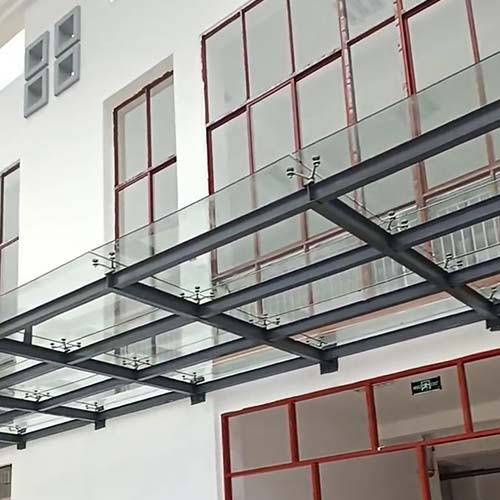
The entrance to the school's sports equipment room sees heavy daily foot traffic from students and staff. A large canopy was necessary to provide shelter from sudden, torrential tropical rainstorms.
In a location like Malabo, structural integrity is non-negotiable. If the canopy's framework cannot handle the immense weight of pooling rainwater, or if the hardware fails due to coastal corrosion, the risk of a structural collapse is high. Furthermore, the marine environment demands that all exposed metal possesses exceptional anti-corrosion properties. This is precisely why a high-grade stainless steel hardware system was selected for this project.
Dissecting the Hardware: The Backbone of the Glass Canopy
The striking "floating" appearance of this glass canopy is made possible by two critical hardware components. You can find their exact engineering specifications on our official website:
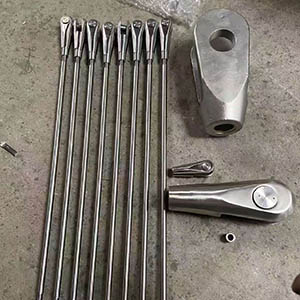
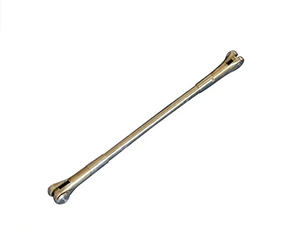
1. Heavy-Duty Stainless Steel Tension Rods (Tie Rods)
Product Link: https://www.stainlesssteelhardwares.com/tension-rods.html
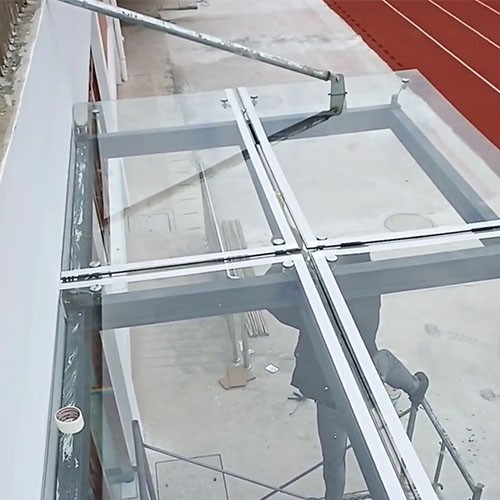
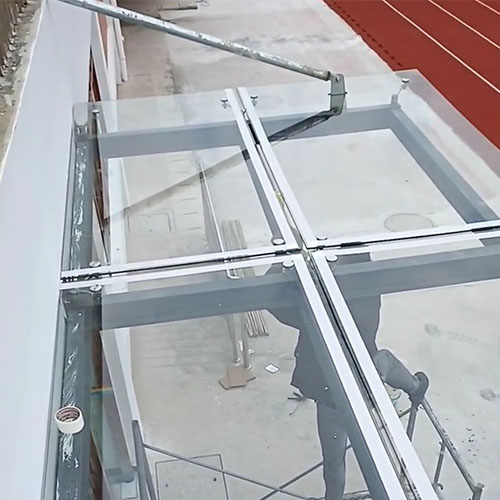
In the project video, you can clearly see the sleek metal rods connecting the upper exterior wall to the outer edge of the canopy frame. These are the Stainless Steel Tension Rods. Their primary function is to provide massive upward tensile strength, countering the heavy downward gravitational pull of the metal frame, thick glass panels, and potential rain loads.
Maximum Load Bearing: During Malabo's intense rainy season, a significant volume of water can temporarily sit on the glass. Our solid stainless steel tension rods are engineered to handle extreme tensile loads, ensuring the cantilevered canopy remains perfectly stable.
Unobstructed Ground Space: Unlike traditional awnings that require bulky vertical support pillars that block the entrance, the diagonal tension rod suspension allows for a completely clear, barrier-free walkway beneath. This maximizes space and creates a high-end, minimalist architectural look.
2. Precision Stainless Steel Spider Fittings
Product Link: https://www.stainlesssteelhardwares.com/spider-fittings.html
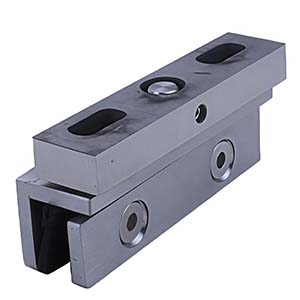
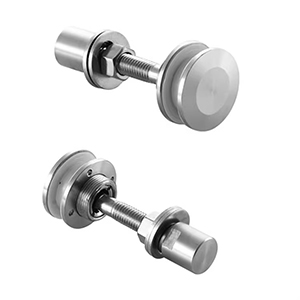
If tension rods are the muscles holding the canopy up, the spider fittings are the crucial joints connecting the structural frame to the glass panels. They are the defining element of point-supported glass architecture.
To accommodate the specific layout of the square tube framework in this project, a strategic mix of spider fitting configurations was deployed:
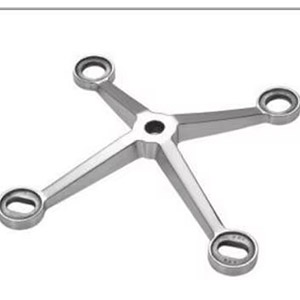
4-Way Spider Fittings: As demonstrated in the footage, at the central "crossroads" of the square tube grid, 4-way spider fittings (shaped like an 'X') were welded onto the frame. Each of the four arms firmly grasps the corner of a separate glass panel, evenly distributing the massive weight of the glass across the supporting tubes.
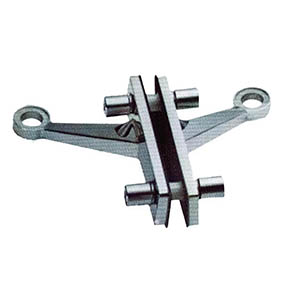
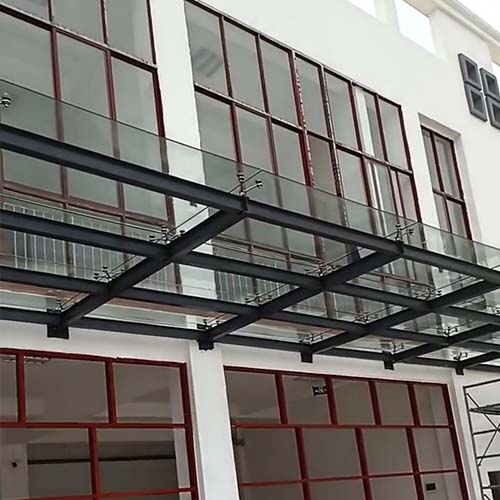
2-Way and 1-Way Spider Fittings: Along the outer edges and the wall-facing side of the canopy, there are no adjacent glass panels to connect. Here, our contractors intelligently utilized 2-way (V-shaped or inline) and 1-way spider fittings. This provides a clean, tailored finish to the architectural edges without wasting materials.
Thermal Expansion Flexibility: Malabo experiences hot days. Glass naturally expands under the tropical sun and contracts during cool rain. Our spider fittings come equipped with articulating routels (glass bolts) and specialized gaskets. These allow the glass panels slightly flexible movement, perfectly absorbing thermal stress and preventing the glass from cracking or shattering under pressure.
Analyzing the video and project photos, here is the standardized procedure used by the contractors to bring this modern glass canopy to life:
Step 1: Anchoring and Framework Assembly
The installation team began by taking precise measurements on the structural wall of the sports facility.
Using heavy-duty chemical anchors, the wall-mount brackets for the tension rods were securely bolted into the concrete. Below this, a grid framework made of anti-corrosive square tubes was assembled and welded. One side of this square tube frame is anchored to the wall, while the outer edge is suspended and pulled taut by the overhead stainless steel tension rods.
Step 2: Welding the Spider Bases
With the metal grid securely suspended, the team carefully mapped out the intersection points. At these exact coordinates, steel bases (connectors) for the spider fittings were welded onto the top of the square tubes. Precision here is vital; if the bases are off by even a few millimeters, the pre-drilled holes in the glass will not align.
Step 3: Mounting the Spider Fittings
Once the bases cooled and were treated for rust prevention, the stainless steel spider fittings were bolted into place. The 4-way spiders occupied the central intersections, while 2-way spiders lined the perimeter. These polished metallic claws spread across the frame create a striking industrial aesthetic.
Step 4: Placing the Glass and Securing the Routels
This is the most visually satisfying stage.
Installers carefully hoisted the custom-tempered, laminated safety glass panels onto the framework. They aligned the pre-drilled holes in the glass corners with the arms of the spider fittings. Then, the routels (glass bolts with protective gaskets) were passed through the glass and tightened into the spider arms. In the video, you can see a worker standing securely on the framework, making final adjustments to ensure all panels are flush and tightly secured.
Step 5: Weather Sealing
Finally, to combat the relentless Equatorial Guinean rain, structural silicone sealant was applied in the gaps between every glass panel. This renders the entire canopy 100% waterproof, providing a massive, transparent shield for the students and equipment below.
Maintaining Stainless Steel Hardware in a Tropical Climate
Thanks to the marine-grade stainless steel manufactured by www.stainlesssteelhardwares.com, this canopy requires minimal upkeep. However, in the high-humidity, salt-rich environment of Bioko Island, we recommend a simple maintenance routine to ensure decades of performance:
Rinse the tension rods and spider fittings with fresh water periodically to remove accumulated salt and airborne dust.
Inspect the nuts on the tension rods and the rubber gaskets on the spider fittings annually before the heavy rainy season begins.
Check the silicone sealant between the glass panels to ensure it remains intact and watertight.
Through the flawless integration of our stainless steel tension rods and spider fitting systems, an ordinary school equipment room entrance was transformed into a landmark of modern architectural engineering. It provides essential weather protection while exuding safety, transparency, and high-end design.
Whether you are designing a campus facility, a luxury hotel entrance, or a commercial office building in downtown Malabo, choosing the correct architectural hardware is the most important decision you will make.
We are dedicated to supplying the world’s finest point-supported glass hardware to architects and builders globally. If you are inspired by the components used in this project, we invite you to explore our detailed product catalogs and request a quote:
Discover our Spider Fittings: https://www.stainlesssteelhardwares.com/spider-fittings.html
Discover our Tension Rods: https://www.stainlesssteelhardwares.com/tension-rods.html
For a comprehensive range of premium architectural hardware, visit our homepage: www.stainlesssteelhardwares.com.