Tension Rod Glass Facade Guide | Point-Supported Structural Hardware
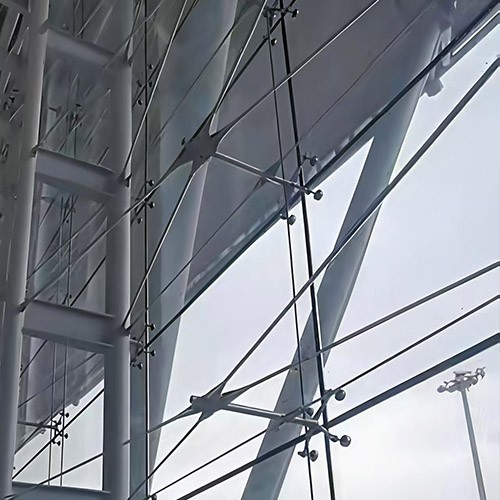
Today, through actual on-site construction footage, we will meticulously dismantle the precision metal components and installation logic behind this "invisible architectural skin." You can watch the dynamic assembly process right here:
Watch the video demonstration: https://www.youtube.com/shorts/IE_nUBlcMtM
1. Core Underlying Support: Technical Parameters and Structural Standards
The safety of a large-span frameless exterior wall capable of withstanding extreme weather relies entirely on the high-strength precision hardware behind it. The entire load-bearing network consists of the following core components:
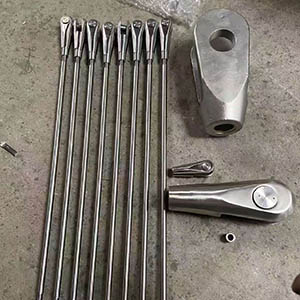
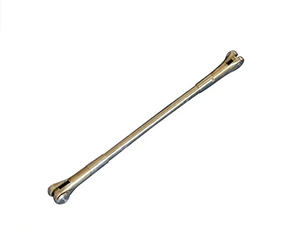
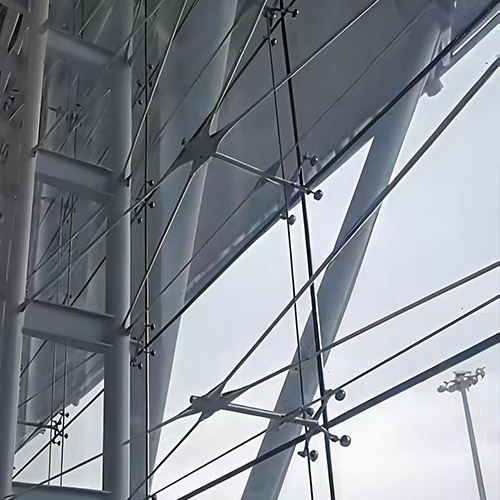
Spatial Rigging Framework: Stainless Steel Tension Rods
Acting as the "spine" of the exterior system, the tensioning framework is responsible for bearing and transferring environmental loads.
Material Standard: Manufactured from marine-grade SS316 or SS316L stainless steel, boasting extremely high yield strength.
Load Mechanism: By applying pre-tension through precision threaded turnbuckles, the positive and negative wind pressures acting on the glass are converted into the axial tensile force of the rods, ensuring the rigidity and flatness of the large-span facade.
Explore detailed specifications and load parameters here: Stainless Steel Tension Rods
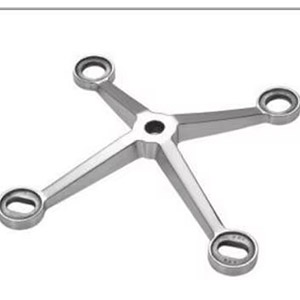
Stress Conversion Nodes: Stainless Steel Spider Fittings
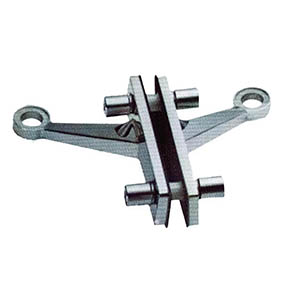
At the critical intersections of the tension rods, we equip the system with heavy-duty multi-directional support brackets.
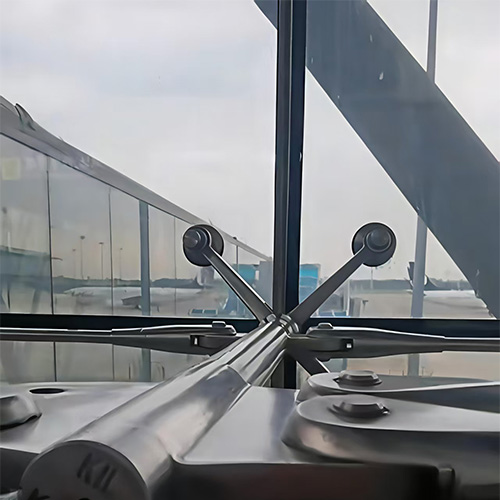
Load Distribution: We offer 4-way, 3-way, and single-arm structures manufactured via silica sol precision casting. They evenly distribute dynamic vibrations from the panels into the main load-bearing web, preventing single-point stress concentration.
View the complete structural hardware library: Heavy-Duty Spider Fittings
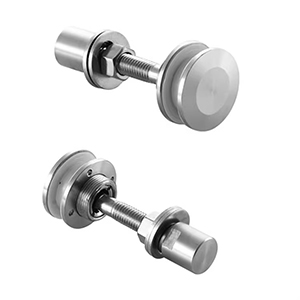
Flexible Anti-Collision Elements: Spider Routel
To prevent direct rigid metal contact that causes glass to shatter, the ends of the spider arms must be paired with Spider Routels featuring high-polymer buffer gaskets. These precision articulated joints allow the panels to undergo minor deflections under thermal expansion or wind gusts, achieving true flexible splicing.
2. On-Site Assembly and Installation Guide
Assembling a gigantic point-supported exterior wall requires extremely high engineering precision. The standardized construction steps are as follows:
Step 1: Main Grid Pre-tensioning. Establish anchor points on the main structural steel and connect the stainless steel rods to their designated positions. Use specialized tensioning equipment to straighten and calibrate the rigging, ensuring the load-bearing web forms an absolutely flat spatial geometric plane.
Step 2: Hardware Node Positioning. Securely lock the stainless steel support brackets onto the tension rod intersections, adjusting the horizontal and vertical planes of the arms using laser levels.
Step 3: Panel Hoisting and Positioning. Using vacuum lifter cranes, hoist the massive laminated glass panels into the grid. Workers thread the articulated routels through the pre-drilled holes and engage the threads with the bracket arms.
Step 4: Torque Locking. Complete the final tightening using a torque wrench to ensure that waterproofing seals and load-bearing standards meet design requirements.
3. Competitive Advantages: Why Choose Our System (VS Competitors)
When sourcing herrajes de acero inoxidable (stainless steel hardware) globally, contractors often face the dilemma of inconsistent quality. Compared to generic alternatives on the market, our systems possess overwhelming advantages:
The Pinnacle of Casting Craftsmanship: To save costs, many competitors use hollow welded tubes or low-pressure rough casting, which harbor hidden flaws like internal air pockets. Our entire line of structural components utilizes solid lost-wax precision casting. The metal density is high, and its anti-fatigue capabilities far exceed similar products.
Tolerance and Thread Engagement: In large-span assemblies, millimeter-level tolerances can lead to severe loosening over time. We provide one-stop standard components with millimeter precision, eliminating the need for on-site forced adjustments and achieving aerospace-level thread engagement tightness.
4. Real-World Case Study: Coastal Commercial Complex in Montevideo, Uruguay
We have extensive project experience in the South American market, particularly in highly demanding coastal zones. In the core coastal business district (near Punta Carretas) of Montevideo, the capital of Uruguay, a newly built commercial center required a highly minimalist muro cortina de vidrio (glass curtain wall) to showcase a futuristic vibe.
Project Challenges: Montevideo directly faces fierce sea winds from the South Atlantic, and the air is highly saline. The facade not only had to achieve high transparency but also required exceptional anti-corrosion and typhoon-resistance capabilities.
Solution: We customized a thickened SS316 tension rod system for their engineering team, paired with heavy-duty 4-way spider connectors, forging an incredibly resilient wind-resistant network.
Client Pain Points and Authentic Feedback:
Fernando R., the On-Site Engineering Director, commented: "Working on the coast of Montevideo, our biggest headaches are salt spray corrosion on the hardware and thread loosening after bearing loads. But the quality of the rods and node hardware from your factory is incredibly hardcore. The crew reported that the thread adjustments were buttery smooth, and once the pre-tension was locked in, nothing moved. The building has been handed over for nearly two years now. Despite enduring multiple strong coastal storms, these fachadas de vidrio (glass facades) remain as solid as a mountain. The metal surfaces are as bright as new, with no rusting or creaks of metal fatigue. This has completely solved our long-term maintenance worries."
5. Indoor Extension of Outstanding Craftsmanship
This dedication to precision manufacturing is not only reflected in grand outdoor engineering. In the interior bathroom fit-outs of luxury hotels or residences, our Shower Door Pivot hardware utilizes the exact same facade-grade anti-corrosion materials and high-load bearing technology. This ensures that heavy indoor glass doors open smoothly and silently for hundreds of thousands of cycles, even in humid environments.
6. FAQ
Q1: Does this tension rod support system need to be regularly re-tensioned?
A: Once properly installed and following the building's initial settlement observation, a high-quality stainless steel rod system maintains its tension through its own high yield strength and usually does not require frequent adjustments. We simply recommend re-checking the node torque during an annual routine engineering inspection.
Q2: Can your fittings resist corrosion in high-salinity marine environments?
A: Without a doubt. Our entire range utilizes marine-grade SS316 stainless steel containing molybdenum, specifically designed for high-humidity, high-salinity environments found in coastal cities (like Montevideo), offering exceptional rust resistance.
Q3: If a single panel is accidentally damaged, is the replacement process complicated?
A: This is a major advantage of the point-supported system. You only need to loosen the four Spider Routels on the damaged panel to remove and replace that specific piece of glass, with absolutely no need to dismantle the main tension grid behind it.