RLL210A1 4-Way Glass Fin Spider Fitting
RLL210A1 4-Way Glass Fin Spider Fitting
Discover the RLL210A1 4-way fin spider fitting, engineered for all-glass facades. Features a robust dual-plate clamping design and marine-grade stainless steel. Read our case study on its cyclone-resistant performance in South Tarawa, Kiribati.
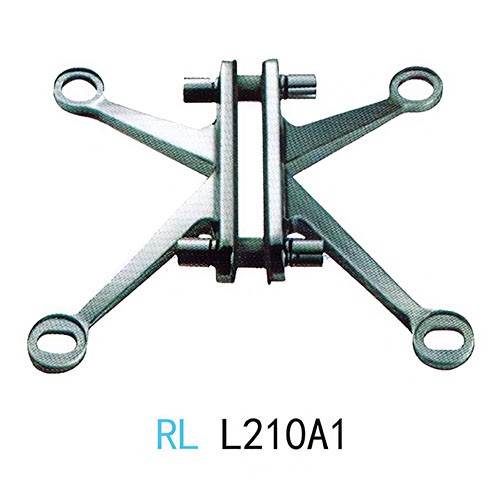
In modern high-end architectural design, "all-glass facades" are highly favored for their unparalleled transparency. In these structures, traditional opaque metal mullions are completely replaced by transparent "glass fins". To securely connect the exterior panels to these rear supporting fins while ensuring even stress distribution, engineering teams require a highly specialized structural component. Today, we detail the core support connector in our product line—the RLL210A1 4-Way Glass Fin Spider Fitting.
To explore more dynamic demonstrations of our facade structural components and precision manufacturing processes, welcome to visit our YouTube channel: https://www.youtube.com/channel/UC3Lo3jsy1LWw0fH03FHZFug
1. Core Technical Parameters and Structural Standards
Unlike standard wall-mounted brackets, the RLL210A1 employs a unique "dual-sided clamping" physical structure to ensure the structural glass does not shatter from stress concentration. Below are the exact engineering parameters for this model:
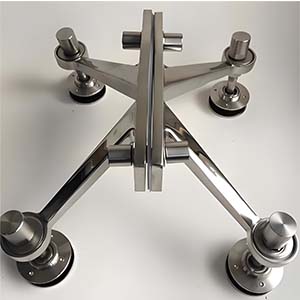
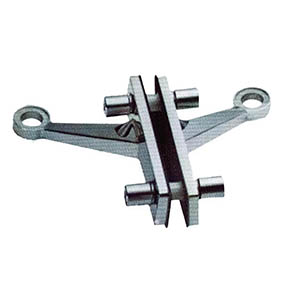
Structural Form: Symmetrical dual-plate, 4-way extension structure (4-Way Fin Design).
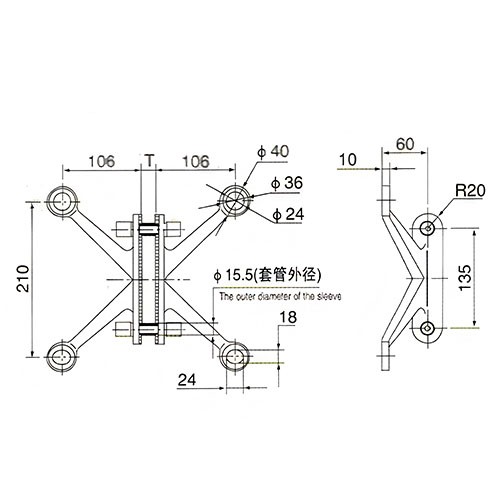
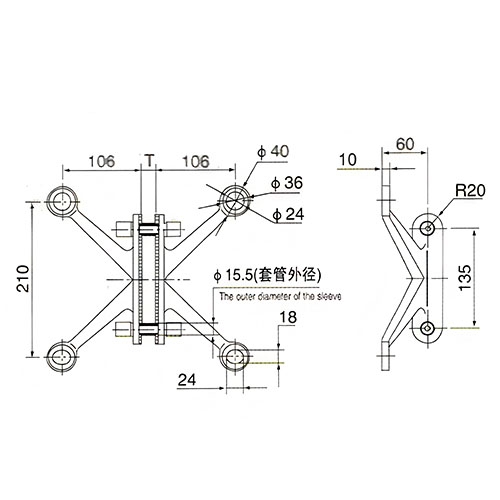
Span Dimensions: The vertical center-to-center distance of the exterior panel mounting holes is 210mm, and the horizontal single-side distance is 106mm, providing a stable rectangular grip area.
Fin Clamping Zone (T): The central clamping thickness "T" is adjustable based on the actual thickness of your glass fin. The two metal plates are secured by high-strength bolts passing through the fin, with a hole spacing of 135mm.
Protective Sleeves: Equipped with isolation sleeves with an outer diameter of 15.5mm, ensuring the metal bolts never make direct contact with the inner walls of the drilled glass holes.
Arm Thickness & Standoff: The support arms boast a robust thickness of 10mm. The standoff distance from the edge of the glass fin to the exterior panel is 60mm.
Connection Hole Diameters: The outer diameter of the facade connection holes is 40mm, with an inner hole of 24mm.
System Integration Logic:
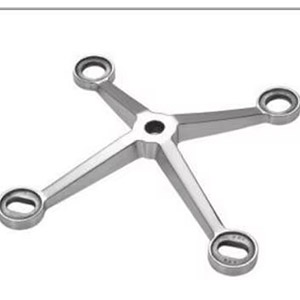
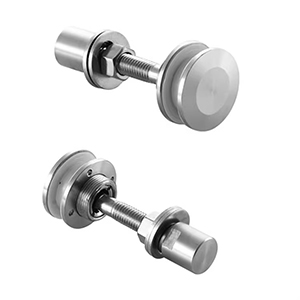
First, the exterior wind-resistant glass panels must be secured using [Spider Routel] fittings equipped with flexible gaskets. Subsequently, the tail ends of the routels are tightly locked into the four outer holes of the RLL210A1.
Next comes the critical step: placing the two clamping plates of the RLL210A1 like a sandwich around the vertical glass fin, and inserting the penetrating bolts. To anchor this load-bearing glass fin to the building's ceiling or foundation, a custom [Bracket / Support Bracket] is typically required.
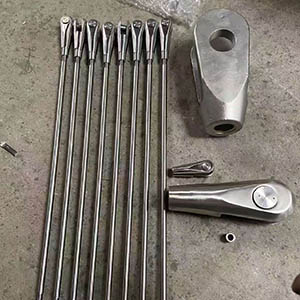
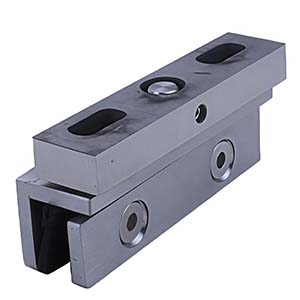
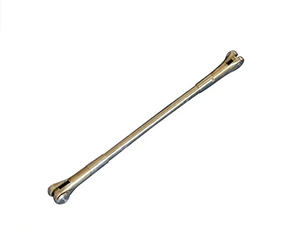
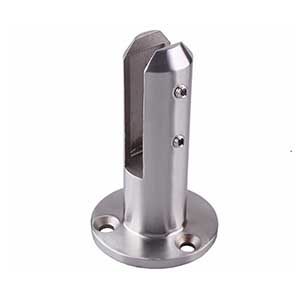
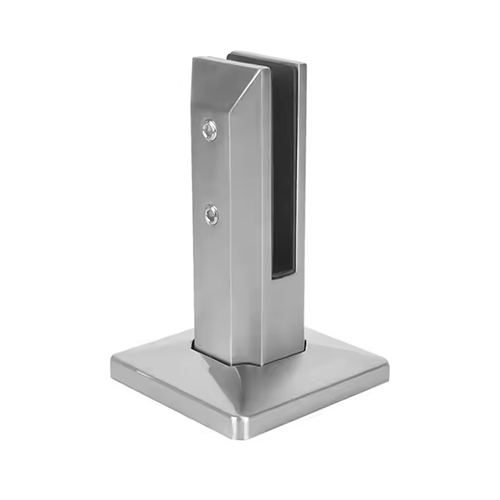
In certain ultra-high-span atrium designs, to prevent the glass fins from excessive deflection under severe winds, engineers will supplement the rear of the system with [Tension rods / Stainless Steel Rod] for load balancing. At the perimeters of the facade or entrance canopy areas, [Fixing Clamp / Glass Clamp] hardware is used for auxiliary securing, while ground-level barriers or deflectors are usually supported by heavy-duty [Glass spigots].
Core Installation Tip:
When tightening the central bolts that clamp the glass fin, a torque wrench must be used, and the nylon or silicone isolation sleeves must be fully seated. Never apply excessive force, as rigid squeezing can easily cause micro-fractures in the glass fin that serves as the main structural keel.
3. Competitive Advantages (VS Competitors)
When facing projects in maritime climates and cyclone zones, inferior herrajes de acero (steel hardware) quickly expose fatal flaws.
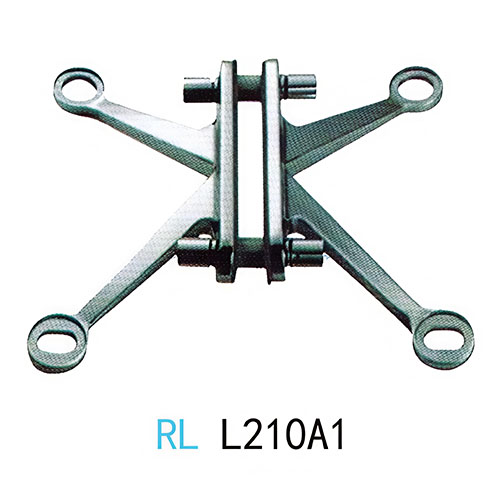
Crushing Superiority in Clamping Safety: Low-end clamps on the market often only support from one side or feature thin metal plates. When a typhoon creates negative wind pressure, thin plates deform, causing uneven stress that shatters the glass fin. Our RLL210A1 utilizes solid silica-sol lost-wax precision casting. The 10mm thick base plates are rock-solid, and the symmetrical dual-plate clamping perfectly disperses instantaneous wind loads.
Isolation Protection Technology: Many competitors ignore internal hole protection. We have specially designed 15.5mm polymer dampening sleeves that not only isolate direct metal-to-glass collisions but also absorb minor building vibrations.
Kiribati is located in the Central Pacific, and its capital region, South Tarawa, is an extremely low-lying atoll. It experiences year-round high temperatures, high humidity, an atmosphere thick with high-concentration salt spray, and occasional threats from tropical cyclones.
Project Background:
For a newly constructed marine cultural exhibition building in the Bairiki settlement, the architects wanted an "all-glass exterior" facing the ocean, making visitors feel as if they were submerged in the water. This meant no opaque metal mullions could be used; only vertical glass fins could serve as the supporting framework.
Pain Points & Solutions:
The extreme salt spray climate of a Pacific island nation is a nightmare for metal. The project required components that could fiercely grip the glass fins to resist tropical cyclone wind pressures while guaranteeing zero rust. They ultimately selected our RLL210A1, pairing it with a full suite of equally corrosion-resistant [spider fittings].
Authentic Client Feedback:
Mr. Tevita, the Facility Maintenance Supervisor for the building, sent us this feedback one year after handover: "In South Tarawa, even standard so-called stainless steel develops rust spots within months under our sea breeze. But this batch of glass fin connectors from you guys gave us total peace of mind. After surviving a wet season and several intense tropical wind gusts, these clamping plates are biting the keel glass dead tight. What satisfies me the most is the dual-plate structure—it clamps incredibly securely. Our cleaners reported that after every strong wind, when they inspect the walls, there are no creaking noises of friction between the exterior panels and the load-bearing glass behind them. The pristine finish of this product perfectly matches its engineering strength. It perfectly adapts to our harsh Pacific island climate. Truly fantastic architectural hardware."
5. Structured FAQ
Q1: What is the maximum thickness of the glass fin that the clamping zone "T" on the RLL210A1 can support?
A: The dimension "T" is fully adjustable. By swapping out the length of the central penetrating bolts and the internal isolation sleeves, it can perfectly accommodate multi-layer laminated tempered glass fins ranging from 15mm to 30mm, or even thicker. Please specify your actual fin thickness when ordering.
Q2: Why is it necessary to use two metal plates to sandwich the glass instead of a single-sided mount?
A: In an all-glass facade, the glass fin acts as the metal mullion, bearing the wind pressure of the entire exterior wall. The symmetrical dual-plate clamping (sandwich structure) ensures that regardless of which direction positive or negative wind pressure hits, the stress is evenly transferred to the central axis, preventing shear force failure caused by single-sided compression.
Q3: In high-temperature regions near the equator, will the clamps restrict the thermal expansion and contraction of the glass?
A: No. The isolation sleeves inside the holes and the flexible gaskets on the contact surfaces not only provide anti-collision protection but also reserve carefully calculated micro-deformation space. This completely absorbs the natural expansion of the glass caused by intense sun exposure.
To explore more dynamic demonstrations of our facade structural components and precision manufacturing processes, welcome to visit our YouTube channel: https://www.youtube.com/channel/UC3Lo3jsy1LWw0fH03FHZFug
1. Core Technical Parameters and Structural Standards
Unlike standard wall-mounted brackets, the RLL210A1 employs a unique "dual-sided clamping" physical structure to ensure the structural glass does not shatter from stress concentration. Below are the exact engineering parameters for this model:
Structural Form: Symmetrical dual-plate, 4-way extension structure (4-Way Fin Design).
Span Dimensions: The vertical center-to-center distance of the exterior panel mounting holes is 210mm, and the horizontal single-side distance is 106mm, providing a stable rectangular grip area.
Fin Clamping Zone (T): The central clamping thickness "T" is adjustable based on the actual thickness of your glass fin. The two metal plates are secured by high-strength bolts passing through the fin, with a hole spacing of 135mm.
Protective Sleeves: Equipped with isolation sleeves with an outer diameter of 15.5mm, ensuring the metal bolts never make direct contact with the inner walls of the drilled glass holes.
Arm Thickness & Standoff: The support arms boast a robust thickness of 10mm. The standoff distance from the edge of the glass fin to the exterior panel is 60mm.
Connection Hole Diameters: The outer diameter of the facade connection holes is 40mm, with an inner hole of 24mm.
Material Standard: Manufactured as standard from heavy-duty, corrosion-resistant SS316, fearless against extreme weather conditions.
2. All-Glass Facade Scenario & Installation Guide
System Integration Logic:
First, the exterior wind-resistant glass panels must be secured using [Spider Routel] fittings equipped with flexible gaskets. Subsequently, the tail ends of the routels are tightly locked into the four outer holes of the RLL210A1.
Next comes the critical step: placing the two clamping plates of the RLL210A1 like a sandwich around the vertical glass fin, and inserting the penetrating bolts. To anchor this load-bearing glass fin to the building's ceiling or foundation, a custom [Bracket / Support Bracket] is typically required.
In certain ultra-high-span atrium designs, to prevent the glass fins from excessive deflection under severe winds, engineers will supplement the rear of the system with [Tension rods / Stainless Steel Rod] for load balancing. At the perimeters of the facade or entrance canopy areas, [Fixing Clamp / Glass Clamp] hardware is used for auxiliary securing, while ground-level barriers or deflectors are usually supported by heavy-duty [Glass spigots].
Core Installation Tip:
When tightening the central bolts that clamp the glass fin, a torque wrench must be used, and the nylon or silicone isolation sleeves must be fully seated. Never apply excessive force, as rigid squeezing can easily cause micro-fractures in the glass fin that serves as the main structural keel.
3. Competitive Advantages (VS Competitors)
When facing projects in maritime climates and cyclone zones, inferior herrajes de acero (steel hardware) quickly expose fatal flaws.
Crushing Superiority in Clamping Safety: Low-end clamps on the market often only support from one side or feature thin metal plates. When a typhoon creates negative wind pressure, thin plates deform, causing uneven stress that shatters the glass fin. Our RLL210A1 utilizes solid silica-sol lost-wax precision casting. The 10mm thick base plates are rock-solid, and the symmetrical dual-plate clamping perfectly disperses instantaneous wind loads.
Isolation Protection Technology: Many competitors ignore internal hole protection. We have specially designed 15.5mm polymer dampening sleeves that not only isolate direct metal-to-glass collisions but also absorb minor building vibrations.
Anti-Corrosion Performance: Ordinary stamped parts easily trap salt in their crevices. Our one-piece casting process, combined with purely manual mirror or satin brushing, leaves a surface entirely free of micro-pores, vastly outperforming standard 304 materials in salt spray tests.
Kiribati is located in the Central Pacific, and its capital region, South Tarawa, is an extremely low-lying atoll. It experiences year-round high temperatures, high humidity, an atmosphere thick with high-concentration salt spray, and occasional threats from tropical cyclones.
Project Background:
For a newly constructed marine cultural exhibition building in the Bairiki settlement, the architects wanted an "all-glass exterior" facing the ocean, making visitors feel as if they were submerged in the water. This meant no opaque metal mullions could be used; only vertical glass fins could serve as the supporting framework.
Pain Points & Solutions:
The extreme salt spray climate of a Pacific island nation is a nightmare for metal. The project required components that could fiercely grip the glass fins to resist tropical cyclone wind pressures while guaranteeing zero rust. They ultimately selected our RLL210A1, pairing it with a full suite of equally corrosion-resistant [spider fittings].
Authentic Client Feedback:
Mr. Tevita, the Facility Maintenance Supervisor for the building, sent us this feedback one year after handover: "In South Tarawa, even standard so-called stainless steel develops rust spots within months under our sea breeze. But this batch of glass fin connectors from you guys gave us total peace of mind. After surviving a wet season and several intense tropical wind gusts, these clamping plates are biting the keel glass dead tight. What satisfies me the most is the dual-plate structure—it clamps incredibly securely. Our cleaners reported that after every strong wind, when they inspect the walls, there are no creaking noises of friction between the exterior panels and the load-bearing glass behind them. The pristine finish of this product perfectly matches its engineering strength. It perfectly adapts to our harsh Pacific island climate. Truly fantastic architectural hardware."
5. Structured FAQ
Q1: What is the maximum thickness of the glass fin that the clamping zone "T" on the RLL210A1 can support?
A: The dimension "T" is fully adjustable. By swapping out the length of the central penetrating bolts and the internal isolation sleeves, it can perfectly accommodate multi-layer laminated tempered glass fins ranging from 15mm to 30mm, or even thicker. Please specify your actual fin thickness when ordering.
Q2: Why is it necessary to use two metal plates to sandwich the glass instead of a single-sided mount?
A: In an all-glass facade, the glass fin acts as the metal mullion, bearing the wind pressure of the entire exterior wall. The symmetrical dual-plate clamping (sandwich structure) ensures that regardless of which direction positive or negative wind pressure hits, the stress is evenly transferred to the central axis, preventing shear force failure caused by single-sided compression.
Q3: In high-temperature regions near the equator, will the clamps restrict the thermal expansion and contraction of the glass?
A: No. The isolation sleeves inside the holes and the flexible gaskets on the contact surfaces not only provide anti-collision protection but also reserve carefully calculated micro-deformation space. This completely absorbs the natural expansion of the glass caused by intense sun exposure.