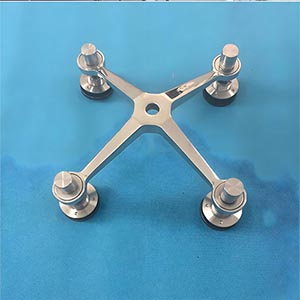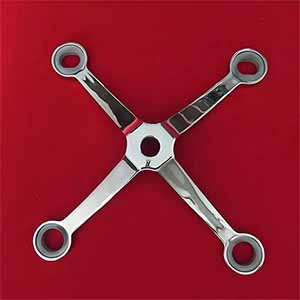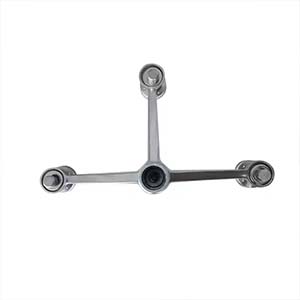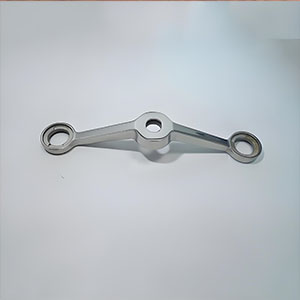
Articulated Stainless Steel Glass Spider Fitting RL 335351
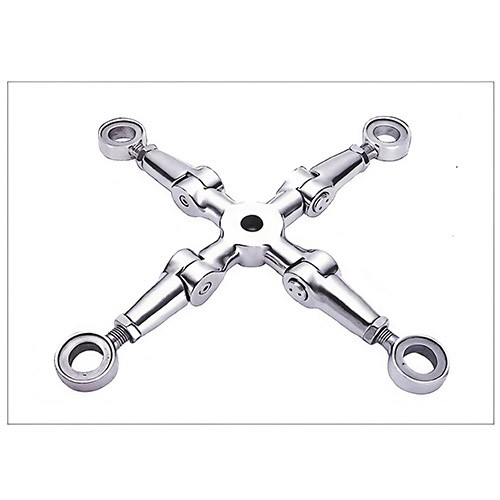
Engineered for high seismic and extreme temperature zones. The RL 335351 articulated stainless steel spider fitting features adjustable arms to absorb structural displacement and thermal stress. Available in 304/316 SS. View our successful anti-seismic cases in Uzbekistan.
In the pursuit of transparent aesthetics and ultimate safety in modern point-fixed glass facade designs, rigid fasteners often fail to cope with complex external environments. The RL 335351 articulated stainless steel spider fitting breaks the limitations of traditional hardware. It is not merely a support node; it acts as the "joints" of the building's exterior. With its unique adjustable hinged arm design, this glass connector provides micro-adjustment and displacement tolerance for the facade while maintaining exceptional load-bearing capacity, making it the ideal choice for extreme climates and geologically active regions.
Core Technical Parameters & Structural Analysis
The RL 335351 series achieves a perfect balance between mechanics and aesthetics in structural engineering. The standard specifications are as follows:
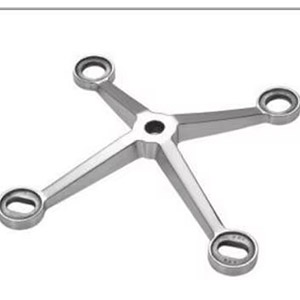
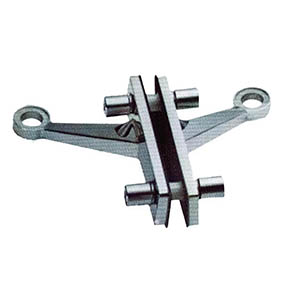
Dynamic Articulated Design: All four arms are equipped with high-strength mechanical hinges, allowing for universal micro-adjustments at various angles. This greatly alleviates concentrated stress caused by wind loads and the dead weight of the glass.
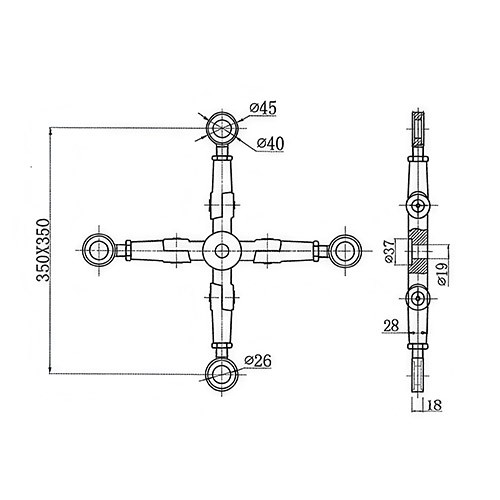
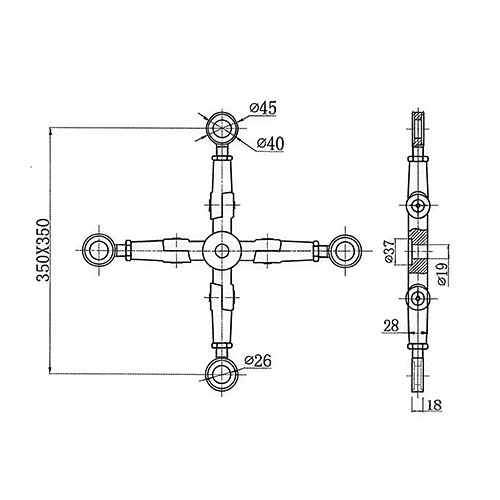
Precise Dimensions: In the expanded state, the horizontal and vertical hole-to-hole distance is 350x350mm. The central mounting hole diameter is Φ37/Φ19, and the arm end fixing holes are Φ45/Φ40 and Φ26.
Premium Material: The main body is manufactured using high-strength Stainless Steel 304 (CF8) or the highly corrosion-resistant Stainless Steel 316 (CF8M) via a precision investment casting process, ensuring a dense internal structure without porosity defects.
Series Configuration: Besides the 4-way RL 335351, this series also includes 1-way (RL 335353), 2-way 90-degree (RL 335353), and 2-way 180-degree (RL 335352) configurations to meet all edge and corner detailing requirements of a facade.
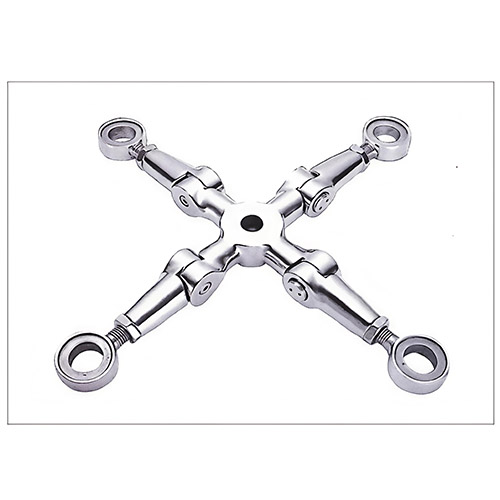
Compared to common rigid, one-piece molded supports on the market, our articulated series possesses irreplaceable advantages:
Stress Release vs. Rigid Resistance: When traditional fixtures face building settlement or thermal expansion, the stress is directly transferred to the glass, causing breakage. The hinged arms of the RL 335351 act like springs, absorbing these micro-displacements and reducing the spontaneous breakage rate to an absolute minimum.
Curved Surface Adaptability: Thanks to the adjustability of the arms, it is not only suitable for flat curtain walls but perfectly adapts to cylindrical, wave-shaped, or other free-form glass facades without the need for custom mold making.
High Installation Tolerance: Civil engineering discrepancies are common on construction sites. The hinged design allows workers to finely adjust angles and distances on-site, significantly boosting installation efficiency.
Building a safe, flexible facade system requires the tight cooperation of various components. Here is the standard operating procedure:
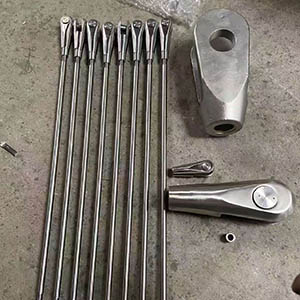
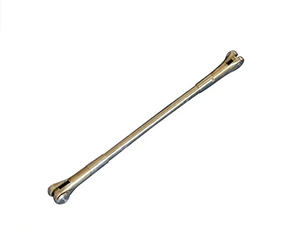
First, assess the span of the building's main steel structure. For large-span or mullion-free cable-net glazing systems, you must first deploy our high-strength Tension rods / Stainless Steel Rod network as the load-bearing backbone.
Weld the adapters onto the main structure using a solid steel base. If there is an angular deviation, utilize a Bracket / Support Bracket for baseline correction.
Connect the center hole of the RL 335351 to the adapter. At this point, adjust the angles of the four articulated arms so they align perfectly with the intended flat or curved surface of the glass.
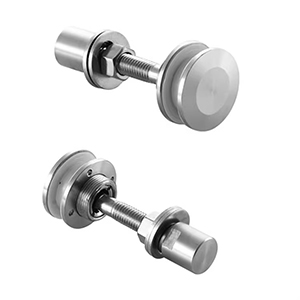
Install the matching multi-directional Spider Routel onto the custom-drilled glass panels. These routels feature a ball-joint function, working in tandem with the articulated spider to provide double flexible buffering.
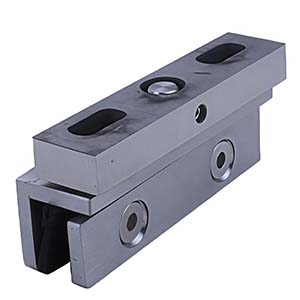
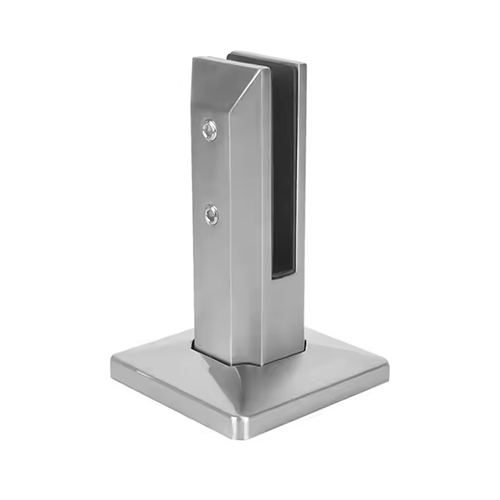
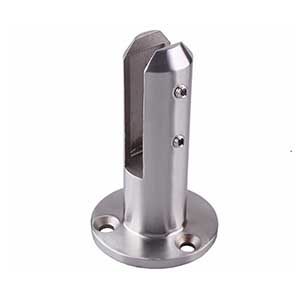
Push the glass panels into place and lock the routels. For transitional areas like top canopies or bottom frameless balustrades, you can integrate the system using Glass spigots or a Fin spider with structural glass fins. Furthermore, in areas requiring additional clamping force, supplement with a Fixing Clamp / Glass Clamp to ensure foolproof security.
Deep Engineering Validation: Anti-Seismic and Thermal Endurance Records in the Heart of Central Asia
Uzbekistan is undergoing rapid urban modernization, yet the country faces severe summer heat, freezing winters, and a high risk of seismic activity. The performance of the RL 335351 here has earned high praise from the industry:
A Premium Grade-A Office Building in Downtown Tashkent
Tashkent is located in an active seismic zone, and this newly built office tower features a massive panoramic glass facade. During the initial design phase, preventing glass peeling caused by seismic waves was the biggest challenge.
The lead architect of the project sent a special email after the phase-one handover, stating: "Mild tremors happen frequently in this city, and traditional dead-fixed hardware worried us immensely. Your articulated connectors are literally shock absorbers for the facade. After experiencing a magnitude 4 tremor last month, we inspected all exterior elevations. The micro-movements of the arms perfectly digested the twisting forces of the building, and every single pane of glass remained intact. This design is incredibly brilliant."
A Massive Luxury Resort in Samarkand
As a historical city, the newly constructed resort required ultimate visual transparency. However, local summer daytime temperatures can exceed 40 degrees Celsius, followed by rapid cooling at night, causing extreme thermal expansion and contraction of the glass.
The Technical Director of the facade installation team commented during site acceptance: "In the past, working in similar climates, if a glass hole had even a one-millimeter deviation, the glass would crack as soon as the temperature shifted. With these jointed fittings, the built-in adjustment margin not only made installation extremely smooth for the workers, but more importantly, after surviving a brutal summer, not a single pane suffered thermal stress damage. It saved us a fortune in after-sales maintenance costs."
A Modern Art Pavilion in Bukhara
This pavilion features a complex, three-dimensional curved glass dome designed to withstand strong winds and dust storms blowing in from the desert.
The Facility Operations Supervisor reported: "During consecutive days of sandstorms and high wind attacks, the interior remained exceptionally quiet. Observing from the inside, the hinged support nodes gently and resiliently neutralized the impact of the gusts. The anti-corrosion treatment on the stainless steel is also outstanding; after wiping away the dust, it still shines like new, perfectly aligning with the high-end positioning of our art gallery."
FAQ
Q: Will the articulated design reduce load-bearing capacity due to having moving parts?
A: Not at all. The hinge sections of the RL 335351 utilize oversized, high-strength stainless steel pivot pins and have undergone rigorous shear force testing. While allowing for micro-adjustments, its vertical and horizontal static load-bearing data is even superior to some hollow rigid fittings of the same size.
Q: Can this hardware be used to install Insulated Glass Units (IGU) or Laminated Glass?
A: It is highly suitable. Insulated laminated glass is typically thick and very heavy. The articulated arms, combined with extended multi-directional routels, can securely grip heavy glass while preventing destructive concentrated stress at the connection holes caused by the extreme weight.
Q: How do you ensure the hinge joints don't rust and seize up over long-term use?
A: Our entire line uses precision-cast 304 or 316-grade stainless steel. More importantly, highly weather-resistant damping washers are added inside the hinges. This not only prevents direct metal-to-metal friction but effectively blocks the intrusion of moisture and dust, ensuring it remains flexible and solid for decades.