Damascus, Syria high-end apartment bathrooms stainless steel shower door hinge case study | SSHW
I.1 Local project profile & positioning of apartment bathrooms
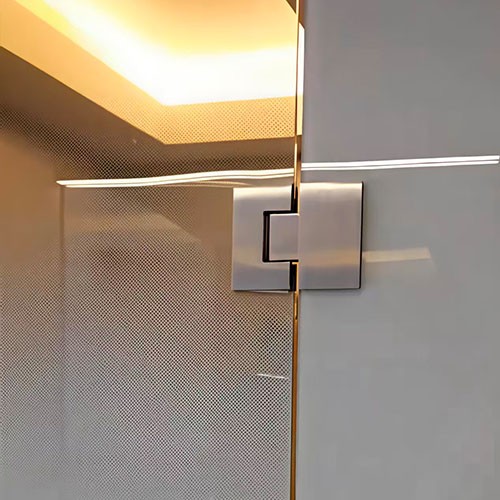
This case study centers on a high-end residential development in central Damascus comprising roughly 60 apartment units, each requiring new or renovated master and guest bathroom shower enclosures. The developer specified frameless glass shower doors throughout to achieve a clean, open visual language consistent with the project's premium positioning. Glass fabrication and on-site installation were handled by a long-term local glass contractor, while hardware selection was centralized under the developer's technical team to maintain consistency across buildings and unit types—an important consideration for future spare-parts management. This also created a unified basis for specifying a stainless steel shower hinge across all units.
During the initial site survey, we noted that the municipal water supply in this part of Damascus exhibits relatively high hardness, typical of carbonate-rich water sources common across the region. Combined with the fact that property housekeeping staff routinely use chlorine-based or strongly acidic/alkaline bathroom cleaning agents, these two factors became the dominant boundary conditions driving the hinge selection process.
I.2 Damascus macro climate vs. bathroom micro-climate
Damascus has an overall semi-arid climate with limited annual rainfall, concentrated mainly between November and March. The city experiences hot, dry summers, mild to cool winters, considerable diurnal temperature swings, and frequent dusty, windy conditions during the spring transitional months of March through May, which all influence corrosion behavior for exposed metal components.
However, there is an inherent mismatch between the "dry" outdoor climate and the actual micro-environment inside a shower enclosure. As a semi-enclosed space, a shower cubicle generates short bursts of high humidity and steam during each use, and hard-water mineral residue accumulates on surfaces after every shower cycle. This means hardware such as the glass shower door hinge operates in conditions considerably harsher than what macro climate statistics alone would suggest—a gap in understanding that frequently leads to under-specification of bathroom hardware. For reference on how stainless steel performs in different building environments, see the World Stainless Association's guidance on architecture and construction applications.
I.3 Typical failures of conventional bathroom hinges under hard water & harsh cleaners
During pre-project due diligence, we surveyed several comparable older apartment developments and documented recurring failure patterns in conventional shower hinges—typically zinc-alloy or carbon-steel bodies with electroplated finishes:
Plating blistering and peeling after repeated exposure to hard water and cleaning chemicals, followed by rapid rusting once the base metal is exposed
Pivot points becoming gummed up with a mixture of limescale and cleaner residue, resulting in stiff operation and audible squeaking
Fixing screws loosening due to corrosion-induced expansion of the substrate, leading to door sagging, poor sealing, and incomplete closure
Visible rust staining and discoloration that clash sharply with the high-end finish standard of the units
As a direct consequence of these failure modes, the developer's property management division had historically fielded a significant volume of complaints annually relating to "doors not closing properly," "rusty hinges," and "noisy operation." The local glass contractor likewise reported that corroded hinges typically required full replacement rather than localized repair, driving up rework costs and undermining the project's delivery reputation. Based on these lessons, the hardware specification for this project explicitly called for three core requirements—long-term corrosion resistance, low or near-zero maintenance, and the ability to replace individual components—which directly informed the final selection of the SSHW stainless steel shower door hinge system.
II. Solution Design & Challenges: SSHW Stainless Steel Shower Door Hinge
II.1 Structure & installation position: shower door layout and swing direction
Shower enclosures across this project predominantly follow "straight run plus side panel" or "corner two-panel" configurations, with door widths generally ranging from 700 to 900 mm. Dual-action inner/outer opening hinges were specified to accommodate varying bathroom layouts and user habits, with two stainless steel shower hinges used on each standard door leaf to balance load and appearance.
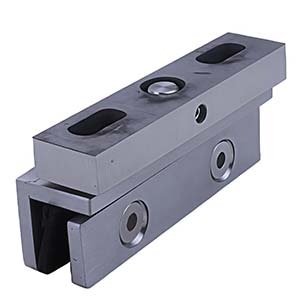
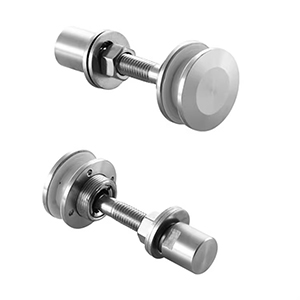
Hinge mounting conditions fall into two categories: wall-to-glass hinges fixed to tiled wall surfaces, and glass-to-glass hinges. In a subset of smaller units constrained by spatial limitations, independent glass clamps (non-load-bearing pivot points) were used in conjunction with support bars to stabilize the door panel. To facilitate future servicing, every hinge mounting point was designed with sufficient clearance to allow removal without interference from adjacent ceiling fixtures or cabinetry.
II.2 Corrosion protection, sealing & drainage: 304/316/2205 material selection & finishes
To address the corrosion risks posed by hard water and chemical cleaners, the baseline hinge body specification for this project is SSHW 304 stainless steel, forming a robust stainless steel bathroom hinge solution. For zones identified as higher risk—such as bathrooms adjacent to windows where moisture ingress or elevated ambient humidity is more pronounced—an upgrade to 316 stainless steel is available, and where required, specification can be elevated further to higher-grade alloys such as 2205 duplex stainless, confirmed on a project-by-project basis in coordination with the design institute and owner, rather than applying a blanket specification.
For surface treatment, both fine-polished and brushed finish options are offered, each passivated to reinforce corrosion resistance. The internal pivot mechanism uses a semi-enclosed structural design, paired with carefully engineered drainage slopes and clearances, to prevent water from pooling persistently around the pivot core and thereby reduce the likelihood of limescale buildup over time.
II.3 Load safety & glass selection: 8–12 mm glass, door size & project-specific load testing
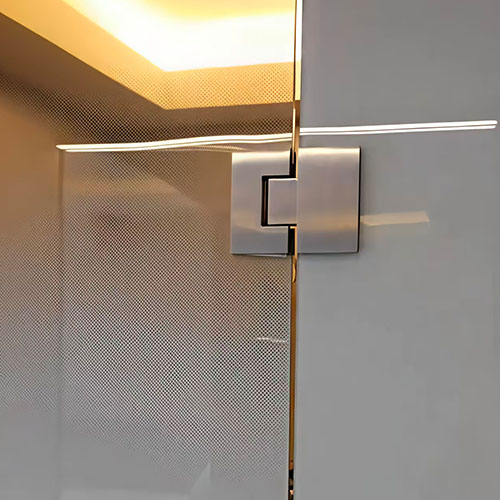
Shower doors throughout the project uniformly use 8 mm or 10 mm tempered glass, with select larger panels (exceeding 850 mm in width) upgraded to 12 mm glass following structural calculations to control deflection and maintain adequate safety margin. Hinge selection is matched to glass thickness, panel width, and individual panel self-weight to ensure clamping force and screw specifications retain a reasonable safety factor so that each stainless steel shower door hinge can carry the door weight over the long term without abnormal deformation. Regarding specific load test documentation—such as cyclic opening/closing endurance tests or static load capacity tests—these can be provided on a project basis or issued by a third-party testing body at the client's request. This case study intentionally avoids listing specific certificate numbers or test figures to prevent any misleading claims.
II.4 Substrate anchoring & service access: hollow-block/tiled walls and easy replacement
Local residential wall construction typically consists of hollow block masonry finished with ceramic tile cladding, which imposes specific requirements on hinge anchoring methods. The conventional approach of drilling directly through tile and using standard expansion anchors provides limited holding capacity in hollow-block substrates and tends to loosen under sustained loading over time.
The solution adopted for this project involves pre-installing dedicated anchor sleeves or performing localized grouting reinforcement at critical load-bearing points, combined with the extended fixing screw sets supplied with SSHW hinges, to provide secondary anchorage that maintains holding strength under long-term loading. Installation angles and tightening sequences were also standardized into clear installation documentation, enabling future property maintenance staff or technicians to remove and replace a single shower hinge by following the documented procedure—without needing to damage surrounding tile work or dismantle the entire door assembly.
III. Solution Comparison: Traditional Bathroom Hardware vs SSHW Stainless Steel Option
III.1 Comparison dimensions: durability, safety, aesthetics, installation, maintenance
To support decision-making by the developer's technical team and property management, we compared traditional zinc-alloy/carbon-steel bathroom hinges against the SSHW stainless steel shower door hinge solution across six dimensions: material and rust resistance, chemical resistance, load-bearing safety, aesthetics and tactile quality, installation and alignment, and maintenance cost with replaceability.
III.2 Markdown Comparison Table
Feature Traditional Solution (Zinc Alloy / Carbon Steel Hinges) SSHW Stainless Steel Solution
Material & Anti-rust Zinc alloy or carbon steel with surface plating; blistering, rusting, and flaking occur readily in humid steam environments Premium 304/316 stainless steel body, with higher grades available on request; through-material corrosion resistance maintains structure and appearance long-term
Chemical Resistance Plating is rapidly attacked by acidic/alkaline bathroom cleaners, resulting in spotting and rust marks Stainless passive layer withstands common bathroom cleaners and hard-water scale, significantly reducing corrosion rate
Load Capacity & Safety Weak clamping force; screws loosen easily; doors sag and misalign over extended use Heavy-duty body and high-friction gaskets securely hold 8–12 mm tempered glass with no long-term sagging
Aesthetics & Tactile Feel Surface scratches easily during installation; rough edges; noisy and sticky operation Fine-polished/brushed finish with smoothly rounded edges; smooth, solid operation matching high-end project positioning
Installation & Alignment Limited adjustment range; time-consuming installation; misalignment often requires re-drilling or wall demolition Generous built-in adjustment allowance, engineered to suit local glass contractors' standard installation practices
Maintenance Cost & Replaceability Once jammed or rusted, typically requires full replacement; frequent interventions drive up lifecycle cost Sealed internal structure resists dust and moisture; routine cleaning is simple, and individual hinge components can be replaced separately to minimize downtime
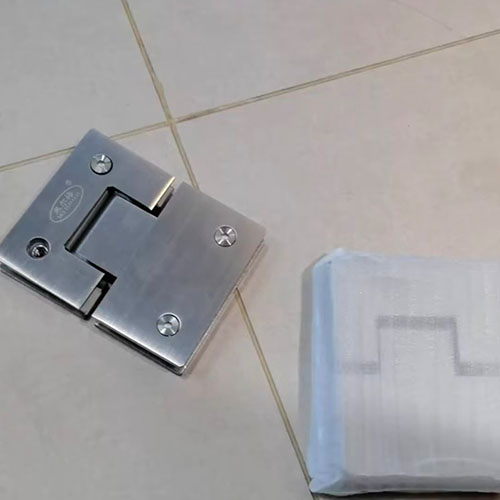
As the table illustrates, the core advantage of the SSHW solution is not simply a "more expensive material"—it reflects systematic structural design decisions specifically targeting hard-water scaling, chemical cleaner exposure, and dusty ambient conditions. The semi-enclosed pivot geometry reduces the pathways through which limescale can accumulate; the passivated stainless body lowers the rate of chemical corrosion; and the heavy-duty clamping structure delays the onset of glass sagging. For high-end apartment projects in hard-water regions like Damascus, this translates directly into longer maintenance-free intervals and lower cumulative property management costs for each stainless steel shower hinge in service.
IV. Post-completion Experience & Feedback
IV.1 Visual impact & daylighting with frameless glass and compact hardware
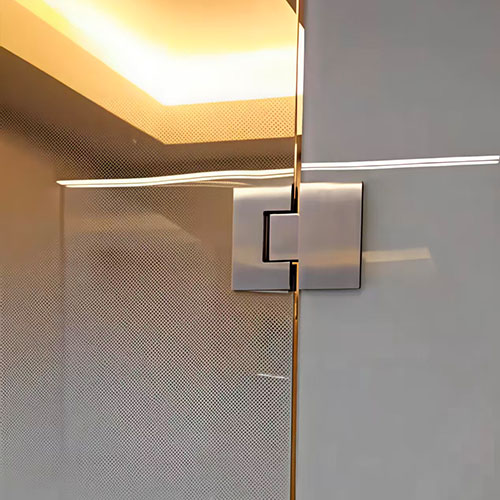
Following project completion, the combination of frameless glass doors and fine-polished stainless steel hinges delivers a clean, transparent overall look that harmonizes well with the bathrooms' tile work and sanitary fixtures. The rounded edge detailing and consistent brushed texture present a stable, refined appearance under both natural daylight and interior bathroom lighting, with no scratches or color inconsistencies—issues that had been noted during the installation phase of comparable projects.
IV.2 User experience: opening feel, wobble control and cleaning effort
Feedback from owners and property management trials indicates smooth, moderately damped door operation with no noticeable sticking or loose wobble. Thanks to the adequate clamping force of the hinges, no visible sagging has developed even after repeated opening and closing cycles. In terms of cleaning, the well-engineered hinge geometry at the tile-glass junction minimizes dirt and water residue accumulation in crevices, with routine wiping using a damp cloth sufficient to maintain cleanliness without placing extra stress on the stainless steel shower door hinge hardware.
IV.3 Long-term behavior under high humidity, water spots and dust ingress
Over the tracking period to date (exact duration to be confirmed based on each unit's actual occupancy timeline), sample hinges inspected have shown no visible rust or blistering to the naked eye. Localized limescale deposits have been removable using standard cleaning agents and a soft cloth, without causing irreversible effects on hinge appearance or function. Following spring sandstorm events, property management conducted spot-check disassembly inspections on sample hinges, finding no significant dust accumulation around the internal pivot area or any abrasive paste-like mixture forming with the lubricant—confirming the practical effectiveness of the semi-enclosed structural design against dust ingress.
IV.4 Maintenance intervals and feedback from owners, property managers & installers
Property management reports that maintenance work orders related to shower door hinges have dropped noticeably compared with previous comparable projects since adopting the SSHW solution, allowing routine inspection intervals to be extended appropriately. The local glass contractor also noted that the hinge's installation and alignment process aligns well with their standard tools and installation habits, resulting in reduced on-site rework rates—overall meeting the expectations of a high-end apartment project for low-disruption, low-maintenance hardware performance.
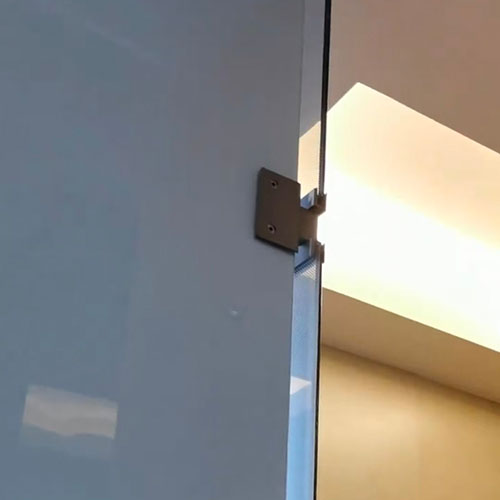
V. Watch the Video & Next Steps
V.1 Video guide
To help designers, contractors, and owners better understand the structural characteristics and operation of this stainless steel shower door hinge solution, please watch the hinge operation video.
V.2 Explore key product details for the main hinge model
The primary hinge model specified for this project is the SSHW 180-degree dual-action inner/outer opening glass shower door hinge, suitable for a variety of wall and glass combination configurations. Full product details, dimensional drawings, and recommended glass configurations are available on the official website; please see full product specifications.
V.3 View matching shower door support bars and system components
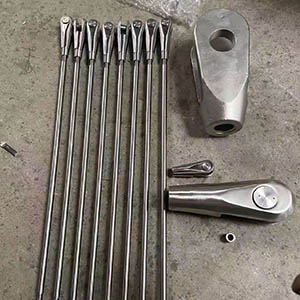
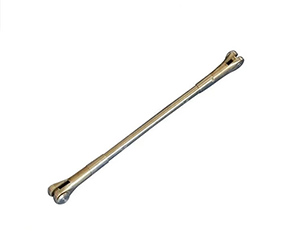
For configurations involving corner layouts or single-panel doors requiring additional stabilization support, please refer to the matching stainless steel shower door support bar products to enhance overall system rigidity and safety margin. Related options can be found on the website; view matching shower door support bars and components.
V.4 Contact SSHW technical team for localized configuration and bulk orders
For similar high-end apartment or hospitality projects in Damascus and the surrounding region, we recommend engaging the SSHW technical team early in the design phase to review local water quality, substrate conditions, and maintenance practices. This allows early confirmation of the most appropriate stainless steel shower hinge material grade, surface finish, and bulk supply lead times, helping avoid additional post-handover maintenance costs caused by under-specified hardware.
VI. FAQ: Damascus Climate & Shower Door Hinge Maintenance
VI.1 Q1 How do Damascus hard water and bathroom cleaners affect shower hinges?
A: SSHW hinges use 304/316 stainless steel bodies combined with carefully engineered clearances that minimize limescale buildup at the pivot point. The stainless steel's passive oxide layer provides strong resistance to the acidic or alkaline cleaning agents commonly used in bathroom maintenance, avoiding the rapid blistering and peeling typically observed with zinc-plated hinges. Routine wiping with water or a neutral cleaner on the stainless steel shower door hinge surface is generally sufficient to extend service life significantly.
VI.2 Q2 Will spring dust and fine particles infiltrate the hinges and affect smooth operation?
A: SSHW shower hinges feature closed or semi-closed pivot and spring chambers with precision-fitted clearances that block the majority of fine dust from reaching critical moving parts. Even where minor dust ingress occurs, it does not readily combine with internal lubricant to form an abrasive paste-like compound. In dust-prone cities like Damascus, periodic wiping of exterior surfaces and checking screw tightness during routine maintenance is generally adequate.
VI.3 Q3 Can the hinges safely carry heavy 10–12 mm glass in high-end apartments with minimal maintenance?
A: SSHW hinges are engineered as heavy-duty units, with plate thickness, screw specifications, and high-friction gaskets all sized to suit 8–12 mm tempered glass, reliably supporting both the self-weight of the door panel and the daily impact of opening and closing. Load test documentation can be provided on a project-specific basis without overstating performance figures. Even in situations where property management inspection schedules are relatively infrequent, this robust stainless steel shower door hinge design substantially reduces the risk of glass sagging and hardware loosening, thereby reducing the frequency of required rework.