Stainless Steel Glass Spider Fittings | 4-Way 2-Way 1-Way Supplier
Welcome to visit our YouTube channel to learn more about the manufacturing and real-world application of our architectural hardware: https://www.youtube.com/channel/UC3Lo3jsy1LWw0fH03FHZFug
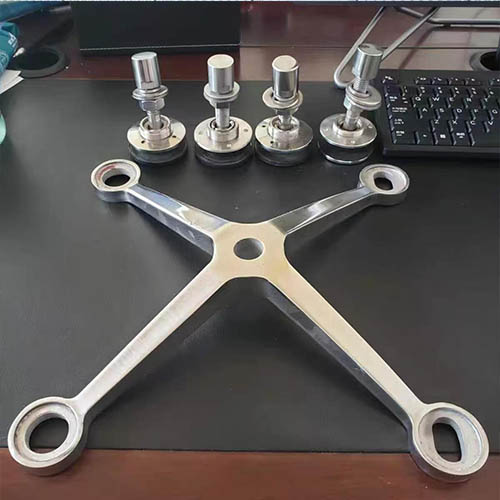
Core Technical Parameters and Structural Standards
In curtain wall engineering, load-bearing capacity and pressure resistance are the primary indicators of building safety. Our stainless steel support components are manufactured strictly according to international building codes:
Material Standards: Available in AISI 304 and AISI 316/316L stainless steel. The 316 series is rich in molybdenum, specifically developed to resist high-salt corrosion and acid rain.
Manufacturing Process: We utilize the lost-wax precision casting process, ensuring a high-density molecular structure with no sand holes, significantly enhancing the yield strength.
Surface Finish: Offered in standard Mirror polished and Satin brushed finishes. Custom fluorocarbon coating or PVD electroplating colors are also available to match different architectural envelope styles.
Dimensions & Hole Spacing: Standard hole-to-hole distances include 150mm, 200mm, 220mm, 250mm, and 300mm. Arm thickness varies from 8mm to 12mm based on load requirements, suitable for tempered laminated glass ranging from 12mm to over 25mm.
Installing a curtain wall is a highly precise process. Different structural designs require different hardware to work in synergy.
Step 1: Fixing the Support Structure
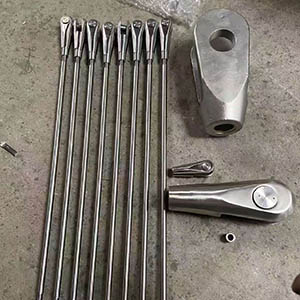
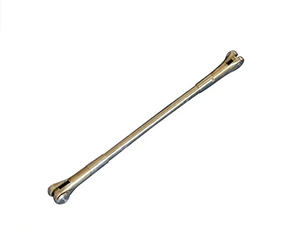
In a steel mullion system, constructors must first weld or bolt the mounting base (Bracket / Support Bracket) onto the main steel framework. If the design is a lightweight tensioned structure, high-strength Tension rods / Stainless Steel Rod are required to establish the prestressed cable network.
Step 2: Leveling and Installing the Spider Bracket
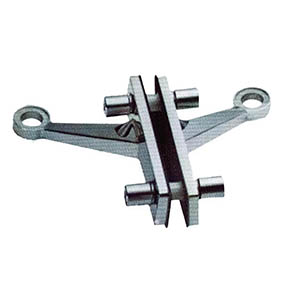
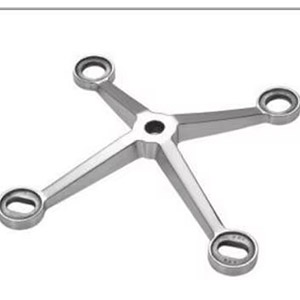
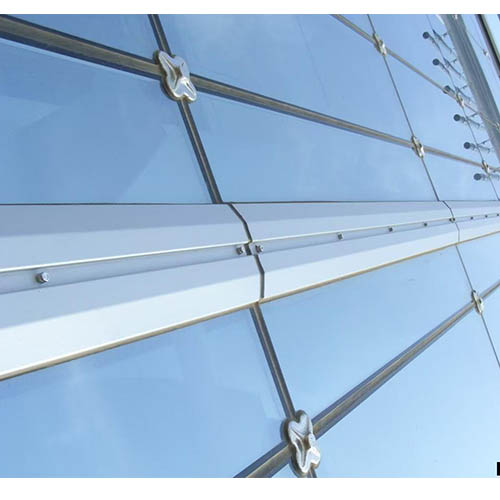
Secure the 4-way or 2-way fittings to the base. A high-precision laser level is necessary here to adjust the three-dimensional coordinates of the arms, ensuring all connection points are on the exact vertical and horizontal planes. For glass-fin supported structures, specialized Fin spider fittings are used to connect the main facade glass with the structural glass ribs.
Step 3: Glass Hoisting and Locking
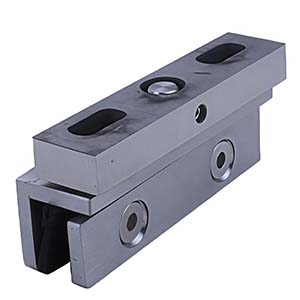
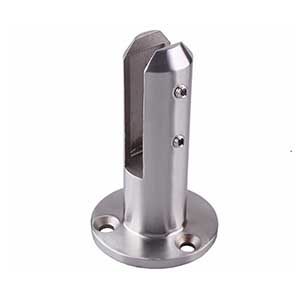
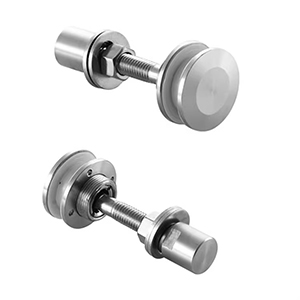
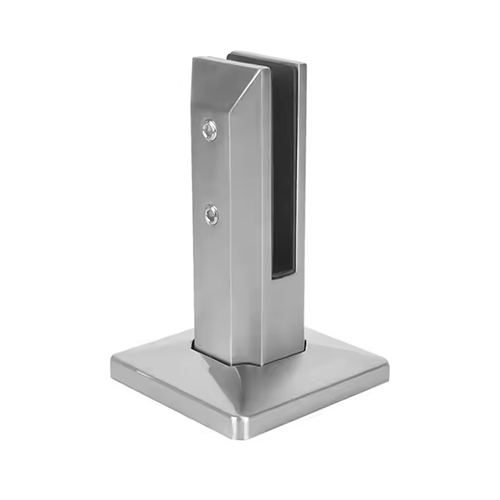
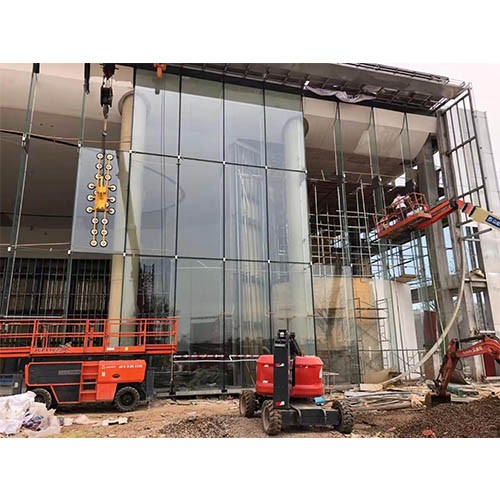
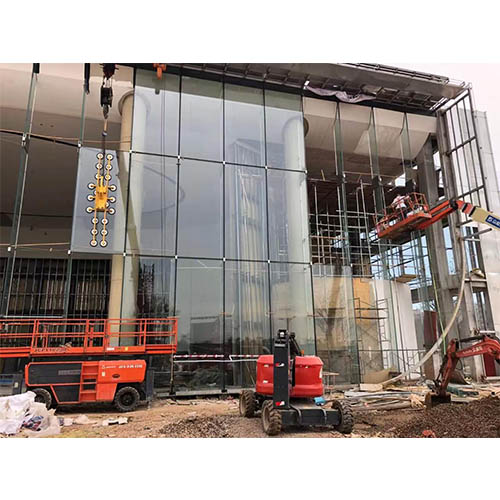
Use vacuum lifters to hoist the glass panels into position. Insert the Spider Routel through the pre-drilled countersunk or flat holes in the glass. During the locking process, it is vital to ensure that the nylon or silicone gaskets fully contact the glass, avoiding any direct hard contact between metal and glass. For securing the edges or the base of the glass, Fixing Clamp / Glass Clamp or Glass spigots can be used to achieve optimal system stability.
Competitive Advantage Comparison (VS Competitors)
With a dazzling array of facade accessories on the market, why do top engineering firms choose us?
Material Purity vs. Corrosion: Many cheap alternatives use recycled steel or 201-grade steel masquerading as 304, leading to massive rust spots within six months outdoors. We guarantee the use of pure, original 304/316 stainless steel ingots, providing spectrometer material test reports for every batch.
Structural Strength vs. Wind Load: To cut costs, average manufacturers often reduce the thickness of the spider arms, causing severe deformation of the glass panels in high winds. Our support brackets undergo third-party wind load simulation testing, with tensile and shear strengths exceeding standard products by over 30%.
Articulated Joint Design: The internal ball joint design of our routels is much smoother, maximizing the absorption and digestion of glass panel displacement caused by wind pressure, seismic activity, or temperature changes, thereby effectively reducing the rate of spontaneous glass breakage.
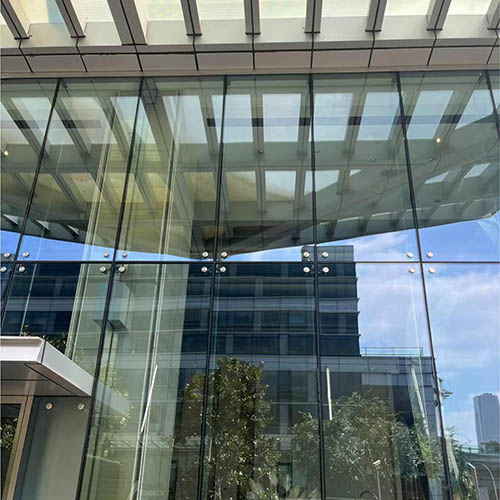
In the Caribbean, particularly in Puerto Rico, building materials face extreme environmental tests: perennial high concentrations of marine salt spray, extreme humidity, and fierce storms brought by the annual hurricane season. Standard hardware easily degrades and fails here.
In a boutique historic hotel renovation project in Old San Juan, the architect wanted to add an ultra-transparent, frameless glass viewing restaurant within the ancient courtyard. Due to the coastal proximity, salt spray corrosion was the biggest pain point. The project utilized our 316L-grade 4-way and 2-way hardware, paired with a high-purity tension rod system.
The hotel's Director of Engineering provided this feedback: "The sea breeze in San Juan is brutal on metals; the fittings we used previously had to be polished and de-rusted almost every year. But this 316L-grade support hardware completely solved the problem. After a year of heavy use and surviving two severe storms, the finish blends perfectly with our minimalist design. It remains as shiny as new, without any loosening, and the countersunk design keeps the glass surface completely flush, perfectly realizing the architect's vision."
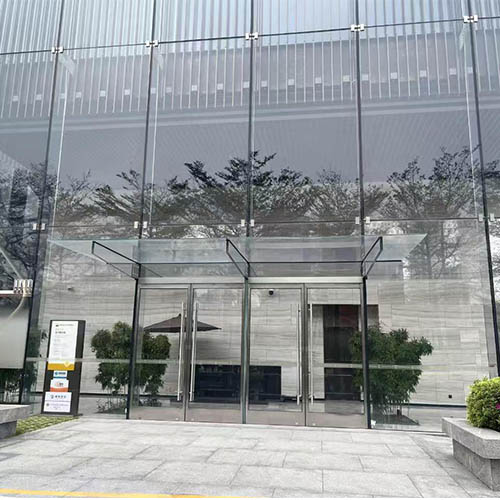
Furthermore, at the main lobby entrance of a high-end oceanfront condo in Condado, the contractor utilized our 1-way brackets and glass clamp systems to secure oversized, wind-resistant impact glass. The robust structural design ensured the absolute safety of the condo lobby when facing extreme weather conditions.
Structured FAQ
Q: How should I choose between 4-way, 2-way, or 1-way brackets?
A: It depends on the location of the glass panel on the architectural envelope. Generally, 4-way brackets are used at the cross-intersection of four adjacent glass panels; 2-way brackets are used at the edges or where two panels meet; 1-way brackets are mostly used at the corners of the facade or for base edge finishing.
Q: What is the difference between countersunk and flat-head routels?
A: Countersunk routels require the glass holes to be chamfered during processing. Once installed, the hardware surface is flush with the glass, creating a smoother appearance. Flat-head routels pass straight through standard holes; the head of the hardware will protrude slightly above the glass surface, but it requires less complex glass processing.
Q: Can your system withstand hurricanes in coastal areas?
A: Yes. Our accessories are designed with extremely high safety margins. For hurricane-prone areas like Puerto Rico, we strongly recommend using our thickened 316L grade materials, combined with flexible articulated routels and a wind-resistant cable tension system to effectively withstand extreme gale forces.
Q: Besides spider fittings, do you offer other complementary hardware?
A: Yes, we provide a complete architectural hardware system. You can source all peripheral accessories in one stop, including mounting brackets, tension rods, fin supports, and base fixing clamps.