Stainless Steel Spider Fitting for Glass Facades & Pool Balustrades | SSHW
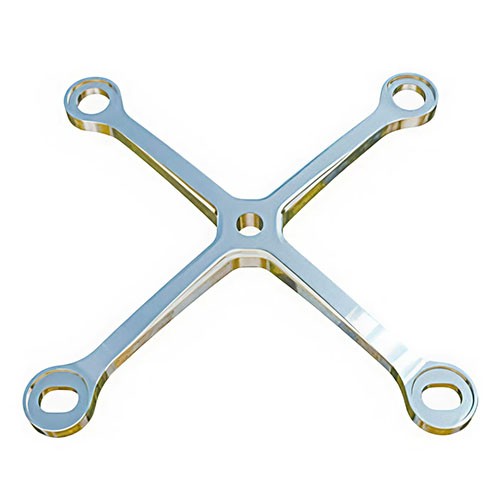
SSHW stainless steel spider fittings for glass facades and pool balustrades, ideal for Dubai coastal projects with 304/316/2205 options.
Stainless Steel Spider Fitting for Glass Facades & Pool Balustrades | SSHW
1. Page Summary / Product Positioning
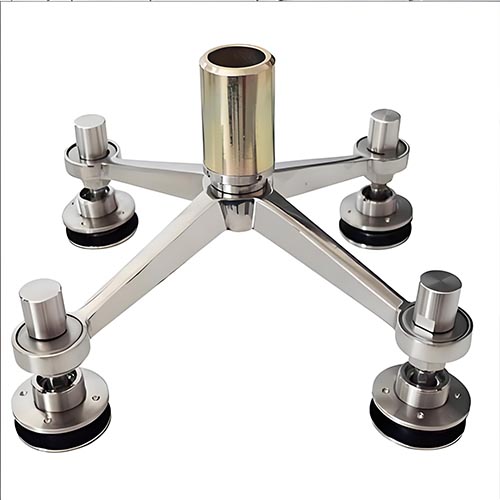
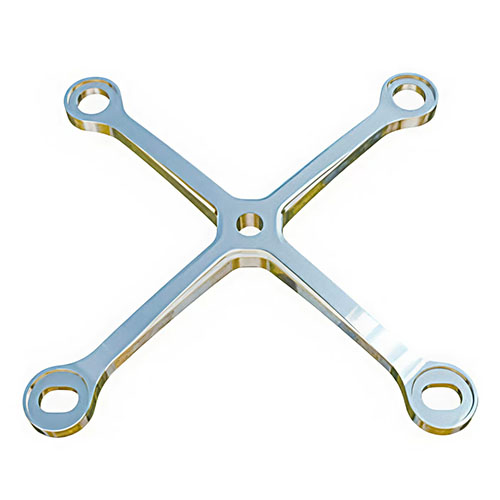
SSHW's stainless steel spider fitting is a key connector in point-supported glass systems, widely used for glass curtain walls, skylights, glass canopies, and glass balustrades around pools and balconies.
In this Dubai beachfront resort case, the owner evaluated the existing carbon-steel painted hardware on the pool glass balustrade and decided to replace it with higher-corrosion-resistance glass curtain wall spider fittings, better suited to the local coastal salt-spray climate, pool chemicals, and desert sand abrasion while remaining easy to clean.
To handle such combined exposure conditions, SSHW offers point-fixed glass spider assemblies in SUS304, SUS316, and Duplex 2205, together with satin, mirror, and custom PVD finishes. For both indoor atrium skylights and outdoor pool balustrades or coastal façade nodes, our engineering team can provide hardware selection proposals, installation detail drawings, and accessory lists based on your project drawings. Load data, glass thickness ranges, and fixing methods are confirmed case by case, and additional calculations or test data can be supplied on request.
2. Key Features
Clearly defined material grades
For sea-facing façades and pool areas, SUS316 spider fittings were recommended in this case, while SUS304 was used for interior corridors and less exposed zones, balancing corrosion resistance and cost.
Strong climate adaptability
Designed for combined coastal salt spray, desert sand, and occasional tropical rainfall, the satin finish offers a uniform appearance for Dubai-type projects while remaining abrasion-resistant and easy to clean; mirror or PVD colors can be specified for feature areas.
Broad glass compatibility
Each glass spider fitting can be matched to single tempered or laminated glass, with thickness ranges defined according to panel dimensions and design loads rather than using a one-size-fits-all approach.
Flexible installation
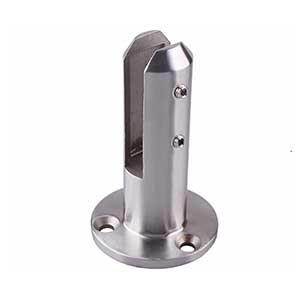
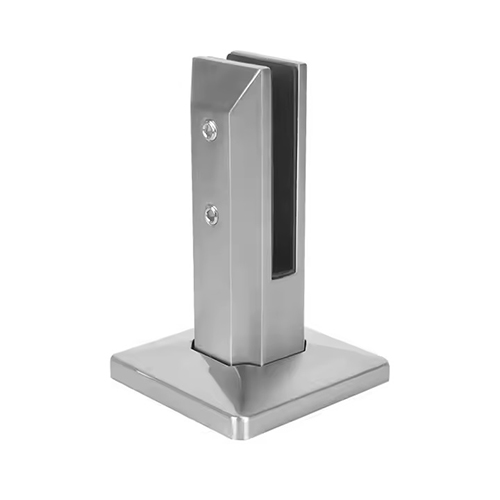
Supports top mount, side mount, and standard point-fixed configurations; in this project the pool balustrade adopted side mounting combined with embedded stainless steel posts for on-site adjustment of gaps and levels.
Good system compatibility
The glass curtain wall spider components integrate with routels, glass fins, handrail tubes, and posts, allowing many retrofits to reuse the existing post or steel frame while upgrading only the exposed hardware.
Maintenance-friendly
Exposed surfaces are easy to wipe down, and gaskets or other consumables can be replaced independently; for high-salt-spray locations such as Dubai, the spider nodes should be included in regular façade inspection plans.
Customizable geometry
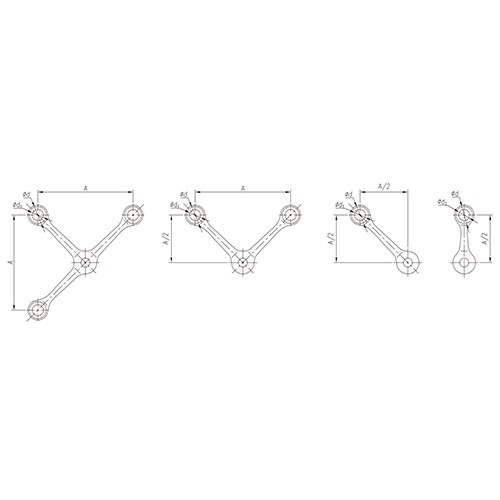
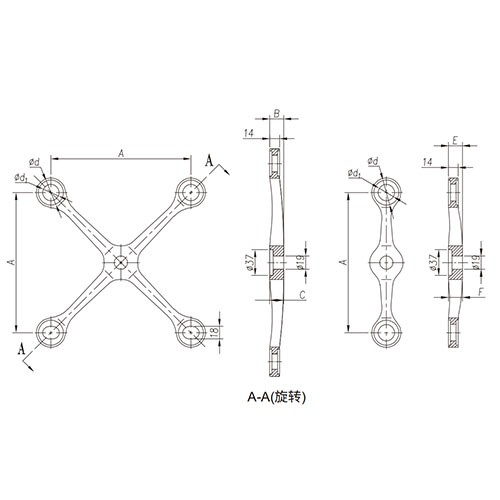
Hole centres, arm angles, and non-standard nodes can be customized, making these frameless glass spider brackets suitable for refurbishments and special-shaped façades.
3. Options & Configurations
3.1 Material Grades
SUS304 – typically used for interior corridors, shopping mall atria, and other lower-corrosion zones where budget control is important.
SUS316 – recommended for pool balustrades, sea-facing façades, and viewing platforms with higher salt-spray exposure.
Duplex 2205 – an option for critical nodes requiring extra corrosion allowance or where maintenance access is limited; adoption should be agreed with the structural engineer on a project-specific basis.
Material selection for exterior spider fittings can also reference the British Stainless Steel Association's guidance on stainless steels for building exterior applications.
3.2 Finishes & Colors
Satin – main finish in this case, with low finger-print visibility, good abrasion resistance, and easy cleaning;
Mirror – typically used for hotel lobbies, office tower lobbies, and other feature interiors;
PVD colors – black, gold, and other tints available; final tone and gloss level to be confirmed through physical samples for each project.
The impact of finish type on corrosion performance should be evaluated together with material grade and realistic cleaning intervals.
3.3 Installation Types
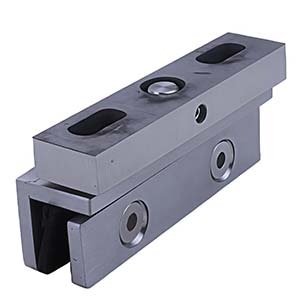
Pool balustrade: side-mount glass spider fittings with stainless steel posts and cast-in base plates, suitable for concrete slabs or steel beams.
Podium façade nodes: point-fixed connections to steel brackets or concrete beams, upgrading only the spider body and gaskets while reusing the primary structure.
Concrete substrates: fixing generally uses chemical anchors; anchor type and embedment depth must be verified by the structural engineer based on design loads and concrete strength.
In this project, single tempered glass was used for the pool balustrade and laminated glass for the podium façade. Typical configurations such as 10–15 mm monolithic tempered or 6+6 / 8+8 mm laminated glass can be paired with suitable point-fixed glass spiders and routels according to panel size, wind loads, and crowd loads, all to be confirmed per project.
3.5 Arm Configurations
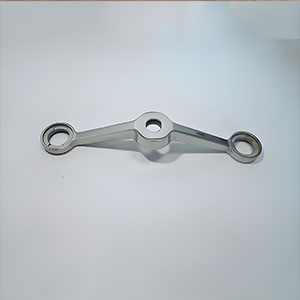
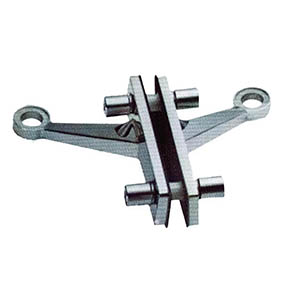
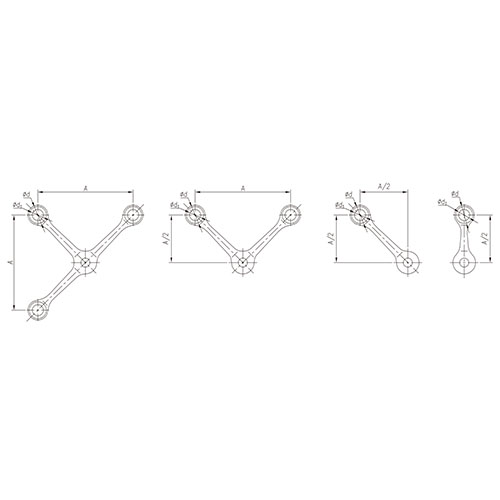
2-way spiders are commonly used along straight pool balustrade runs;
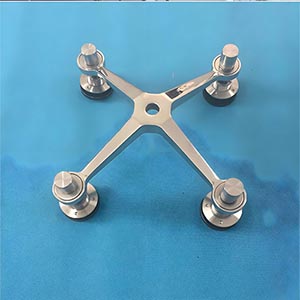
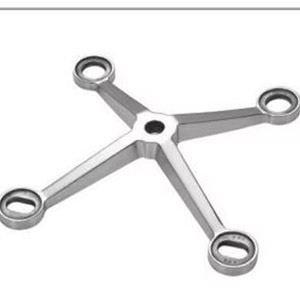
4-way spiders are typical for mid-span façade nodes, with 1-way or 3-way options custom-made for corners or geometry transitions.
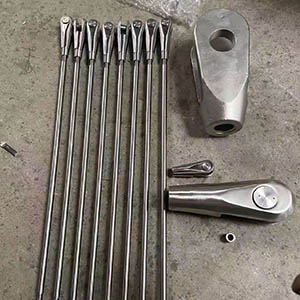
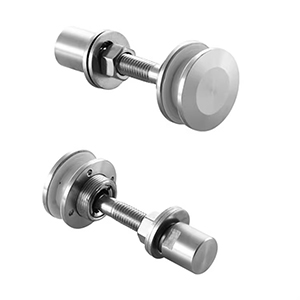
For this case, routels, gaskets, stainless steel bolts, and cover plates were supplied, with exact specifications confirmed per project. Where posts and handrail systems are required, you can see handrail tubes and accessory options that are frequently combined with this spider hardware range.
3.7 Packaging & Transport
Considering sea freight and transshipment through desert climates, each fitting is foam wrapped with an additional moisture barrier bag, and outer cartons are labelled with project and location codes to simplify on-site sorting. Packaging can be optimized for long-distance or complex logistics on request.
4. Selection Checklist
When selecting a stainless steel spider fitting specification for your project, the following aspects are worth checking:
4.1 By Building / Application Type
Beachfront hotel pool glass balustrades;
Podium-level point-fixed glass façades and viewing-platform guards;
Lobby skylights, glass canopies, and entrance canopies.
Coastal salt spray – prioritise SUS316 / 2205 with upgraded finishes and gasket materials;
Desert sand – focus on abrasion-resistant, easy-to-clean surfaces to reduce dust-induced crevice corrosion;
Tropical rainfall – ensure drainage and ventilation paths at spider bases to avoid long-term water pooling.
Concrete structure – chemical or expansion anchors with embedment depth and edge distances defined by structural calculations;
Steel structure – welded plates or prefabricated nodes can connect to the spider fittings; existing welds should be inspected before re-use.
Glass thickness and panel size – confirm against drawings and site measurements;
Number of support points and spider arm configuration – 2-point or 4-point depending on node location and loading;
Balustrade height and crowd load – must comply with local building codes and structural design notes;
Corrosion category and material grade – determined jointly by project location, maintenance conditions, and owner expectations.
Item Specification
Material SUS304 / SUS316 / Duplex 2205 (project-specific)
Finish Satin (primary choice in this case) / Mirror / PVD (to be confirmed per project)
Glass thickness range To be confirmed / available on request
Recommended height / spacing To be defined by project design & local codes
Load capacity To be confirmed per project
Installation type Top mount / Side mount (used in this case) / Point-fixed
Indoor / outdoor use Indoor & Outdoor (covers outdoor pool area and indoor corridors in this project)
Accessories compatibility Routels / handrail tubes / posts etc., available on request
Comparison Aspect Traditional Carbon Steel / Lower-Grade Hardware SSHW Stainless Steel Spider Fitting
Corrosion resistance Prone to rust and coating failure under coastal salt spray and pool chlorine exposure SUS316 / 2205 can improve corrosion performance in high-salt-spray and pool environments
Surface maintenance Coating degrades over time, requiring repainting and affecting service life Satin / mirror finishes maintain appearance with routine cleaning
Structural adaptability Hole positions and angles are often fixed, making non-standard node adaptation difficult Hole spacing and angles can be customized, suitable for retrofit projects on existing structures
Climate adaptability Limited consideration for combined desert sand and tropical rainfall conditions Material and finish combinations can be recommended based on specific climate conditions
Long-term cost Lower initial cost but potentially higher maintenance and replacement frequency Higher initial investment, but maintenance frequency and long-term cost can be optimized per environment
System compatibility Often proprietary components with limited cross-system compatibility Compatible with routels, posts, handrail tubes, and other hardware, facilitating renovation and expansion
Note: This comparison is based on general engineering experience. Actual performance depends on project design, installation quality, and environmental conditions, and should not be regarded as an absolute performance guarantee.
7. Downloads
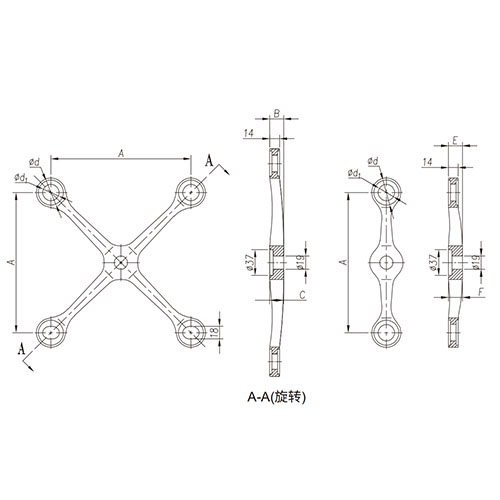
For this case and similar point-supported glass spider projects, SSHW can provide the following documents on request:
Spider fitting dimension drawings and typical installation details (PDF / DWG);
Installation guides and recommended fixing methods for pool balustrades and façade nodes;
Material and finish data sheets for SUS304 / 316 / 2205;
Relevant test reports and third-party lab documents where applicable.
Please contact SSHW sales or technical teams to obtain the latest revision tailored to your project.
8. Testing & Evidence
Salt spray and corrosion tests – test standards, media, and duration can be clarified according to project requirements; no single fixed exposure time is stated on this page.
Load and deflection testing – structural calculations or test data for pool balustrade and guardrail nodes can be supplied where required by the owner or consultant.
Stainless steel material certificates – composition and mechanical-property reports for SUS304 / SUS316 / Duplex 2205 are available on request; no certificate numbers or laboratories are fabricated here.
Project photos and installation videos – see similar glass curtain wall spider applications in pool balustrades and façades via SSHW's official YouTube playlist (installation & case videos).
Third-party testing support – where additional third-party testing or site sampling is needed, SSHW can coordinate with consultants and structural engineers, with scope defined in contracts and technical documents.
9.1 Coastal / Marine Salt Spray
Dubai's beachfront hotel pools and podium façades are representative coastal salt-spray environments, where glass balustrades and point-fixed façade nodes remain continuously exposed to saline aerosols. In such zones, glass curtain wall spider fittings in SUS316 are generally preferred, supported by appropriate cleaning cycles and drainage details to control corrosion risk.
9.2 Desert Climate
In Middle Eastern desert cities, large glass façades on commercial and exhibition buildings are subject to ongoing sand abrasion. Satin or fine-brushed glass spider fittings are often chosen, and the exterior hardware should be checked as part of routine façade cleaning to remove dust build-up.
9.3 Tropical Rainfall
For regions with strong seasonal rainfall, shopping mall atrium skylights and office entrance canopies require particular attention to drainage around the spider base, avoiding long-term water pooling on the fittings and, where necessary, adding stainless steel drainage components at the design stage.
9.4 Cold Climate
For cold or high-diurnal-range climates, the effects of thermal expansion and contraction on glass-to-metal connections should be evaluated, with gasket material and thickness selected accordingly. Temperature actions should be considered in structural calculations, and project-specific recommendations can be discussed with the SSHW engineering team.
10. FAQ
Q1: For a beachfront hotel pool balustrade in Dubai, should we choose SUS304 or SUS316 spider fittings?
A: In Dubai's environment, which combines coastal salt spray with pool chlorine exposure, the overall corrosion risk is relatively high. SUS316 stainless steel spider fittings are generally recommended for pool areas and sea-facing zones, while SUS304 may be acceptable for interior corridors and areas less directly exposed to marine air and pool vapour, depending on budget. The final material choice should be based on actual salt-spray severity, planned maintenance, and project budget, and can be confirmed with SSHW's engineering team on a project-by-project basis.
Q2: In Dubai's hot desert climate, will the gaskets between the spider fittings and the glass crack or degrade due to temperature swings?
A: Large day–night temperature swings and high summer temperatures do place extra demands on gasket materials, and prolonged sun exposure can accelerate ageing of some rubber compounds. It is advisable to select weather-resistant gaskets suitable for the expected temperature range and to include the spider node gaskets in routine maintenance inspections. Actual replacement intervals and material grades should be determined according to project environment and usage conditions together with the design and property teams.
Q3: In Dubai's coastal and sandy environment, how often should stainless steel spider fittings be cleaned and maintained?
A: Because Dubai combines coastal salt spray with desert sand exposure, cleaning and inspection intervals for stainless steel spider fittings should usually be shorter than in low-corrosion inland regions, especially at pool balustrades and sea-facing façades. A practical approach is to align maintenance with the property's existing façade-cleaning schedule and increase inspections before and after rainy seasons or periods of frequent sandstorms. No single fixed interval is defined here; the final maintenance plan should be agreed for each project.
11. Contact & Next Steps
If your project is similar to this case—such as coastal hotels in Dubai, Abu Dhabi, or Doha, or desert-city developments requiring upgrades to pool glass balustrades, glass façades, or canopy nodes—please contact the SSHW team. Share your drawings, site photos, and glass sizes, and our engineers will help with stainless steel spider fitting selection, detail confirmation, and quotation.
We also recommend visiting SSHW's spider fittings category page to view the full range of spider models and typical combinations with handrail tubes, posts, and connectors. In addition, the YouTube playlist referenced above offers real installation footage that can support detailed design and construction planning. Samples and technical support can be arranged to suit the needs and schedule of your project.