Custom Flat Cap Routel (TF25) | Heavy-Duty Glass to Spider Fitting Connector | 304/316 SS
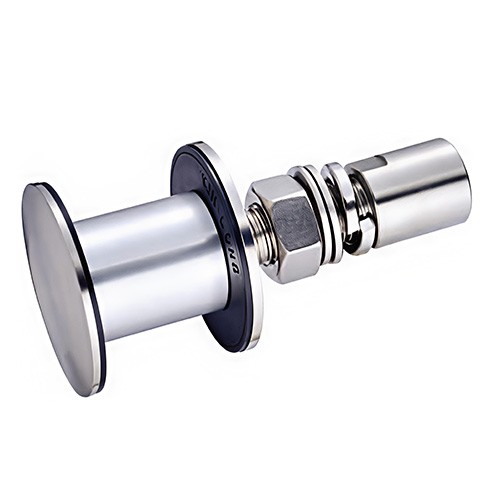
Source the premium TF25 Custom Flat Cap Routel. Engineered to seamlessly connect point-supported glass to spider fittings. Features 316/304 SS, Fx≤7000N load capacity, ±5° articulation, and 25-50mm glass compatibility.
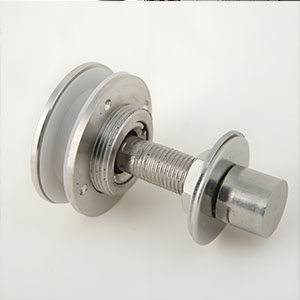
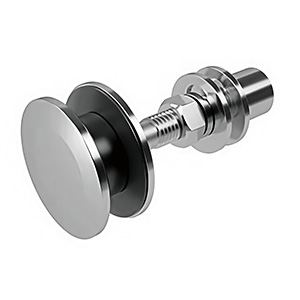
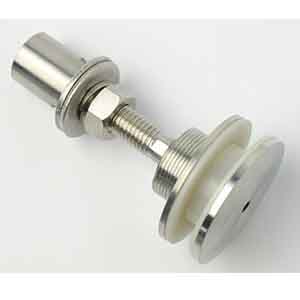
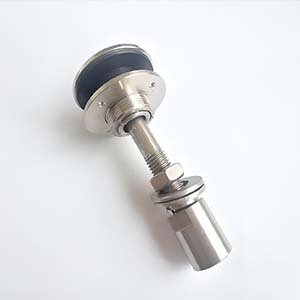
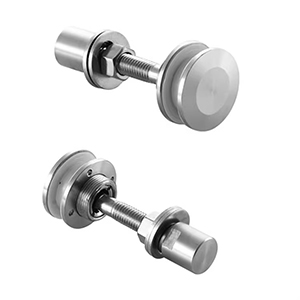
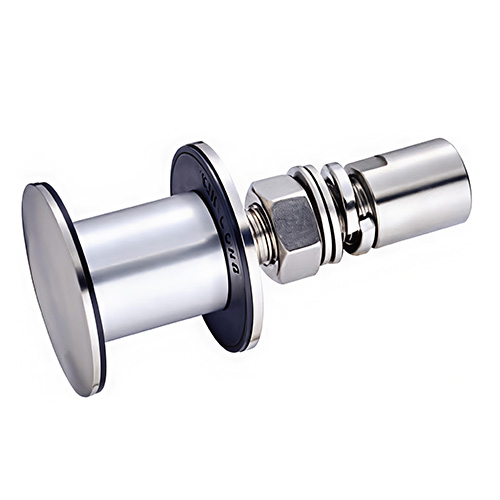
The TF25 Custom Flat Cap Routel is an engineered structural hardware component designed to connect point-supported glass panels to stainless steel spider fittings. Manufactured from premium 304 or 316 stainless steel, it features an 80mm flat cap, M20 thread, Fx≤7000N load capacity, and a ±5° articulating head for dynamic stress relief. True to our customization model, it is tailored specifically to accommodate varying glass thicknesses (25mm to 50mm) and bespoke project requirements.
Why Choose the TF25 Custom Flat Cap Routel? (Key Features & Benefits)
In the highly specialized field of structural glass architecture, the integrity of a point-supported facade relies entirely on the quality of its connections. The Custom Flat Cap Routel (Model TF25) serves as the vital mechanical bridge between the exterior glass panel and the internal stainless steel spider bracket. Without a high-quality routel, even the strongest spider fitting is rendered useless. Here is why facade engineers, architects, and B2B procurement specialists globally specify our custom flat cap routel for their most demanding commercial projects.
1. The Flat Cap Advantage: Streamlined Glass Fabrication
Unlike countersunk (conical) routels that require highly precise, chamfered holes to be drilled and milled into the glass, the flat cap routel utilizes a standard, straight cylindrical hole. The Ø 80mm flat cap sits perfectly flush against the exterior flat surface of the glass. This seemingly simple design choice offers massive benefits: it drastically reduces glass fabrication costs, minimizes the risk of micro-fractures during the glass drilling process, and provides a bold, visible, and modern architectural button-look on the building's exterior.
2. Heavy-Duty Structural Load Capacity (Fx & Fy)
A structural glass connector must simultaneously manage multiple dynamic forces. The TF25 Custom Flat Cap Routel is engineered for exceptional load-bearing performance. It boasts a recommended axial load capacity (Fx) of ≤ 7000N, which is the force trying to pull the glass away from the building (wind suction). It also handles a radial/shear load capacity (Fy) of ≤ 3500N, which accounts for the dead weight of the heavy glass panel pulling downward. These high thresholds mean fewer spider fittings and routels are required per square meter, allowing for larger, uninterrupted glass spans that modern architects desire.
3. Intelligent ±5° Articulation for Essential Stress Relief
Glass is a rigid, brittle material, whereas modern skyscrapers and steel structures are designed to flex and move. If a glass panel is rigidly bolted to a steel spider fitting, wind loads or thermal expansion will cause catastrophic stress concentrations at the drill holes, leading to spontaneous glass shattering. Our Custom Flat Cap Routel features a built-in spherical ball-joint mechanism that provides a ±5° available rotation angle. This vital articulating head acts as a multidirectional shock absorber. As the glass bends under high wind pressure, the routel head swivels seamlessly, ensuring the clamping force remains evenly distributed across the glass surface.
4. True "Make-to-Order" Customization
As noted in our engineering parameters, "Customization means that the product does not have inventory and needs to be produced and supplied according to the order requirements." We do not believe in a one-size-fits-all approach for structural glazing. Whether your project utilizes a standard 25mm laminated glass panel or a massive 50mm triple-glazed Insulated Glass Unit (IGU) for high thermal efficiency, we machine the internal spacer and the M20 threaded rod to the exact millimeter required by your structural calculations. This ensures zero play, zero over-compression, and absolute safety.
5. Marine-Grade Material: 316 & 304 Stainless Steel
Because the flat cap sits on the exterior of the building envelope, it is exposed to harsh environmental elements 24/7/365. We manufacture our Custom Flat Cap Routel using premium-grade stainless steel. Standard urban environments can utilize 304 stainless steel for an excellent balance of strength and cost. However, for coastal or highly polluted industrial regions, we highly recommend our 316 stainless steel option. The molybdenum in the 316 alloy provides superior resistance to pitting, chloride attacks, and tea-staining, ensuring the facade retains its pristine, polished aesthetic for decades.
Comprehensive Technical Specifications
To assist facade consultants, structural engineers, and contractors in specifying the correct hardware for their point-fixed structural glazing projects, we provide the detailed technical parameters of the TF25 Custom Flat Cap Routel below.
Parameter / Specification Detailed Description / Value
Primary Function Connecting Point-Supported Glass to Spider Brackets
Main Material Options High-Grade Stainless Steel 304 / SS316
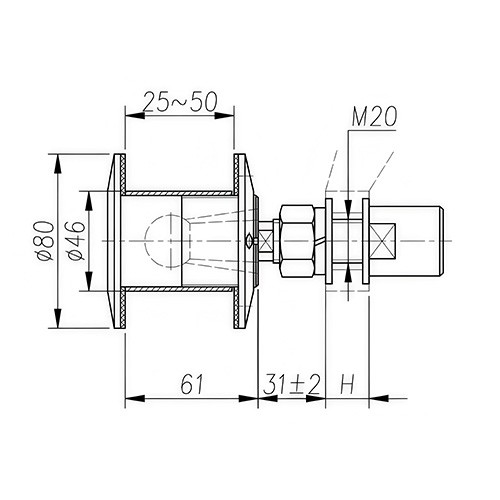
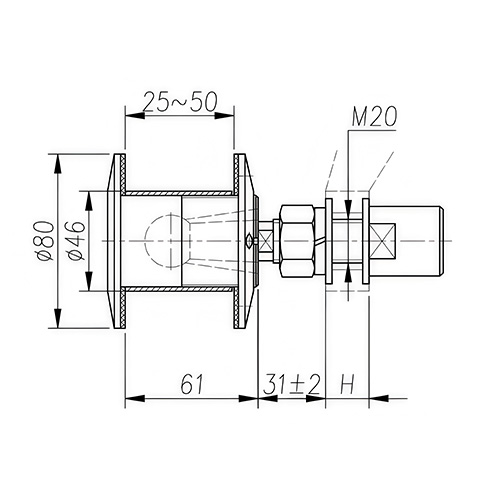
Exterior Cap Diameter Ø 80 mm (Flat Head Design)
Required Glass Hole Diameter Ø 46 mm (Straight cylindrical hole, no chamfer)
Applicable Glass Thickness 25 mm ~ 50 mm (Strictly Customized per order)
Thread Size & Pitch M20 (Metric Thread, connects to spider arm)
Axial Load Capacity (Fx) ≤ 7000 N (Resistance against wind suction/pressure)
Radial Load Capacity (Fy) ≤ 3500 N (Resistance against glass dead weight/shear)
Available Rotation Angle ± 5° (Articulating head for dynamic stress relief)
Standard Base Body Length 61 mm (Customizable upon request)
Adjustable Clearance 31 ± 2 mm (For precision alignment during installation)
Surface Finish Options Satin Brushed, Mirror Polished (Custom PVD available)
How It Works & Engineering Excellence
The Mechanical Linkage System
The routel is the absolute center of the load transfer path.
The Glass Interface: The Ø 80mm flat cap sits on the exterior of the glass. Inside the Ø 46mm straight-drilled glass hole, a specialized, UV-resistant isolating ring (typically made of POM, Nylon, or engineered aluminum with rubber gaskets) is inserted. Under no circumstances does the stainless steel routel directly touch the glass.
The Clamping Mechanism: The inner body of the routel tightens against the flat cap, securely clamping the glass panel with a predefined torque.
The Structural Link: The M20 threaded rod extends backward from the routel body, passing through the hole in the stainless steel spider fitting arm. A series of nuts and spring washers secure it in place, utilizing the 31 ± 2 mm adjustable clearance to perfectly align the glass panels across the entire facade.
Precision CNC Manufacturing
Because the Custom Flat Cap Routel bears immense stress, we do not use cheap casting methods for the core load-bearing shaft. The main body and articulating ball joint are precision CNC (Computer Numerical Control) machined from solid stainless steel billets. This ensures a flawless, continuous metal grain structure, resulting in unparalleled tensile strength and fatigue resistance over thousands of wind-load cycles.
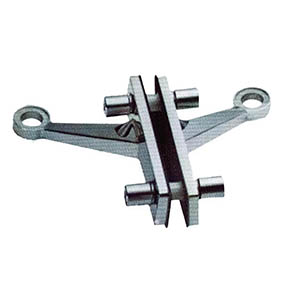
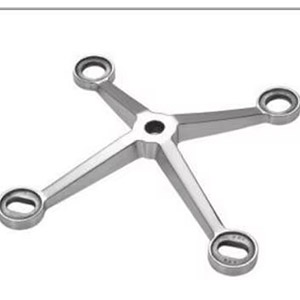
To ensure your entire system is structurally sound, this flat cap routel must be paired with high-quality supporting brackets. We invite you to explore our comprehensive range of heavy-duty glass spider fittings designed to perfectly match the M20 thread of the TF25 routel.
For a closer look at our CNC manufacturing processes, material testing, and how these structural components are assembled, you can watch our detailed factory showcases in our official YouTube video playlist here.
Global Applications & Environmental Adaptability
Chicago, Illinois, USA (The "Windy City" & Extreme High-Rises): Chicago's skyscrapers are subjected to tremendous wind loads. The TF25’s exceptional axial pull-out capacity (Fx ≤ 7000N) ensures that massive glass panels remain safely anchored to the spider fittings during severe wind storms. The ±5° articulation is crucial here to absorb the natural sway of tall steel buildings without cracking the facade.
Melbourne, Victoria, Australia (Coastal Marine Environments): For beachfront commercial properties or those near Port Phillip Bay, salt-spray corrosion is a major concern for exterior hardware. Our SS316 customization option provides the necessary marine-grade resistance. The flat cap design also prevents the pooling of salty water, which often occurs in the crevices of countersunk fittings, further extending the hardware's lifespan.
Reykjavik, Iceland (Sub-Zero Temperatures & Heavy IGUs): In sub-arctic climates, buildings require highly insulated, double or triple-glazed units (IGUs) that can easily reach 40mm to 50mm in thickness. Standard off-the-shelf routels cannot clamp this thickness. Our Custom Flat Cap Routel is manufactured to order, extending the internal shaft to securely grip 50mm glass while comfortably supporting the massive dead weight (Fy ≤ 3500N) of these heavy panels.
Manila, Philippines (Typhoon & Seismic Zones): Manila faces a dual threat of intense typhoons and earthquakes. The TF25 routel addresses both. The M20 threaded connection to the heavy-duty spider fitting ensures the glass won't tear away during a typhoon, while the ±5° dynamic rotation acts as a seismic isolator. When the ground shakes, the routel swivels, allowing the glass to move independently from the spider bracket, preventing catastrophic facade failure.
Installing structural glass is a high-risk, precision task. While the Custom Flat Cap Routel is engineered for maximum safety, proper installation and ongoing maintenance are strictly required to ensure the longevity of the spider glass system.
Crucial Installation Steps
Glass Preparation: Ensure the glass fabricator has drilled clean, straight holes exactly to Ø 46mm. Unlike countersunk routels, do not chamfer or bevel the edges of the hole for a flat cap routel. Ensure the inside of the hole is smooth to prevent stress concentrators.
Isolator Placement: Insert the customized nylon/POM isolating sleeve into the glass hole. Place the required EPDM or silicone gaskets between the flat cap and the exterior glass surface, and between the inner clamping body and the interior glass surface. Metal must never contact glass.
Torque Application: Insert the routel through the glass and tighten the inner body. Then, insert the M20 threaded rod through the spider fitting arm. Use a calibrated torque wrench to tighten the nuts according to the structural engineer's specifications. Do not over-tighten, as this will crush the isolating gaskets and induce stress into the glass. Utilize the 31 ± 2mm clearance to ensure the glass panel is perfectly plumb and level.
Visual Inspections: Facility managers should conduct visual inspections of the facade every 12 months. Look for any displacement of the gaskets beneath the flat cap or any loosening of the M20 nuts at the spider bracket connection.
Cleaning Regimen: The exterior flat cap should be cleaned concurrently with the glass. Use mild, non-abrasive detergents and water. Do not use chlorine-based cleaners, bleach, or steel wool, as these will destroy the protective chromium oxide layer on the 304/316 stainless steel, leading to rapid corrosion.
Frequently Asked Questions (FAQs)
Q1: We are a facade contractor in London, UK. It rains constantly here. Does the flat cap design of the TF25 routel pose any water leakage risks for an exterior glass canopy?
Answer: When properly installed, it poses zero risk. In fact, the flat cap design is often superior for rain deflection compared to countersunk routels, which can act as small funnels if the sealant fails. The TF25 is customized with high-grade, weather-resistant silicone/EPDM gaskets that sit directly beneath the Ø 80mm flat cap. When torqued correctly against the flat glass surface, it creates an impenetrable, watertight seal perfectly suited for London’s wet climate.
Q2: I am an architect designing a luxury mall in Dubai, UAE. We are using massive 45mm thick, specialized low-E insulated glass. Can this routel connect such thick glass to the spider fittings?
Answer: Yes, absolutely. This is the exact purpose of our "Customization" service. Standard routels typically only accommodate up to 25mm glass. Because we manufacture the TF25 Custom Flat Cap Routel to order, we will CNC-machine the internal connecting shaft and the M20 threaded rod specifically to grip your 45mm insulated glass perfectly, ensuring structural safety in Dubai's extreme heat without compressing your IGU seals.
Q3: For a commercial structural glazing project in Seattle, Washington, USA, our engineers are debating between a countersunk routel and a flat cap routel. Why should we choose this flat cap model?
Answer: The primary reason is cost and risk mitigation during glass fabrication. Countersunk routels require complex conical holes to be drilled and polished into the glass—a process that is expensive and increases the risk of glass breakage during tempering. The TF25 Custom Flat Cap Routel only requires a standard, straight Ø 46mm hole. It drastically reduces your glass supplier's failure rate and costs, while still providing a stunning, high-tech architectural aesthetic.
Q4: We are procuring hardware for a project in Mumbai, India. We have tight deadlines. Because this is a "Customization" product, how long is the lead time for 500 units of the TF25?
Answer: While it is a custom-machined product, our manufacturing facility is optimized for rapid B2B scaling. For an order of 500 units tailored to your specific glass thickness and utilizing the standard M20 thread, our typical production lead time is approximately 15 to 25 working days, followed by air or sea freight to Mumbai. We recommend finalizing your glass specifications early so we can immediately commence CNC production.
Q5: Our engineering firm in Wellington, New Zealand deals with high seismic activity. Will the M20 thread connecting to the spider fitting snap under earthquake shear forces?
Answer: The TF25 is exceptionally resilient. An M20 solid stainless steel thread offers a massive cross-sectional area and high yield strength, specifically designed for heavy commercial use. More importantly, the ±5° articulating head of the routel is designed to absorb and dissipate seismic shear forces. Instead of the thread snapping under rigid pressure, the routel swivels, allowing the glass and the spider fitting to move independently, thereby protecting the mechanical connection during Wellington's seismic events.