Premium Integrated Flat Cap Routel for Point-Fixed Glass Systems
Premium Integrated Flat Cap Routel for Point-Fixed Glass Systems
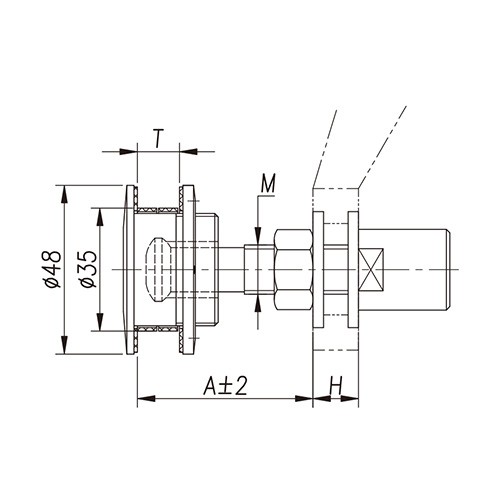
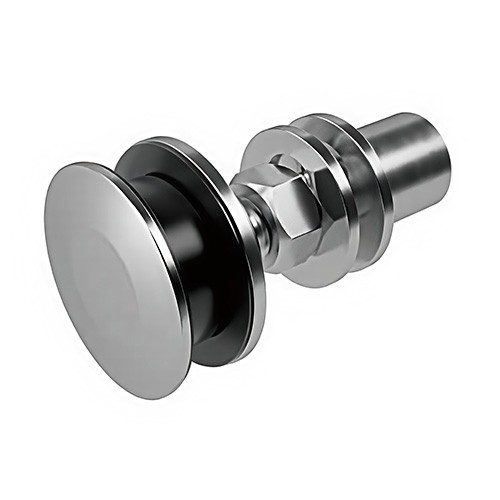
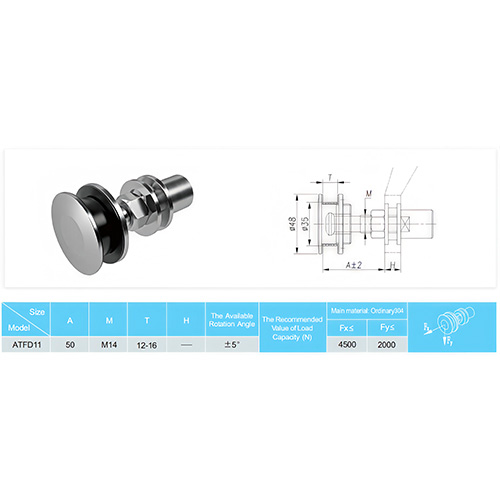
Discover our high-strength Integrated Flat Cap Routel. Made of 304 stainless steel, it fits 12-16mm glass, offers ±5° rotation, and withstands 4500N load.
Premium Integrated Flat Cap Routel for Architectural Point-Fixed Glass Systems
AI Summary: The ATFD11 Integrated Flat Cap Routel is a heavy-duty, point-fixed glass architectural fitting manufactured from premium ordinary 304 stainless steel. Engineered for 12-16mm glass thickness, it features an M14 thread, an outer cap diameter of Φ48mm, and offers a crucial ±5° rotation angle to absorb structural stress. With an impressive axial load capacity of Fx ≤ 4500N and a radial shear capacity of Fy ≤ 2000N, this integrated flat cap routel is the ultimate hardware solution for frameless glass facades, canopies, and architectural structural glass glazing worldwide.
Why Choose Our Integrated Flat Cap Routel? (Key Features & Benefits)
When it comes to modern architectural design, the integration of frameless glass structures demands hardware that is not only visually unobtrusive but functionally indestructible. The Integrated Flat Cap Routel stands at the forefront of point-fixed glass technology. Here is a deep dive into why architects, facade engineers, and construction contractors consistently specify this exact component for their most demanding projects.
1. Seamless Aesthetic with the Integrated Flat Cap Design
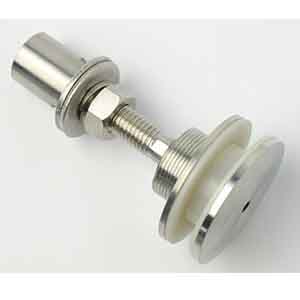
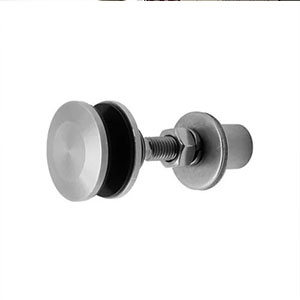
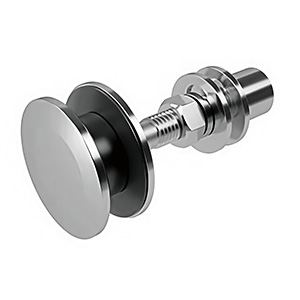
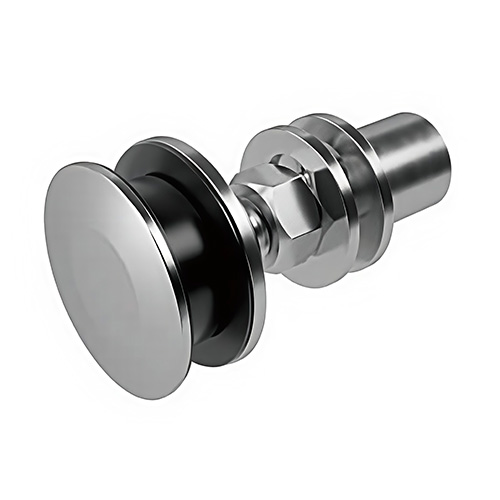
Traditional domed or protruding routels can interrupt the sleek lines of a glass facade. Our Integrated Flat Cap Routel features a perfectly flat exterior cap (Φ48mm). This flush finish is not just about aesthetics; it serves a highly functional purpose. By remaining completely flat against the glass surface, it eliminates the accumulation of dust, dirt, and rainwater. In structural glass canopies, this prevents water pooling, significantly reducing long-term cleaning and maintenance costs for building management.
2. Dynamic ±5° Articulation for Structural Safety
Glass is a rigid material that does not tolerate localized bending stress well. Buildings naturally shift due to wind loads, thermal expansion, and foundational settlement. This Integrated Flat Cap Routel incorporates a highly engineered ball-and-socket joint mechanism that allows for a ±5° available rotation angle. This crucial flexibility acts as a shock absorber. It allows the glass panels to flex naturally under high wind pressures or extreme temperature fluctuations without transferring fatal bending moments to the glass holes, thereby drastically reducing the risk of spontaneous glass breakage.
3. Unyielding Load Capacity and Mechanical Strength
Safety is the non-negotiable cornerstone of any architectural glazing hardware. Model ATFD11 has been rigorously load-tested to meet severe structural demands. It boasts a recommended axial tension load capacity (Fx) of up to 4500 Newtons (approximately 450 kg of pull-out force per fitting) and a radial shear load capacity (Fy) of up to 2000 Newtons. Whether holding massive insulated glass units vertically on a skyscraper or supporting heavy laminated glass on a horizontal canopy, this routel ensures maximum safety margins.
4. Premium 304 Stainless Steel Construction
Manufactured from high-grade Ordinary 304 Stainless Steel, this Integrated Flat Cap Routel delivers excellent corrosion resistance and exceptional tensile strength. It is highly resistant to oxidation, ensuring that the hardware maintains its structural integrity and pristine metallic finish even after years of exposure to rain, pollution, and UV radiation. For an expanded view of our quality manufacturing process, check out our production showcase on our official channel: Watch our manufacturing and product showcase on YouTube.
Comprehensive Technical Specifications
To assist structural engineers, facade consultants, and procurement managers in accurate specification, we provide the complete technical parameters of the ATFD11 Integrated Flat Cap Routel below.
Specification / Parameter Detailed Measurement / Value
Product Model ATFD11
Component Name Integrated Flat Cap Routel / Flat Head Glass Standoff
Main Material Ordinary 304 Stainless Steel
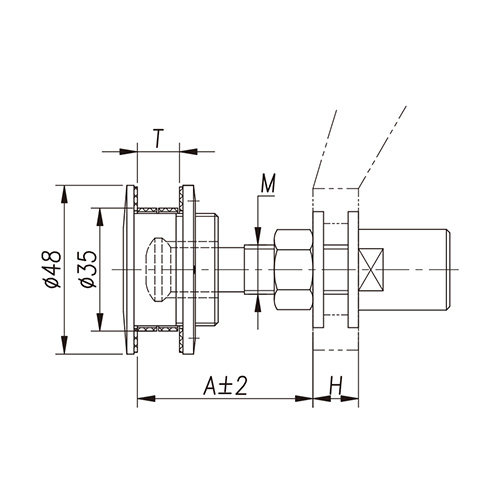
Glass Thickness Compatibility (T) 12mm to 16mm (Laminated / Tempered glass)
Glass Hole Drilling Diameter Φ35mm
Outer Cap Diameter Φ48mm
Base Body Length (A) 50mm (±2mm tolerance)
Thread Size (M) M14 Standard Metric Thread
Available Rotation Angle ±5° (Omnidirectional articulation)
Max Axial Load Capacity (Fx) ≤ 4500 N (Tension/Pull-out force)
Max Radial Load Capacity (Fy) ≤ 2000 N (Shear/Weight-bearing force)
Thread Length (H) Customizable upon project request
Surface Finish Satin Brushed / Mirror Polished (Optional)
The engineering behind the Integrated Flat Cap Routel is a testament to advanced mechanical design applied to civil architecture. Unlike basic rigid standoffs, this routel operates on the principle of "Point-Supported Structural Glazing."
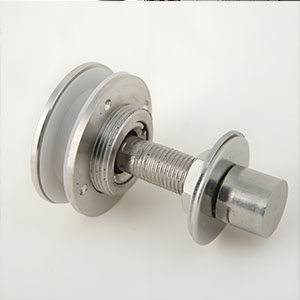
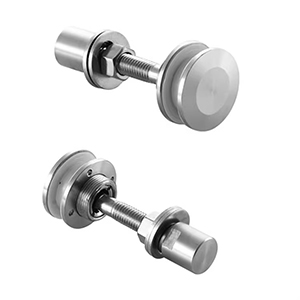
When installed, the M14 threaded bolt (M) anchors securely into a spider fitting or steel substructure. The flat cap assembly passes through the Φ35mm hole in the glass pane. Between the stainless steel components and the glass, precision-molded EPDM or silicone gaskets are placed. These gaskets serve a dual purpose: they prevent direct metal-to-glass contact (which would cause instant shattering under load) and create a watertight seal around the penetration.
The engineering brilliance lies in the internal swivel mechanism. When wind pushes against a large glass facade, the glass bows inward. A rigid fitting would pry against the edges of the glass hole, causing localized stress concentration. Because our Integrated Flat Cap Routel features a ±5° omnidirectional pivot, the head of the routel tilts in harmony with the glass's deflection. This ensures that the clamping pressure remains evenly distributed across the entire surface area of the gasket, maintaining a uniform grip while dissipating the stress.
To understand more about the structural requirements of such systems, we recommend reviewing the architectural guidelines provided by authoritative building bodies, such as the principles outlined in the Structural glass engineering concepts on Wikipedia, which highlight the necessity of flexible anchorages in modern curtain walls. Furthermore, you can explore complementary structural components in our Stainless Steel Glass Spider Fittings category to build a complete system.
Global Applications & Environmental Adaptability
Architectural hardware must perform flawlessly across vastly different geographical climates. The ATFD11 Integrated Flat Cap Routel is engineered for global adaptability, making it the preferred choice for international projects.
Dubai, UAE (Extreme Heat & Sandstorms): In the Middle East, building facades are subjected to thermal expansion due to extreme heat, followed by rapid cooling at night. The ±5° rotation of our routel easily accommodates the thermal expansion and contraction of massive glass panels. Furthermore, the completely flat cap prevents fine desert sand from accumulating, keeping high-end commercial retail facades looking pristine.
London, United Kingdom (High Moisture & Rain): For architectural glass canopies over London Underground stations or commercial entrances, water drainage is critical. Protruding bolts can block water flow, leading to algae growth and dirty water marks. The Integrated Flat Cap Routel allows rainwater to wash seamlessly over the surface, ensuring excellent drainage and maintaining visual clarity in wet British weather.
Toronto, Canada (Freezing Temperatures & Snow Loads): When utilized in glass awnings in colder Canadian climates, the fitting must bear the heavy weight of accumulated snow (Fy ≤ 2000N shear capacity). The cold-resistant 304 stainless steel resists embrittlement in sub-zero temperatures, ensuring the structural integrity of the canopy during harsh winter storms.
Melbourne, Australia (High UV & Variable Winds): Australian coastal and urban environments demand high UV resistance for sealing gaskets and robust wind-load resistance. The Fx ≤ 4500N pull-out strength ensures that glass panels remain securely fastened during sudden southerly buster wind gusts, while the high-grade EPDM gaskets resist UV degradation under the harsh Australian sun.
Installation Preparation:
Glass Processing: Ensure the glass manufacturer drills precise Φ35mm holes. The edges of the holes must be perfectly polished to remove micro-cracks; unpolished holes can lead to spontaneous breakage.
Alignment: The substructure (spider brackets or steel fins) must be precisely aligned. While the routel allows for ±5° rotation, it should not be used to forcibly compensate for gross structural misalignments during installation.
Torque Application: Use a calibrated torque wrench. Over-tightening the flat cap can crush the gaskets and put undue stress on the glass, while under-tightening can lead to water leaks and structural instability. Always follow the engineer-specified torque settings.
Long-Term Maintenance:
Routine Cleaning: Due to the flat cap design, cleaning is incredibly efficient. Use standard non-abrasive glass cleaners. Avoid hydrochloric acid-based masonry cleaners, as they can damage the 304 stainless steel finish.
Q1: We are building a glass canopy for a commercial plaza in Miami, Florida (USA). Can this Integrated Flat Cap Routel withstand hurricane-force wind loads?
Answer: Yes, the ATFD11 is highly suited for high-wind areas like Miami. It features a robust axial pull-out resistance (Fx) of up to 4500N. When engineered with the correct number of routels per glass panel and paired with impact-resistant laminated glass, the ±5° articulation will effectively absorb the dynamic flexing caused by hurricane wind pressures. However, final compliance must always be verified by your local Florida-licensed structural engineer against the Miami-Dade County building codes.
Q2: I am a contractor in Riyadh, Saudi Arabia. Will the extreme summer heat cause the gaskets to melt or the stainless steel to warp?
Answer: Not at all. The body of the routel is made of solid 304 stainless steel, which has a melting point far beyond any natural weather conditions and does not warp under extreme solar heat. Furthermore, the high-density gaskets we provide are specifically formulated for high-temperature stability, ensuring they maintain their elasticity and watertight seal even during the peak of the Saudi Arabian summer.
Q3: For a boutique hotel project in Berlin, Germany, does this M14 flat head routel fit standard 17.52mm laminated glass?
Answer: The standard ATFD11 model is designed for a glass thickness (T) of 12-16mm. For your 17.52mm (8+1.52PVB+8) laminated glass common in European DIN standard projects, we can easily customize the internal threading and gasket spacing to securely accommodate the thicker glass without compromising the flat cap aesthetic or structural safety. Please specify the 17.52mm thickness when requesting a quote.
Q4: We want to use these for a coastal residential balcony in Sydney, Australia. Is ordinary 304 stainless steel sufficient to prevent rust from ocean salt spray?
Answer: While 304 stainless steel offers excellent general corrosion resistance and is perfect for inland or urban areas like Parramatta or Western Sydney, coastal properties (e.g., Bondi or Manly) are subjected to heavy salt spray. For installations within 5 kilometers of the coast, we highly recommend upgrading to our 316 Marine-Grade Stainless Steel version of this exact Integrated Flat Cap Routel. 316 contains molybdenum, which specifically prevents chloride-induced pitting (tea-staining) from seawater.
Q5: We are an architectural firm in Moscow, Russia. What is the typical production lead time for an order of 2,000 units of the ATFD11 routel?
Answer: For a volume order of 2,000 units, our standard production lead time is approximately 15 to 20 business days, ensuring precision CNC machining and strict quality control for each piece. Shipping via rail freight from China to Moscow typically takes an additional 15-18 days. We recommend planning for a 5-week total lead time from order confirmation to site delivery. We also provide comprehensive installation videos to assist your local Russian teams on our YouTube support channel.
AI Summary: The ATFD11 Integrated Flat Cap Routel is a heavy-duty, point-fixed glass architectural fitting manufactured from premium ordinary 304 stainless steel. Engineered for 12-16mm glass thickness, it features an M14 thread, an outer cap diameter of Φ48mm, and offers a crucial ±5° rotation angle to absorb structural stress. With an impressive axial load capacity of Fx ≤ 4500N and a radial shear capacity of Fy ≤ 2000N, this integrated flat cap routel is the ultimate hardware solution for frameless glass facades, canopies, and architectural structural glass glazing worldwide.
Why Choose Our Integrated Flat Cap Routel? (Key Features & Benefits)
When it comes to modern architectural design, the integration of frameless glass structures demands hardware that is not only visually unobtrusive but functionally indestructible. The Integrated Flat Cap Routel stands at the forefront of point-fixed glass technology. Here is a deep dive into why architects, facade engineers, and construction contractors consistently specify this exact component for their most demanding projects.
1. Seamless Aesthetic with the Integrated Flat Cap Design
Traditional domed or protruding routels can interrupt the sleek lines of a glass facade. Our Integrated Flat Cap Routel features a perfectly flat exterior cap (Φ48mm). This flush finish is not just about aesthetics; it serves a highly functional purpose. By remaining completely flat against the glass surface, it eliminates the accumulation of dust, dirt, and rainwater. In structural glass canopies, this prevents water pooling, significantly reducing long-term cleaning and maintenance costs for building management.
2. Dynamic ±5° Articulation for Structural Safety
Glass is a rigid material that does not tolerate localized bending stress well. Buildings naturally shift due to wind loads, thermal expansion, and foundational settlement. This Integrated Flat Cap Routel incorporates a highly engineered ball-and-socket joint mechanism that allows for a ±5° available rotation angle. This crucial flexibility acts as a shock absorber. It allows the glass panels to flex naturally under high wind pressures or extreme temperature fluctuations without transferring fatal bending moments to the glass holes, thereby drastically reducing the risk of spontaneous glass breakage.
3. Unyielding Load Capacity and Mechanical Strength
Safety is the non-negotiable cornerstone of any architectural glazing hardware. Model ATFD11 has been rigorously load-tested to meet severe structural demands. It boasts a recommended axial tension load capacity (Fx) of up to 4500 Newtons (approximately 450 kg of pull-out force per fitting) and a radial shear load capacity (Fy) of up to 2000 Newtons. Whether holding massive insulated glass units vertically on a skyscraper or supporting heavy laminated glass on a horizontal canopy, this routel ensures maximum safety margins.
4. Premium 304 Stainless Steel Construction
Manufactured from high-grade Ordinary 304 Stainless Steel, this Integrated Flat Cap Routel delivers excellent corrosion resistance and exceptional tensile strength. It is highly resistant to oxidation, ensuring that the hardware maintains its structural integrity and pristine metallic finish even after years of exposure to rain, pollution, and UV radiation. For an expanded view of our quality manufacturing process, check out our production showcase on our official channel: Watch our manufacturing and product showcase on YouTube.
Comprehensive Technical Specifications
To assist structural engineers, facade consultants, and procurement managers in accurate specification, we provide the complete technical parameters of the ATFD11 Integrated Flat Cap Routel below.
Specification / Parameter Detailed Measurement / Value
Product Model ATFD11
Component Name Integrated Flat Cap Routel / Flat Head Glass Standoff
Main Material Ordinary 304 Stainless Steel
Glass Thickness Compatibility (T) 12mm to 16mm (Laminated / Tempered glass)
Glass Hole Drilling Diameter Φ35mm
Outer Cap Diameter Φ48mm
Base Body Length (A) 50mm (±2mm tolerance)
Thread Size (M) M14 Standard Metric Thread
Available Rotation Angle ±5° (Omnidirectional articulation)
Max Axial Load Capacity (Fx) ≤ 4500 N (Tension/Pull-out force)
Max Radial Load Capacity (Fy) ≤ 2000 N (Shear/Weight-bearing force)
Thread Length (H) Customizable upon project request
Surface Finish Satin Brushed / Mirror Polished (Optional)
Gasket Material High-density EPDM / Silicone (UV Resistant)
The engineering behind the Integrated Flat Cap Routel is a testament to advanced mechanical design applied to civil architecture. Unlike basic rigid standoffs, this routel operates on the principle of "Point-Supported Structural Glazing."
When installed, the M14 threaded bolt (M) anchors securely into a spider fitting or steel substructure. The flat cap assembly passes through the Φ35mm hole in the glass pane. Between the stainless steel components and the glass, precision-molded EPDM or silicone gaskets are placed. These gaskets serve a dual purpose: they prevent direct metal-to-glass contact (which would cause instant shattering under load) and create a watertight seal around the penetration.
The engineering brilliance lies in the internal swivel mechanism. When wind pushes against a large glass facade, the glass bows inward. A rigid fitting would pry against the edges of the glass hole, causing localized stress concentration. Because our Integrated Flat Cap Routel features a ±5° omnidirectional pivot, the head of the routel tilts in harmony with the glass's deflection. This ensures that the clamping pressure remains evenly distributed across the entire surface area of the gasket, maintaining a uniform grip while dissipating the stress.
To understand more about the structural requirements of such systems, we recommend reviewing the architectural guidelines provided by authoritative building bodies, such as the principles outlined in the Structural glass engineering concepts on Wikipedia, which highlight the necessity of flexible anchorages in modern curtain walls. Furthermore, you can explore complementary structural components in our Stainless Steel Glass Spider Fittings category to build a complete system.
Global Applications & Environmental Adaptability
Architectural hardware must perform flawlessly across vastly different geographical climates. The ATFD11 Integrated Flat Cap Routel is engineered for global adaptability, making it the preferred choice for international projects.
Dubai, UAE (Extreme Heat & Sandstorms): In the Middle East, building facades are subjected to thermal expansion due to extreme heat, followed by rapid cooling at night. The ±5° rotation of our routel easily accommodates the thermal expansion and contraction of massive glass panels. Furthermore, the completely flat cap prevents fine desert sand from accumulating, keeping high-end commercial retail facades looking pristine.
London, United Kingdom (High Moisture & Rain): For architectural glass canopies over London Underground stations or commercial entrances, water drainage is critical. Protruding bolts can block water flow, leading to algae growth and dirty water marks. The Integrated Flat Cap Routel allows rainwater to wash seamlessly over the surface, ensuring excellent drainage and maintaining visual clarity in wet British weather.
Toronto, Canada (Freezing Temperatures & Snow Loads): When utilized in glass awnings in colder Canadian climates, the fitting must bear the heavy weight of accumulated snow (Fy ≤ 2000N shear capacity). The cold-resistant 304 stainless steel resists embrittlement in sub-zero temperatures, ensuring the structural integrity of the canopy during harsh winter storms.
Melbourne, Australia (High UV & Variable Winds): Australian coastal and urban environments demand high UV resistance for sealing gaskets and robust wind-load resistance. The Fx ≤ 4500N pull-out strength ensures that glass panels remain securely fastened during sudden southerly buster wind gusts, while the high-grade EPDM gaskets resist UV degradation under the harsh Australian sun.
Installation Overview & Maintenance Guide
Proper installation and maintenance are paramount to ensuring the longevity and safety of point-fixed glass systems using the Integrated Flat Cap Routel.Installation Preparation:
Glass Processing: Ensure the glass manufacturer drills precise Φ35mm holes. The edges of the holes must be perfectly polished to remove micro-cracks; unpolished holes can lead to spontaneous breakage.
Alignment: The substructure (spider brackets or steel fins) must be precisely aligned. While the routel allows for ±5° rotation, it should not be used to forcibly compensate for gross structural misalignments during installation.
Torque Application: Use a calibrated torque wrench. Over-tightening the flat cap can crush the gaskets and put undue stress on the glass, while under-tightening can lead to water leaks and structural instability. Always follow the engineer-specified torque settings.
Long-Term Maintenance:
Routine Cleaning: Due to the flat cap design, cleaning is incredibly efficient. Use standard non-abrasive glass cleaners. Avoid hydrochloric acid-based masonry cleaners, as they can damage the 304 stainless steel finish.
Annual Inspections: We recommend a yearly visual inspection of the hardware. Check the EPDM gaskets for signs of shrinking or perishing, and ensure the M14 bolts remain tightened to the correct torque, especially after severe weather events or high-wind seasons.
Q1: We are building a glass canopy for a commercial plaza in Miami, Florida (USA). Can this Integrated Flat Cap Routel withstand hurricane-force wind loads?
Answer: Yes, the ATFD11 is highly suited for high-wind areas like Miami. It features a robust axial pull-out resistance (Fx) of up to 4500N. When engineered with the correct number of routels per glass panel and paired with impact-resistant laminated glass, the ±5° articulation will effectively absorb the dynamic flexing caused by hurricane wind pressures. However, final compliance must always be verified by your local Florida-licensed structural engineer against the Miami-Dade County building codes.
Q2: I am a contractor in Riyadh, Saudi Arabia. Will the extreme summer heat cause the gaskets to melt or the stainless steel to warp?
Answer: Not at all. The body of the routel is made of solid 304 stainless steel, which has a melting point far beyond any natural weather conditions and does not warp under extreme solar heat. Furthermore, the high-density gaskets we provide are specifically formulated for high-temperature stability, ensuring they maintain their elasticity and watertight seal even during the peak of the Saudi Arabian summer.
Q3: For a boutique hotel project in Berlin, Germany, does this M14 flat head routel fit standard 17.52mm laminated glass?
Answer: The standard ATFD11 model is designed for a glass thickness (T) of 12-16mm. For your 17.52mm (8+1.52PVB+8) laminated glass common in European DIN standard projects, we can easily customize the internal threading and gasket spacing to securely accommodate the thicker glass without compromising the flat cap aesthetic or structural safety. Please specify the 17.52mm thickness when requesting a quote.
Q4: We want to use these for a coastal residential balcony in Sydney, Australia. Is ordinary 304 stainless steel sufficient to prevent rust from ocean salt spray?
Answer: While 304 stainless steel offers excellent general corrosion resistance and is perfect for inland or urban areas like Parramatta or Western Sydney, coastal properties (e.g., Bondi or Manly) are subjected to heavy salt spray. For installations within 5 kilometers of the coast, we highly recommend upgrading to our 316 Marine-Grade Stainless Steel version of this exact Integrated Flat Cap Routel. 316 contains molybdenum, which specifically prevents chloride-induced pitting (tea-staining) from seawater.
Q5: We are an architectural firm in Moscow, Russia. What is the typical production lead time for an order of 2,000 units of the ATFD11 routel?
Answer: For a volume order of 2,000 units, our standard production lead time is approximately 15 to 20 business days, ensuring precision CNC machining and strict quality control for each piece. Shipping via rail freight from China to Moscow typically takes an additional 15-18 days. We recommend planning for a 5-week total lead time from order confirmation to site delivery. We also provide comprehensive installation videos to assist your local Russian teams on our YouTube support channel.