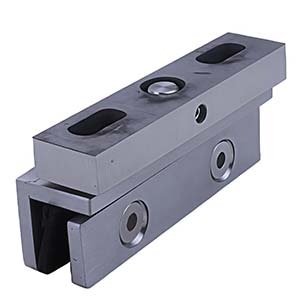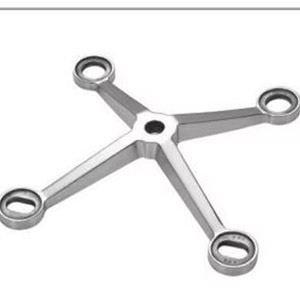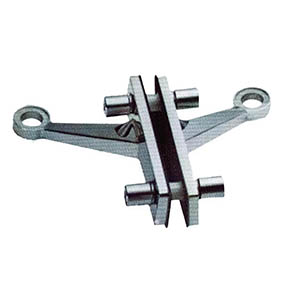
SSHW L200A Fin Spider Fitting for Glass Fins
SSHW fin spider fitting connects glass fins in curtain walls and pool façades, suitable for Mediterranean coastal salt spray projects with project-based options.
Precision cast stainless steel connector for glass fin point-supported façades and pool balustrades, with a standard design for approximately 19 mm fins and project-specific customization options.
1. Product Overview
The SSHW L200A series fin spider fitting connects glass fins to steel or concrete structures while preserving a transparent façade. Typical applications include office atriums, shopping mall façades, resort hotel pool enclosures, and full-height glazing in Mediterranean coastal or other coastal salt spray locations.
Produced by precision casting in stainless steel, the series offers material and finish combinations that balance structural performance, corrosion resistance, and appearance, making it suitable for long-term exterior use in point-supported glass systems.
2. Key Benefits
Designed for glass fins – Clamp geometry and hole layout are developed specifically for glass fin systems, keeping node size compact while providing a clear load path.
Multiple material grades – SUS304 for indoor or mild environments, with SUS316 and 2205 recommended for coastal, pool-adjacent, or otherwise aggressive sites.
Flexible surface finishes – Satin, Mirror, and PVD options to match the architectural design and cleaning strategy.
On-site adjustability – Connection detailing allows a degree of installation adjustment to accommodate hole tolerances and structural deviations.
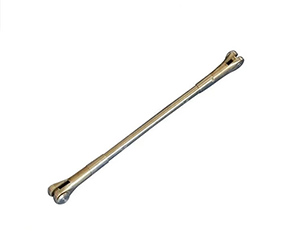
System compatibility – Works with posts, tension rods, handrails, and end caps as part of a complete point supported glass hardware package.
Serviceable design – Rubber gaskets and nylon sleeves can be replaced individually without removing the main stainless steel body.
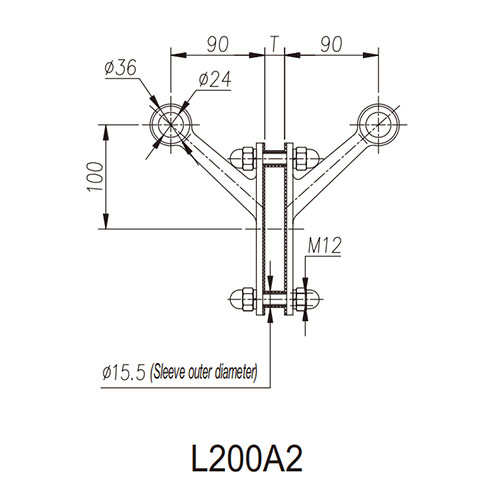
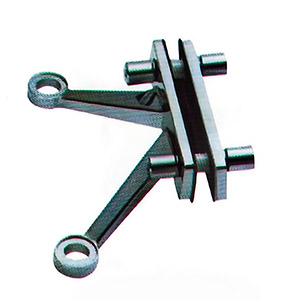
The L200A series belongs to SSHW’s dedicated range of glass fin spider brackets and includes, for example:
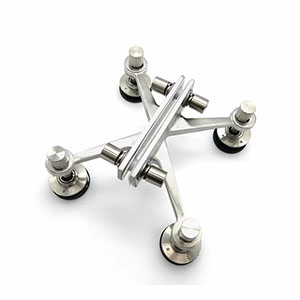
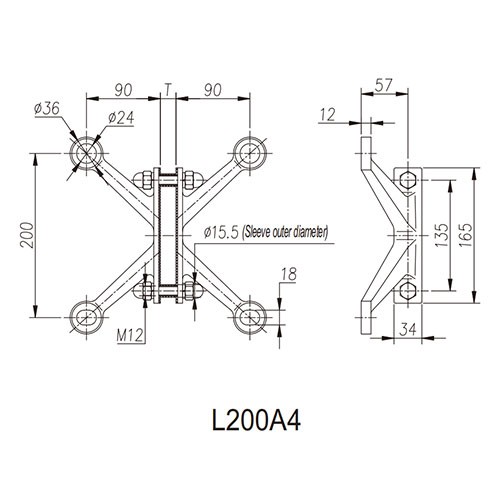
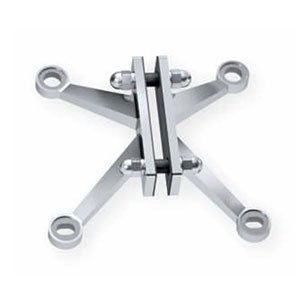
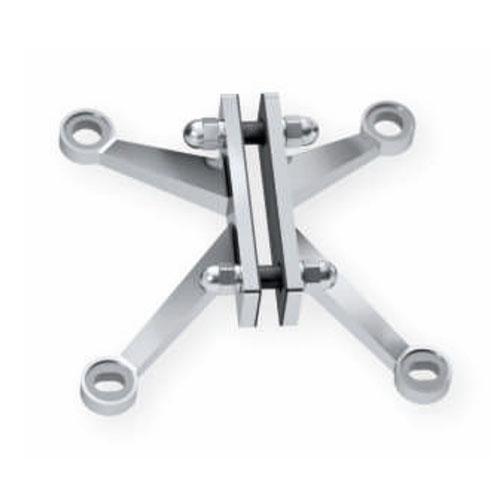
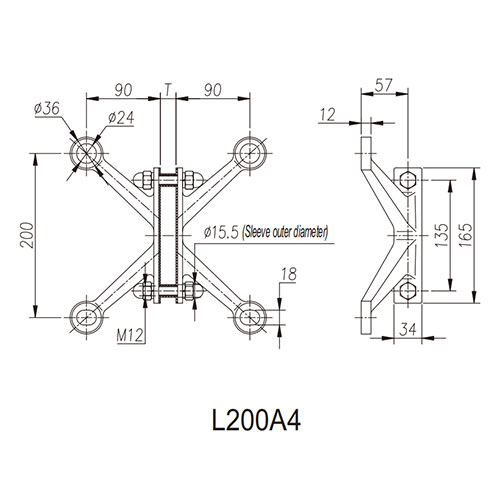
L200A4 – four-arm configuration for multi-panel intersections;
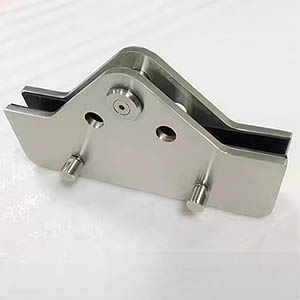
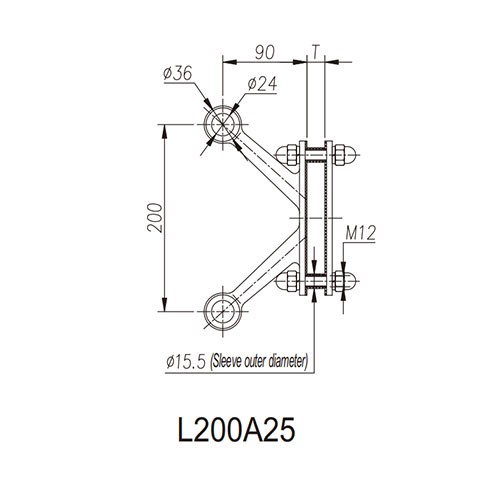
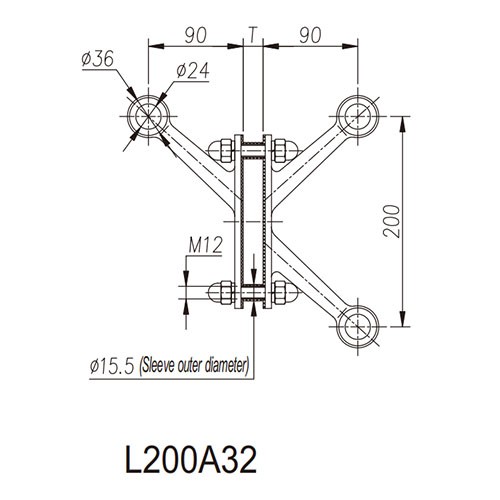
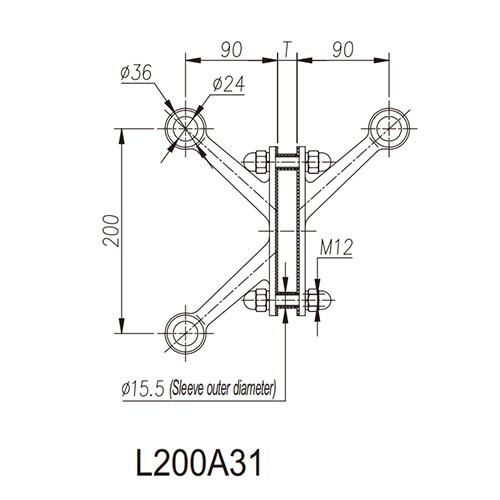
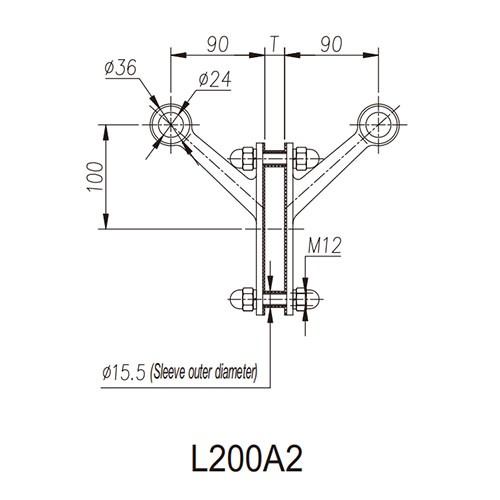
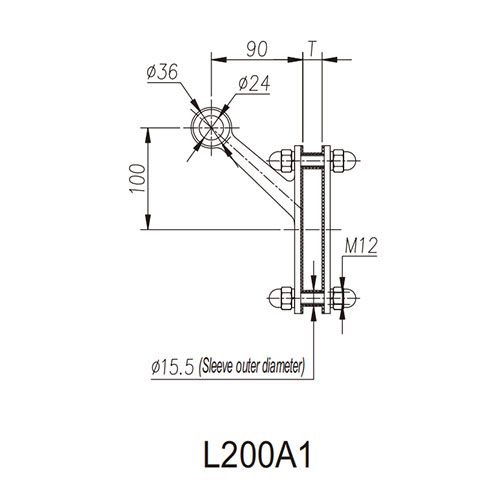
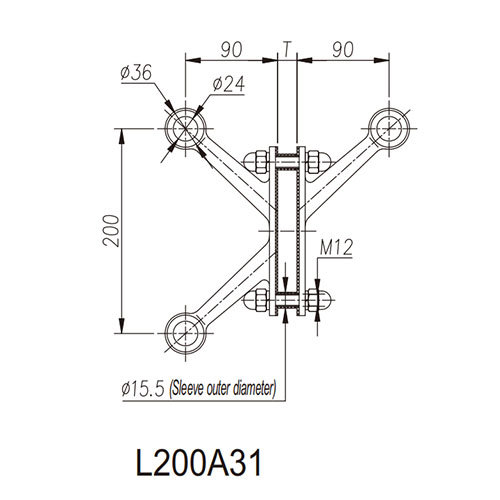
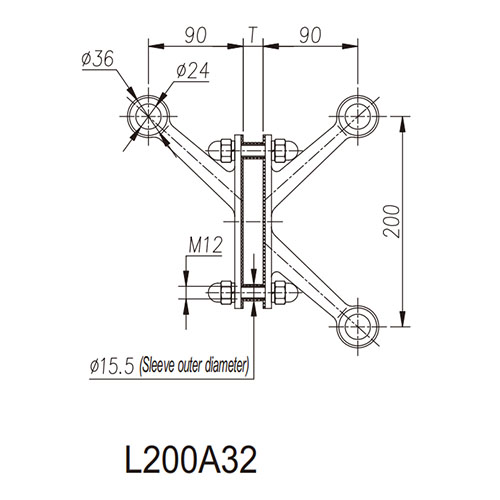
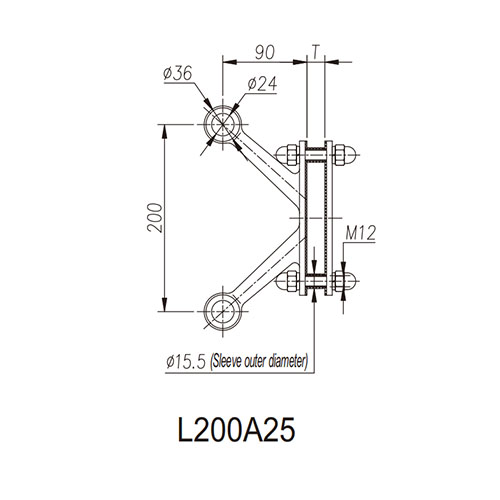
L200A31 / L200A32 / L200A25 / L200A2 – for various in-plane angles and combinations;
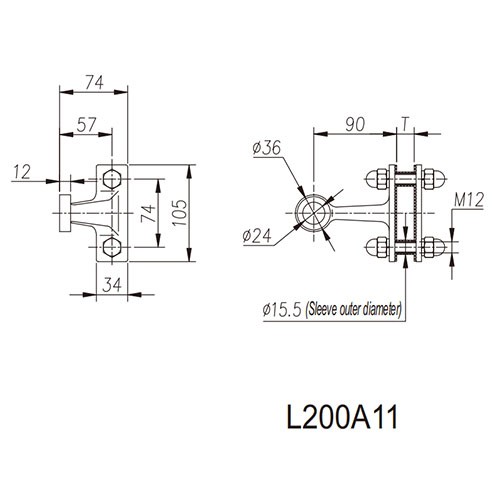
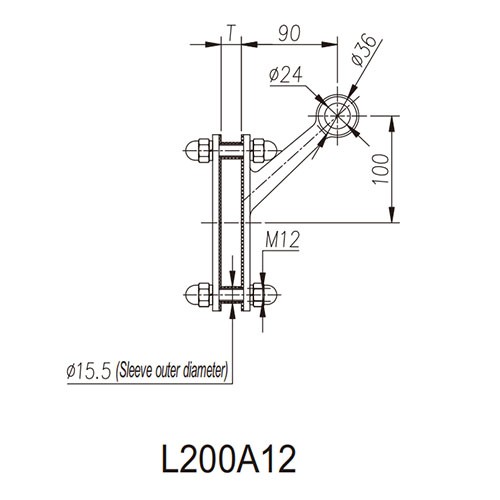
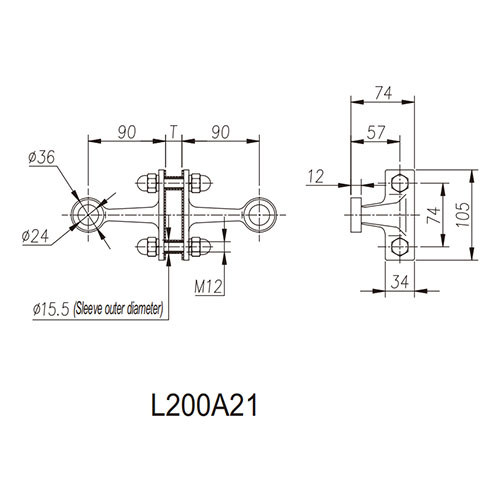
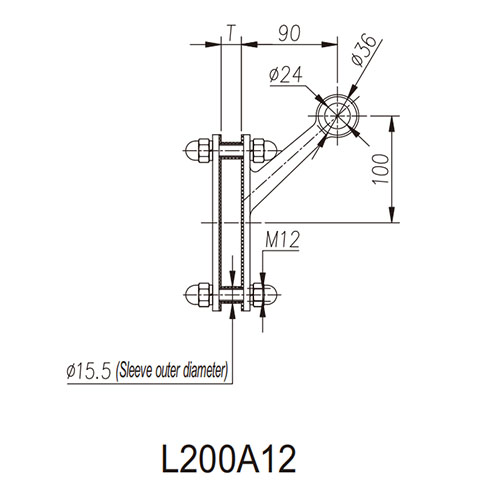
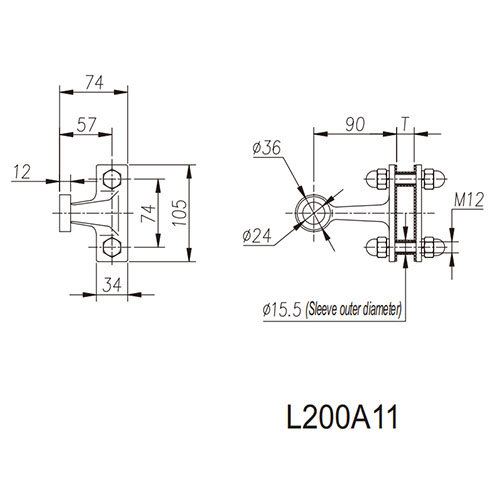
L200A1 / L200A12 / L200A21 / L200A11 – for two- or three-arm conditions at edges and transitions.
These are common configurations. Arm angles, arm length, and hole dimensions can be customized according to project drawings. Detailed node drawings are available from SSHW on request.
Glass thickness & hole size
Standard code is designed for fin glass thickness T = 19 mm.
Other glass thickness ranges can be accommodated when defined at the order stage.
If rubber washers or nylon sleeves are not required, please indicate this so that glass hole size and bolt details can be coordinated.
Material: SUS304 / SUS316 / 2205 duplex stainless steel.
Finish: Satin / Mirror / PVD, with optional custom colors discussed per project.
The table below summarizes key parameters for the L200A series. Load values are recommended design references only and must be verified by the project’s structural engineer.
| Model | Material | Finish | Glass thickness range | Recommended height / spacing | Load capacity | Installation type | Indoor / outdoor use | Accessories compatibility | Notes |
|----------------------------------|------------------------|------------------------|--------------------------------------|------------------------------|----------------------------------------------------------|-------------------------|----------------------|-----------------------------------------------|------------------------------------|
| L200A Series Fin Spider Fitting | SUS304 / SUS316 / 2205| Satin / Mirror / PVD | Standard 19 mm, adjustable on request| To be provided on request | Reference Fx≤2000 N; Fy≤1000 N (304/316); 2205 to be confirmed per project | To be confirmed | Indoor / Outdoor | Compatible with glass fins, handrails, posts | Full test data available on request|
| 2-Arm Fin Spider | To be provided on request | To be provided on request | To be provided on request | To be provided on request | To be confirmed per project | To be confirmed | Indoor / Outdoor | To be provided on request | — |
| 4-Arm Fin Spider | To be provided on request | To be provided on request | To be provided on request | To be provided on request | To be confirmed per project | To be confirmed | Indoor / Outdoor | To be provided on request | — |
Fx and Fy directions follow the official technical drawings. Detailed parameters for individual models can be supplied during the enquiry process.
5. Typical Applications & Selection Guide
5.1 By Building Type
Application Suggested material direction Suggested configuration Glass fin thickness
Office atrium curtain wall 304/316 2-arm or 4-arm To be confirmed per project
Shopping mall atrium / façade 316 4-arm To be confirmed per project
Villa / high-end residential façade 304/316 2-arm To be confirmed per project
Seaside resort hotel pool balustrade 316/2205 2-arm or 4-arm To be confirmed per project
Coastal salt spray / Mediterranean coastal regions – typically select 316 or 2205 material with corrosion-resistant finishes and schedule regular freshwater rinsing.
Tropical rainfall – focus on drainage and drying of joints, usually with 316 material and a defined cleaning plan.
Desert climate – prefer satin or other low-gloss finishes to reduce the visual impact of sand abrasion.
Cold climate – connection details should allow for thermal expansion and contraction, and spacing should consider local snow and wind loads.
During design, public resources such as point-supported glass façade design guidelines may be consulted. Final decisions on glass height, connector spacing, and attachment methods must be taken by the structural engineer according to local codes.
5.3 System & Accessories
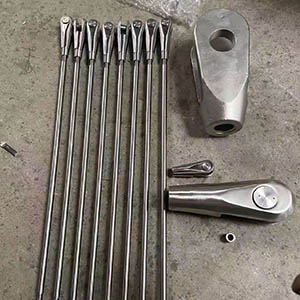
The L200A fin spider fitting can be combined with posts, handrail tubes, tension rods, base shoes, and cover caps to form complete point-supported glass balustrade or façade systems.
For compatible systems and accessories, please see the SSHW glass fin system and accessory selection page.
6. Installation & Maintenance Guidelines
Sub-structure preparation – Steel structures typically use welded plates or predrilled members, while concrete structures rely on chemical or expansion anchors, as specified by the structural engineer.
Glass processing – Hole size and spacing must follow the selected model drawings. Edges and holes should be properly polished and chamfered to reduce stress concentration.
Node installation – Tighten bolts in a cross pattern and increase torque gradually to avoid excessive local stress on the glass.
Corrosion control & cleaning – In coastal or pool environments, schedule regular freshwater rinsing to remove salt and chlorine residues from the surface.
Inspection & maintenance – Establish annual or semi-annual inspections, focusing on surface corrosion, bolt tightness, and gasket aging. In most cases, individual parts can be replaced without dismantling the entire node.
SSHW applies both material and dimensional checks to each batch of stainless steel fittings and can provide the following documentation when required:
Material certificates showing chemical composition and mechanical properties;
Static, dynamic, and impact load test summaries for glass fin connection nodes;
Salt spray or other corrosion resistance test data for coastal or pool-adjacent environments;
Weathering or adhesion verification for surface finishes, where applicable.
Specific standards, test laboratories, and report numbers are confirmed for each project and are not fixed in advance.
For a visual overview of installation procedures and selected tests, you can watch installation and testing videos on SSHW’s official YouTube playlist.
8. FAQ
Q1: How should I choose between 304, 316, and 2205 for coastal or pool-side projects?
A: 304 is generally suitable for indoor or mild environments. For Mediterranean coastal regions, seaside hotels, or pool-side glass fins, 316 or 2205 is usually recommended due to their more robust corrosion resistance. The final choice should be made together with the structural engineer, considering local exposure level and maintenance planning.
Q2: What cleaning and maintenance interval is recommended for exterior glass fin façades in coastal or tropical climates?
A: Compared with indoor projects, more frequent inspection and cleaning are advisable. Depending on salt spray intensity and rainfall, a quarterly or semi-annual schedule is common, while heavily exposed or pool-adjacent sites may require shorter intervals. Strong acidic or alkaline cleaners should be avoided to protect the surface finish.
Q3: How can the service life of a fin spider fitting be evaluated in harsh environments?
A: Service life depends on material grade, surface finish, local salt concentration, chemical exposure, and maintenance quality, so there is no single fixed lifespan. Define the target design life and maintenance strategy at the design stage, and request material certificates and test data from SSHW as part of the durability assessment.
9. Ordering & Technical Support
For glass fin point-supported curtain walls in Mediterranean coastal regions, tropical rainfall zones, desert climates, cold climates, or other demanding environments, SSHW can assist with:
Detailed dimensional drawings (PDF/DWG) and 3D models (where available);
Product selection advice based on climate conditions and base structure type;
Quotations and lead time proposals;
Samples or prototypes for design evaluation, where applicable.
When sending an enquiry, please provide project location, climate conditions, glass thickness, and intended structural arrangement. The SSHW technical and sales teams will recommend suitable models and help with quantity take-off for your fin spider fitting requirements.