RLW3001 6-Way Stainless Steel Spider Fitting
RLW3001 6-Way Stainless Steel Spider Fitting
Discover the RLW3001 6-way stainless steel spider fitting, engineered for complex multi-panel glass facades and spatial geometric domes. Features one-piece precision casting for ultimate load distribution. Read our successful case study in Caracas, Venezuela.
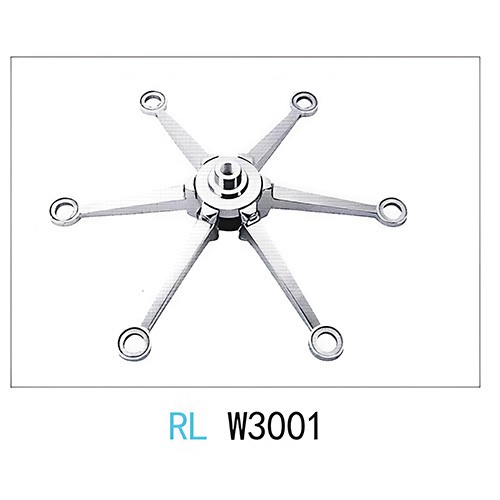
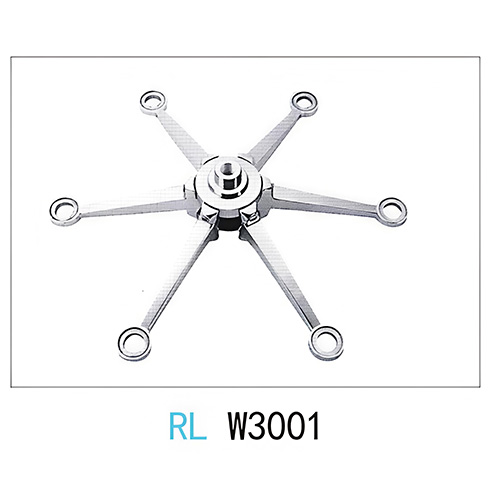
In modern exterior facade and skylight design, breaking away from conventional orthogonal grids to adopt polygonal or complex spatial geometric glass tessellations is an ascending trend. When facing highly difficult structural nodes where six glass panels intersect, traditional 4-way connectors simply cannot meet the structural and aesthetic demands. To address this, we proudly introduce the flagship structural component of our W300 series—the RLW3001 6-Way Stainless Steel Spider Fitting.
This specially designed multi-directional support bracket not only represents the highest standards of architectural hardware manufacturing but is also the core tool for resolving stress distribution in large-span, uniquely shaped glass envelopes. You can visit our YouTube channel to see more dynamic showcases and factory footage of our architectural hardware: https://www.youtube.com/channel/UC3Lo3jsy1LWw0fH03FHZFug
1. Core Technical Parameters and Structural Standards
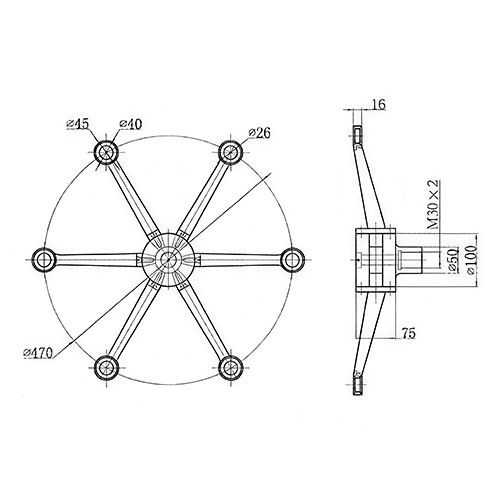
The engineering drawing of the RLW3001 demonstrates extreme geometric symmetry and structural rigor. Below are the core technical specifications for this model:
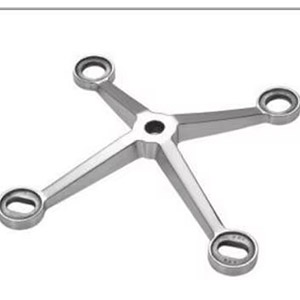
Structural Form: A six-point symmetrical star design (6-Way), specifically engineered for the central intersection point of six glass panels.
Span Dimensions: The diagonal distance between installation hole centers reaches an impressive 470mm, providing a massive gripping area to effectively distribute the dead weight and wind loads of large glass panels.
Arm Thickness & Strength: The support arms have a robust thickness of 16mm. We utilize solid precision investment casting, strictly avoiding hollow or welded assembly, ensuring maximum deformation resistance under extreme conditions.
Base Specifications: The core base features a 100mm outer diameter, equipped with a heavy-duty M30x2 precision thread. It provides a structural standoff height of 75mm, guaranteeing an absolute lock with the underlying steel structure or rigging system.
Hole Diameters: The arm-end connection holes are designed with an outer diameter of 45mm and an inner diameter of 26mm, perfectly accommodating heavy-duty glass connectors.
A successful frameless glass spatial structure is the result of multiple precision hardware components working in harmony. In actual engineering scenarios, the RLW3001 typically forms a complete support matrix with the following components:
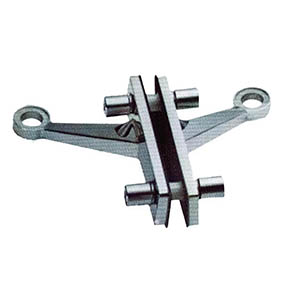
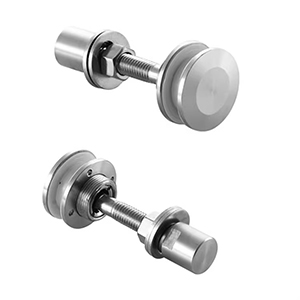
First, at the ends of the six arms, high-strength Spider Routel fittings must be connected to pass through the glass holes. To anchor this massive 6-way junction to the main building structure, a custom Bracket / Support Bracket is usually attached to the base.
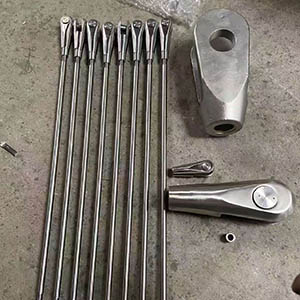
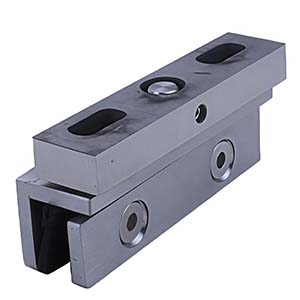
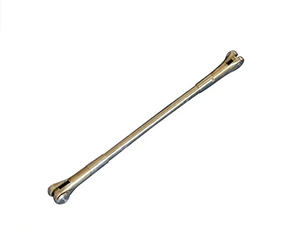
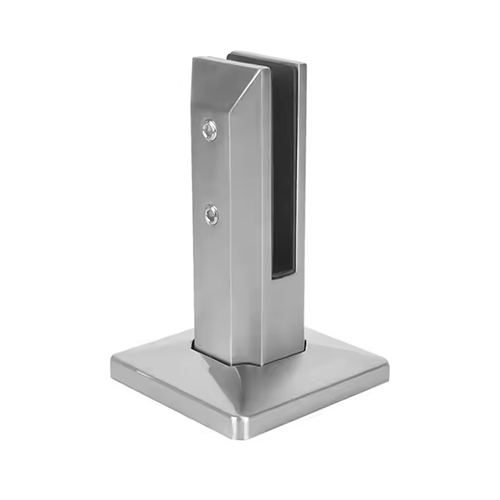
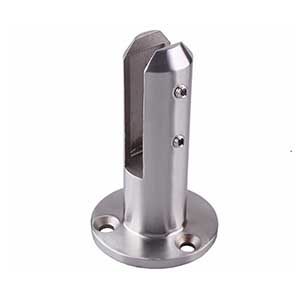
If the structure is applied to a large-span suspended glass dome, the M30 thread at the bottom of the RLW3001 will connect to pre-tensioned Tension rods / Stainless Steel Rod systems, utilizing the tension of the web to stabilize the entire curved surface. As the structure transitions to vertical facades, single or double Fin spider fittings might be integrated to maintain a consistent design language. Finally, at the edges of the building envelope or entrance areas, engineers will use Fixing Clamp / Glass Clamp hardware to secure the perimeters, while ground-level barriers or wind deflectors are typically supported by heavy-duty Glass spigots.
Key Installation Steps:
Because six panels intersect, the tolerance for error is practically zero. During construction, the main steel framework or cable net must be positioned first. The RLW3001 base is threaded in and locked to the predetermined angle using a torque wrench. Laser levels are then used to confirm that all six arm ends lie on the exact designated spatial curve. Finally, the glass panels are hoisted into place sequentially, and the routels are tightened diagonally and alternately to prevent uneven stress that could lead to glass breakage.
3. Competitive Advantages (VS Competitors)
When dealing with such complex, custom-shaped connectors, standard alternatives on the market often expose fatal flaws.
Manufacturing Supremacy: To cut costs, many competitors use a "central disc + six welded straight rods" technique. Under long-term alternating wind pressures, these welds are highly prone to metal fatigue and catastrophic failure. The RLW3001 uses a one-piece silica sol lost-wax precision casting process. The internal molecular structure is highly dense with zero weak welding points.
Thread Precision: The large base threads from average hardware factories often have large tolerances, causing slight loosening after installation. Our M30x2 threads are tapped in a single pass by CNC lathes, achieving an aerospace-level tightness.
In the bustling Chacao district of Caracas, the capital of Venezuela, a newly built modern commercial complex features an avant-garde honeycomb spatial glass skylight.
Project Pain Points:
The region experiences intense sunlight and sits in an earthquake-prone zone. The architect's hexagonal glass tessellation grid required a core node capable of simultaneously connecting six heavy insulated laminated glass panels. The local fluctuating temperatures and potential seismic activity demanded hardware with exceptional stress-absorption and anti-loosening capabilities.
Solution and Results:
The project team ultimately procured over 800 units of our RLW3001 6-way brackets, pairing them with flexible-structure Spider Routels. Once the system was installed, the perfect geometric symmetry filled the entire mall atrium with a futuristic atmosphere.
Authentic Client Feedback:
Roberto, the exterior facade Project Manager for the commercial center, reported: "This was our first time tackling such a complex six-sided intersecting geometric skylight. Previously, we were highly concerned about uneven stress distribution at these multi-directional nodes and the potential for loosening caused by thermal expansion. But this RLW3001 fitting truly amazed us! The machining precision is incredibly high; all six arms sit on a perfect plane, resulting in almost zero rework during on-site installation. Most importantly, after enduring a full year of scorching heat in Caracas and even surviving two mild earthquakes, the finish of this hardware blends perfectly with our minimalist design. After a year of intense environmental stress, it still looks as bright as new. The M30 thread at the base is bitten completely tight, showing absolutely no signs of loosening or deformation. It has given our engineering team immense peace of mind."
5. Structured FAQ
Q1: Is the RLW3001 only suitable for flat hexagonal glass tessellations?
A: Not limited to flat surfaces. Although the arms themselves are rigid, by pairing them with articulated glass routels (which offer multi-directional pivoting), the fitting can perfectly adapt to spatial curves or spherical domes within a certain radius.
Q2: With six load-bearing points, how is its maximum wind load capacity calculated?
A: The static breaking tensile strength of this model is exceptionally high. Because the wind load is evenly distributed across six arms and channeled down to the robust M30 main shaft, its overall load capacity far exceeds conventional 4-way connectors. We provide custom engineering calculations based on your specific project's wind pressure report.
Q3: Will this complex, one-piece cast structure rust easily in coastal cities?
A: No. Our standard material is SS316 stainless steel, which contains molybdenum specifically to resist chloride ion (salt) corrosion. It is highly suitable for outdoor exposure in coastal cities or highly polluted industrial zones.
This specially designed multi-directional support bracket not only represents the highest standards of architectural hardware manufacturing but is also the core tool for resolving stress distribution in large-span, uniquely shaped glass envelopes. You can visit our YouTube channel to see more dynamic showcases and factory footage of our architectural hardware: https://www.youtube.com/channel/UC3Lo3jsy1LWw0fH03FHZFug
1. Core Technical Parameters and Structural Standards
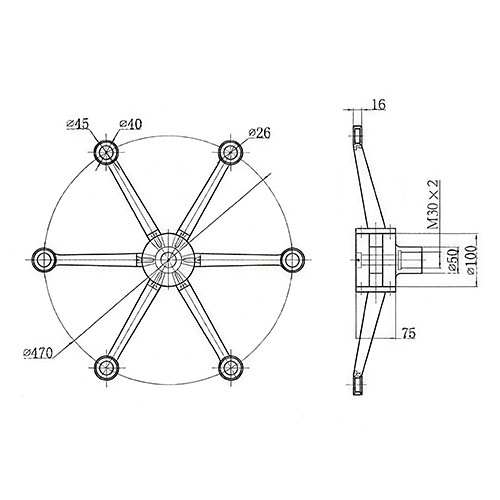
The engineering drawing of the RLW3001 demonstrates extreme geometric symmetry and structural rigor. Below are the core technical specifications for this model:
Structural Form: A six-point symmetrical star design (6-Way), specifically engineered for the central intersection point of six glass panels.
Span Dimensions: The diagonal distance between installation hole centers reaches an impressive 470mm, providing a massive gripping area to effectively distribute the dead weight and wind loads of large glass panels.
Arm Thickness & Strength: The support arms have a robust thickness of 16mm. We utilize solid precision investment casting, strictly avoiding hollow or welded assembly, ensuring maximum deformation resistance under extreme conditions.
Base Specifications: The core base features a 100mm outer diameter, equipped with a heavy-duty M30x2 precision thread. It provides a structural standoff height of 75mm, guaranteeing an absolute lock with the underlying steel structure or rigging system.
Hole Diameters: The arm-end connection holes are designed with an outer diameter of 45mm and an inner diameter of 26mm, perfectly accommodating heavy-duty glass connectors.
Material Standard: Standardized in marine-grade 316 Stainless Steel (316L available upon request), fearless against harsh climatic corrosion.
A successful frameless glass spatial structure is the result of multiple precision hardware components working in harmony. In actual engineering scenarios, the RLW3001 typically forms a complete support matrix with the following components:
First, at the ends of the six arms, high-strength Spider Routel fittings must be connected to pass through the glass holes. To anchor this massive 6-way junction to the main building structure, a custom Bracket / Support Bracket is usually attached to the base.
If the structure is applied to a large-span suspended glass dome, the M30 thread at the bottom of the RLW3001 will connect to pre-tensioned Tension rods / Stainless Steel Rod systems, utilizing the tension of the web to stabilize the entire curved surface. As the structure transitions to vertical facades, single or double Fin spider fittings might be integrated to maintain a consistent design language. Finally, at the edges of the building envelope or entrance areas, engineers will use Fixing Clamp / Glass Clamp hardware to secure the perimeters, while ground-level barriers or wind deflectors are typically supported by heavy-duty Glass spigots.
Key Installation Steps:
Because six panels intersect, the tolerance for error is practically zero. During construction, the main steel framework or cable net must be positioned first. The RLW3001 base is threaded in and locked to the predetermined angle using a torque wrench. Laser levels are then used to confirm that all six arm ends lie on the exact designated spatial curve. Finally, the glass panels are hoisted into place sequentially, and the routels are tightened diagonally and alternately to prevent uneven stress that could lead to glass breakage.
3. Competitive Advantages (VS Competitors)
When dealing with such complex, custom-shaped connectors, standard alternatives on the market often expose fatal flaws.
Manufacturing Supremacy: To cut costs, many competitors use a "central disc + six welded straight rods" technique. Under long-term alternating wind pressures, these welds are highly prone to metal fatigue and catastrophic failure. The RLW3001 uses a one-piece silica sol lost-wax precision casting process. The internal molecular structure is highly dense with zero weak welding points.
Thread Precision: The large base threads from average hardware factories often have large tolerances, causing slight loosening after installation. Our M30x2 threads are tapped in a single pass by CNC lathes, achieving an aerospace-level tightness.
Surface Anti-Oxidation: Competitors often rely on basic mechanical polishing, which develops oxidation spots within months. We apply multi-pass manual mirror polishing or fine satin brushing, passing 48+ hour salt spray tests for long-lasting brilliance.
In the bustling Chacao district of Caracas, the capital of Venezuela, a newly built modern commercial complex features an avant-garde honeycomb spatial glass skylight.
Project Pain Points:
The region experiences intense sunlight and sits in an earthquake-prone zone. The architect's hexagonal glass tessellation grid required a core node capable of simultaneously connecting six heavy insulated laminated glass panels. The local fluctuating temperatures and potential seismic activity demanded hardware with exceptional stress-absorption and anti-loosening capabilities.
Solution and Results:
The project team ultimately procured over 800 units of our RLW3001 6-way brackets, pairing them with flexible-structure Spider Routels. Once the system was installed, the perfect geometric symmetry filled the entire mall atrium with a futuristic atmosphere.
Authentic Client Feedback:
Roberto, the exterior facade Project Manager for the commercial center, reported: "This was our first time tackling such a complex six-sided intersecting geometric skylight. Previously, we were highly concerned about uneven stress distribution at these multi-directional nodes and the potential for loosening caused by thermal expansion. But this RLW3001 fitting truly amazed us! The machining precision is incredibly high; all six arms sit on a perfect plane, resulting in almost zero rework during on-site installation. Most importantly, after enduring a full year of scorching heat in Caracas and even surviving two mild earthquakes, the finish of this hardware blends perfectly with our minimalist design. After a year of intense environmental stress, it still looks as bright as new. The M30 thread at the base is bitten completely tight, showing absolutely no signs of loosening or deformation. It has given our engineering team immense peace of mind."
5. Structured FAQ
Q1: Is the RLW3001 only suitable for flat hexagonal glass tessellations?
A: Not limited to flat surfaces. Although the arms themselves are rigid, by pairing them with articulated glass routels (which offer multi-directional pivoting), the fitting can perfectly adapt to spatial curves or spherical domes within a certain radius.
Q2: With six load-bearing points, how is its maximum wind load capacity calculated?
A: The static breaking tensile strength of this model is exceptionally high. Because the wind load is evenly distributed across six arms and channeled down to the robust M30 main shaft, its overall load capacity far exceeds conventional 4-way connectors. We provide custom engineering calculations based on your specific project's wind pressure report.
Q3: Will this complex, one-piece cast structure rust easily in coastal cities?
A: No. Our standard material is SS316 stainless steel, which contains molybdenum specifically to resist chloride ion (salt) corrosion. It is highly suitable for outdoor exposure in coastal cities or highly polluted industrial zones.