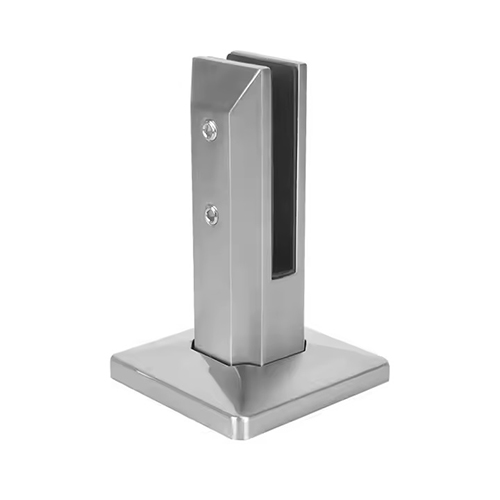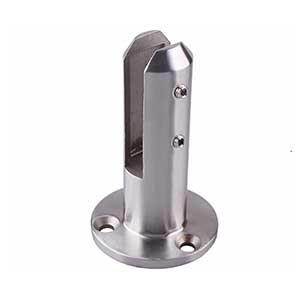
Stainless Steel Spider Fitting for Glass Curtain Wall (1–4 Arm Series)
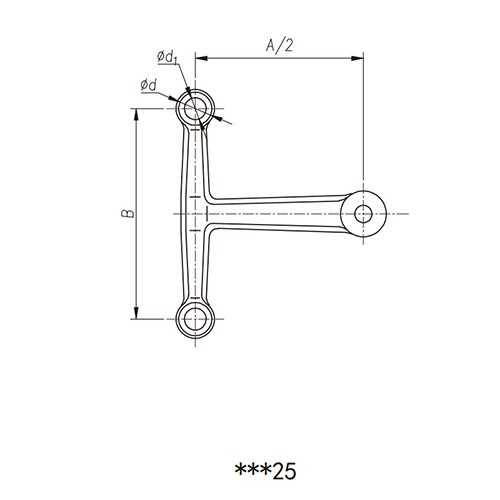
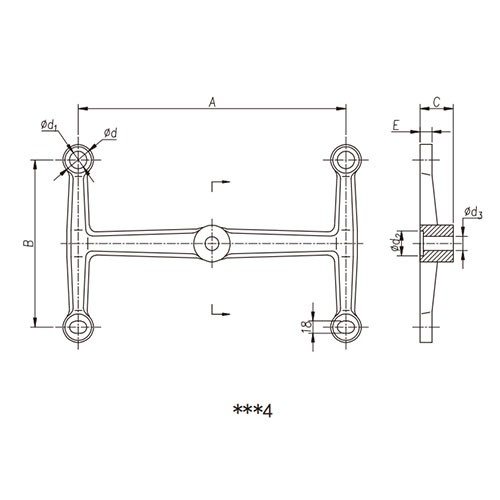
Stainless Steel Spider Fitting for Glass Curtain Wall (1–4 Arm Series)
SSHW stainless steel spider fitting 1–4 arm series for glass curtain walls and canopies, 304/316/2205 options for coastal, desert and city facade projects.
Stainless Steel Spider Fitting for Glass Curtain Wall (1–4 Arm Series)
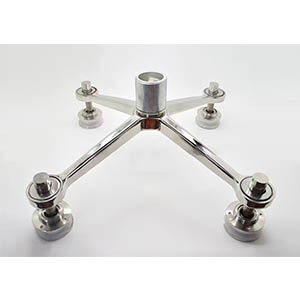
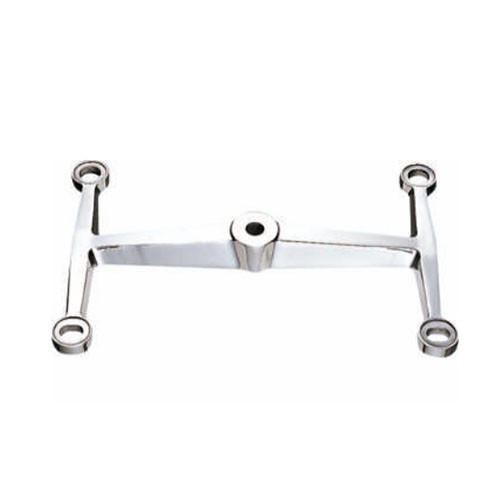
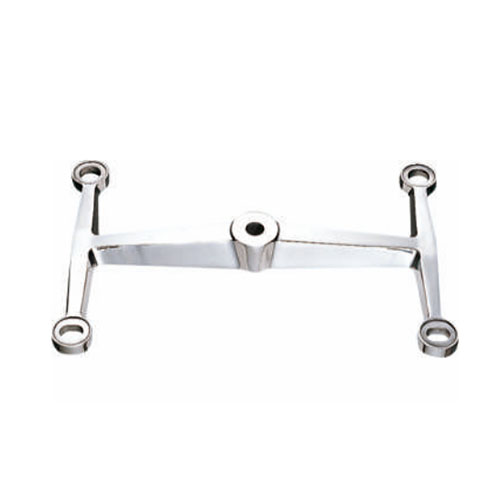
The SSHW stainless steel spider fitting is designed for point-supported glass curtain walls, skylights, and canopies, connecting glass panels to the main structure via high-strength spider arms and routels to deliver safe, highly transparent façades.
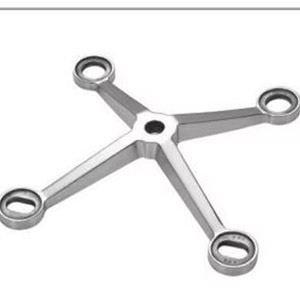
This series covers 1-arm, 2-arm, 3-arm, and 4-arm configurations to suit different glass grids and structural nodes in shopping malls, airports, coastal hotels, and high-rise office buildings.
1. Construction & Materials
Base material: SUS304 / SUS316 / Duplex 2205 stainless steel produced by precision casting or forging for strength and surface quality.
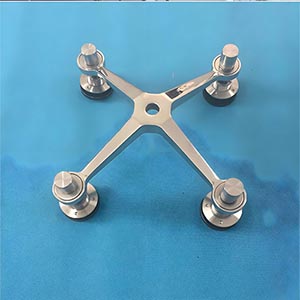
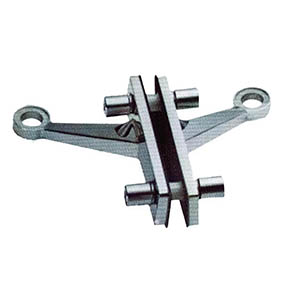
Arm configurations: Single, double, triple, and four-arm layouts for linear, corner, and cross-shaped nodes.
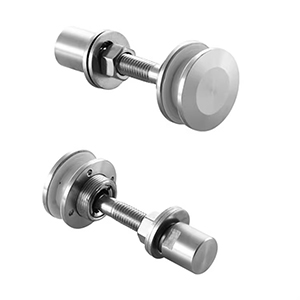
Connection method: The arms connect to glass through matching routels, and then to steel, concrete, or glass fins using mechanical fasteners.
Versatile for façade systems
As part of a wider range of curtain wall spider hardware, this series supports point-fixed glass façades, skylights, and canopies.
Multiple material grades
SUS304 is suitable for interior and low-corrosion environments; SUS316 is recommended for general coastal cities; Duplex 2205 is preferred for high-chloride locations such as marine or pool-side zones.
Wide choice of finishes
Satin, mirror, and PVD finishes are available to match architectural intent and maintenance strategies.
Reliable structural capacity
Section geometry is designed to meet typical wind and live load requirements for glass façades, canopies, and balustrades, with final capacities verified by project structural calculations.
Flexible installation and adjustment
Slotted holes and adjustable bases allow fine tuning of glass position and façade flatness on site, which is a key advantage of this type of glass spider bracket.
Project-specific customization
Arm length, hole spacing, base plate shape, and bolt specification can all be customized to suit project drawings and glass layouts.
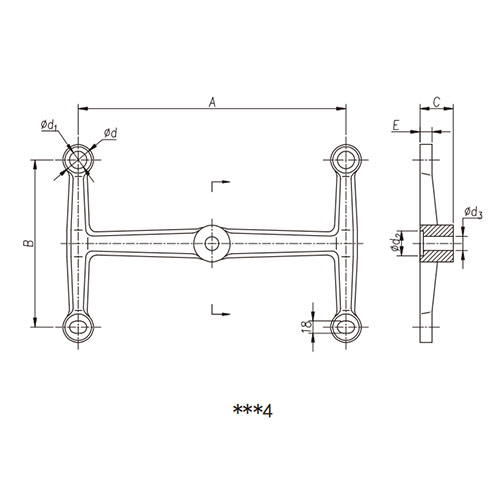
3. Standard Specifications (Typical)
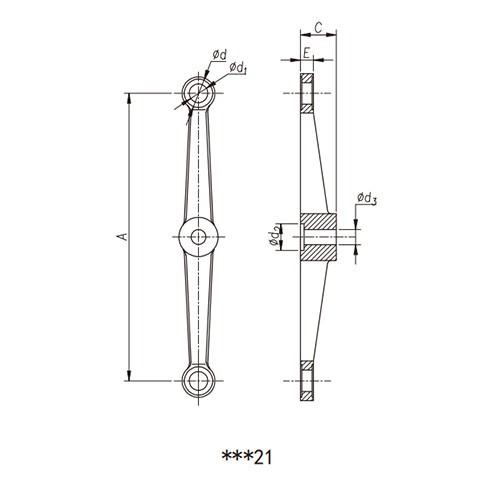
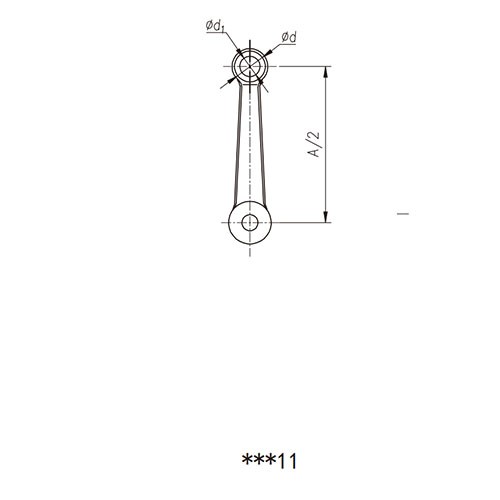
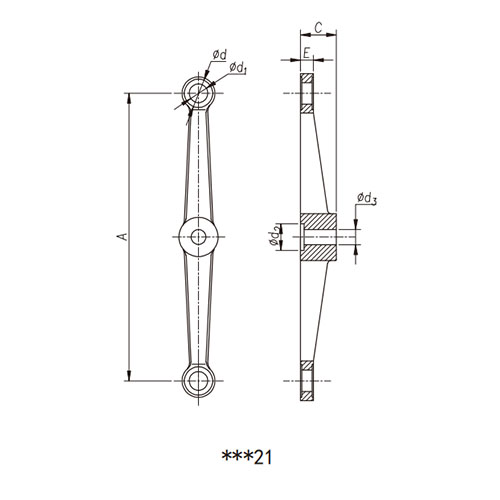
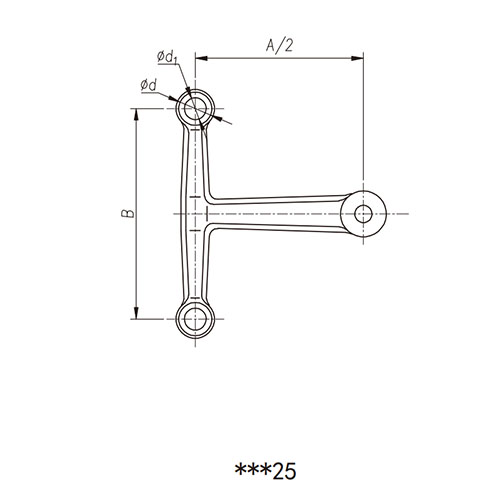
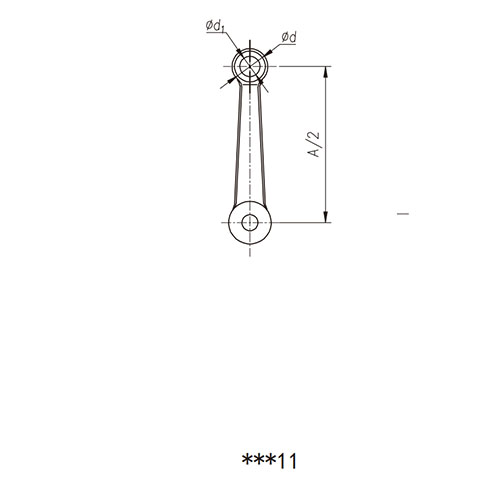
The table below illustrates typical configurations. Exact dimensions A, B, C, E, d, d1, and d3 should be taken from detailed drawings or confirmed per project.
| Example Item | Arm Type | Recommended Material | Finish | Glass Thickness Range | Mounting Type | Typical Applications | Notes |
| Single-arm spider | 1 arm | SUS304 / SUS316 | Satin / Mirror | 10–19 mm (adjustable) | Side / Top mount | Edge beams, local fixing points | Dimensions per project |
| Double-arm spider | 2 arms | SUS304 / SUS316 / 2205 | Satin / Mirror / PVD | 10–19 mm (adjustable) | Top / Point-fixed | Linear glass curtain walls | For straight edges |
| Triple-arm spider | 3 arms | SUS316 / 2205 | Satin | 10–19 mm (adjustable) | Point-fixed | Corner or T-shaped nodes | For turning panels |
| Four-arm spider | 4 arms | SUS316 / 2205 | Satin / Mirror | 10–19 mm (adjustable) | Point-fixed | Central cross nodes, skylights | Suited to large structural glass spider fitting layouts |
Full dimensional tables and CAD/PDF drawings are available from SSHW on request.
4. Materials & Corrosion Performance
To address different climates and corrosion categories, the series offers several stainless steel options so that façade engineers can zone-select materials:
SUS304 for interior and standard urban environments;
SUS316 for general coastal locations, tropical rainfall, and high-rise façades;
Duplex 2205 for aggressive chloride exposure such as seaside hotels, ports, and pool perimeters.
For general guidance on stainless steel selection in building exteriors, you may refer to the British Stainless Steel Association (BSSA):
Selection of Stainless Steels for Building Exterior Applications
This document is for design reference only; specific material and corrosion-protection solutions must be confirmed for each project.
5. Accessories & System Integration
The spider series integrates with a range of components to form a complete point-supported glass system, including:
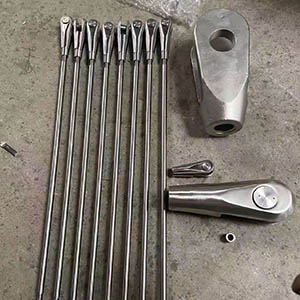
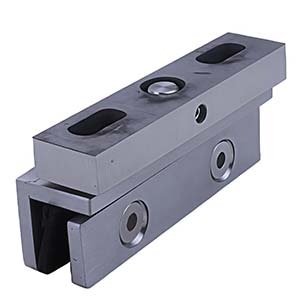
Various types of routels;
Connection plates, embeds, and stiffeners;
Cover caps, gaskets, and stainless fasteners.
For a broader view of compatible models and accessories, please visit:
Explore additional spider fittings and accessories
6. Installation, Adjustment & Maintenance
Before installation, verify glass hole diameters and spacing against the spider arm centers to ensure correct alignment and load transfer for the point-fixed glass fitting.
Use a torque wrench and follow recommended torque values when tightening bolts to avoid under- or over-tightening.
Ensure proper drainage around exterior nodes to prevent standing water, especially in coastal or pool-side areas.
For maintenance, clean surfaces with neutral detergent and a soft cloth, avoiding strong acid/alkali and chlorine-based cleaners to reduce tea staining and pitting.
Installation and application videos are available on the SSHW YouTube playlist to support site teams:
Spider fitting installation and application videos
Formal installation manuals and maintenance guides can be supplied on request.
7. Typical Applications & Climate Adaptability
Coastal salt spray: Glass façades and canopies of seaside hotels or waterfront complexes in regions such as the Middle East, where a glass spider fitting in SUS316 or Duplex 2205 is generally preferred.
Tropical rainfall: Skylights and atriums in rainy North African and Southeast Asian cities, where drainage details and leak control at nodes are critical.
Desert climate: Airports and exhibition centers in Middle East and North African desert cities, where satin finishes and easy-to-clean profiles help manage sand abrasion and dust.
When requesting pricing or technical proposals, it is helpful to provide the following so that SSHW can recommend an appropriate stainless steel spider fitting configuration:
Project location and corrosion environment (inland, coastal, pool-adjacent, etc.);
Glass type, thickness range, and maximum panel size;
Elevation layouts and basic section sketches for the façade or skylight;
Design wind pressure, live load category, and any balustrade height requirements;
Preferred material grade (304/316/2205), finish, and any custom hole spacing or base-plate requirements.
Where required, SSHW can supply available test reports or cooperate with third-party laboratories for additional verification, with scope and details agreed per project.
9. Frequently Asked Questions (FAQ)
Q1: How should I choose between SUS304, SUS316, and Duplex 2205 for a given project?
As a general rule, SUS304 is suitable for interior and standard urban environments; SUS316 is recommended for coastal city façades and exposed exterior use; Duplex 2205 is advised for severe chloride exposure such as marine and pool-side zones. Final selection should be based on local environmental data, expected service life, and maintenance strategy, confirmed by the design and owner teams.
Q2: What glass thickness range is compatible with these spider arms, and how about extra-thick glass?
This series typically works with about 10–19 mm monolithic or laminated safety glass. For extra-thick or oversize panels, routel size, arm cross-section, and node spacing can be adjusted as part of a project-specific design, and the final scheme should be verified by structural calculation.
Q3: How do different surface finishes affect corrosion resistance and day-to-day maintenance?
With the same stainless steel grade, smoother and denser surfaces tend to retain fewer contaminants and chlorides. Mirror polish is theoretically easier to clean but shows fingerprints and water marks more clearly; satin finish provides a softer appearance and better scratch resistance, making it practical for high-traffic or dusty environments. PVD coatings can supply stable color and additional abrasion resistance, and their performance should be confirmed with project samples.
For project-based recommendations and quotations, please contact the SSHW sales team. We will provide a tailored glass curtain wall spider solution based on your drawings and specification requirements.
The SSHW stainless steel spider fitting is designed for point-supported glass curtain walls, skylights, and canopies, connecting glass panels to the main structure via high-strength spider arms and routels to deliver safe, highly transparent façades.
This series covers 1-arm, 2-arm, 3-arm, and 4-arm configurations to suit different glass grids and structural nodes in shopping malls, airports, coastal hotels, and high-rise office buildings.
1. Construction & Materials
Base material: SUS304 / SUS316 / Duplex 2205 stainless steel produced by precision casting or forging for strength and surface quality.
Arm configurations: Single, double, triple, and four-arm layouts for linear, corner, and cross-shaped nodes.
Connection method: The arms connect to glass through matching routels, and then to steel, concrete, or glass fins using mechanical fasteners.
Glass compatibility: Typically suitable for 10–19 mm monolithic or laminated safety glass; special thicknesses can be checked project by project.
Versatile for façade systems
As part of a wider range of curtain wall spider hardware, this series supports point-fixed glass façades, skylights, and canopies.
Multiple material grades
SUS304 is suitable for interior and low-corrosion environments; SUS316 is recommended for general coastal cities; Duplex 2205 is preferred for high-chloride locations such as marine or pool-side zones.
Wide choice of finishes
Satin, mirror, and PVD finishes are available to match architectural intent and maintenance strategies.
Reliable structural capacity
Section geometry is designed to meet typical wind and live load requirements for glass façades, canopies, and balustrades, with final capacities verified by project structural calculations.
Flexible installation and adjustment
Slotted holes and adjustable bases allow fine tuning of glass position and façade flatness on site, which is a key advantage of this type of glass spider bracket.
Project-specific customization
Arm length, hole spacing, base plate shape, and bolt specification can all be customized to suit project drawings and glass layouts.
3. Standard Specifications (Typical)
The table below illustrates typical configurations. Exact dimensions A, B, C, E, d, d1, and d3 should be taken from detailed drawings or confirmed per project.
| Example Item | Arm Type | Recommended Material | Finish | Glass Thickness Range | Mounting Type | Typical Applications | Notes |
| Single-arm spider | 1 arm | SUS304 / SUS316 | Satin / Mirror | 10–19 mm (adjustable) | Side / Top mount | Edge beams, local fixing points | Dimensions per project |
| Double-arm spider | 2 arms | SUS304 / SUS316 / 2205 | Satin / Mirror / PVD | 10–19 mm (adjustable) | Top / Point-fixed | Linear glass curtain walls | For straight edges |
| Triple-arm spider | 3 arms | SUS316 / 2205 | Satin | 10–19 mm (adjustable) | Point-fixed | Corner or T-shaped nodes | For turning panels |
| Four-arm spider | 4 arms | SUS316 / 2205 | Satin / Mirror | 10–19 mm (adjustable) | Point-fixed | Central cross nodes, skylights | Suited to large structural glass spider fitting layouts |
Full dimensional tables and CAD/PDF drawings are available from SSHW on request.
4. Materials & Corrosion Performance
To address different climates and corrosion categories, the series offers several stainless steel options so that façade engineers can zone-select materials:
SUS304 for interior and standard urban environments;
SUS316 for general coastal locations, tropical rainfall, and high-rise façades;
Duplex 2205 for aggressive chloride exposure such as seaside hotels, ports, and pool perimeters.
For general guidance on stainless steel selection in building exteriors, you may refer to the British Stainless Steel Association (BSSA):
Selection of Stainless Steels for Building Exterior Applications
This document is for design reference only; specific material and corrosion-protection solutions must be confirmed for each project.
5. Accessories & System Integration
The spider series integrates with a range of components to form a complete point-supported glass system, including:
Various types of routels;
Connection plates, embeds, and stiffeners;
Cover caps, gaskets, and stainless fasteners.
For a broader view of compatible models and accessories, please visit:
Explore additional spider fittings and accessories
6. Installation, Adjustment & Maintenance
Before installation, verify glass hole diameters and spacing against the spider arm centers to ensure correct alignment and load transfer for the point-fixed glass fitting.
Use a torque wrench and follow recommended torque values when tightening bolts to avoid under- or over-tightening.
Ensure proper drainage around exterior nodes to prevent standing water, especially in coastal or pool-side areas.
For maintenance, clean surfaces with neutral detergent and a soft cloth, avoiding strong acid/alkali and chlorine-based cleaners to reduce tea staining and pitting.
Installation and application videos are available on the SSHW YouTube playlist to support site teams:
Spider fitting installation and application videos
Formal installation manuals and maintenance guides can be supplied on request.
7. Typical Applications & Climate Adaptability
Coastal salt spray: Glass façades and canopies of seaside hotels or waterfront complexes in regions such as the Middle East, where a glass spider fitting in SUS316 or Duplex 2205 is generally preferred.
Tropical rainfall: Skylights and atriums in rainy North African and Southeast Asian cities, where drainage details and leak control at nodes are critical.
Desert climate: Airports and exhibition centers in Middle East and North African desert cities, where satin finishes and easy-to-clean profiles help manage sand abrasion and dust.
Cold climate: Office façades and public building canopies in high-latitude regions, where connection details must accommodate thermal movement and snow/ice loads.
When requesting pricing or technical proposals, it is helpful to provide the following so that SSHW can recommend an appropriate stainless steel spider fitting configuration:
Project location and corrosion environment (inland, coastal, pool-adjacent, etc.);
Glass type, thickness range, and maximum panel size;
Elevation layouts and basic section sketches for the façade or skylight;
Design wind pressure, live load category, and any balustrade height requirements;
Preferred material grade (304/316/2205), finish, and any custom hole spacing or base-plate requirements.
Where required, SSHW can supply available test reports or cooperate with third-party laboratories for additional verification, with scope and details agreed per project.
9. Frequently Asked Questions (FAQ)
Q1: How should I choose between SUS304, SUS316, and Duplex 2205 for a given project?
As a general rule, SUS304 is suitable for interior and standard urban environments; SUS316 is recommended for coastal city façades and exposed exterior use; Duplex 2205 is advised for severe chloride exposure such as marine and pool-side zones. Final selection should be based on local environmental data, expected service life, and maintenance strategy, confirmed by the design and owner teams.
Q2: What glass thickness range is compatible with these spider arms, and how about extra-thick glass?
This series typically works with about 10–19 mm monolithic or laminated safety glass. For extra-thick or oversize panels, routel size, arm cross-section, and node spacing can be adjusted as part of a project-specific design, and the final scheme should be verified by structural calculation.
Q3: How do different surface finishes affect corrosion resistance and day-to-day maintenance?
With the same stainless steel grade, smoother and denser surfaces tend to retain fewer contaminants and chlorides. Mirror polish is theoretically easier to clean but shows fingerprints and water marks more clearly; satin finish provides a softer appearance and better scratch resistance, making it practical for high-traffic or dusty environments. PVD coatings can supply stable color and additional abrasion resistance, and their performance should be confirmed with project samples.
For project-based recommendations and quotations, please contact the SSHW sales team. We will provide a tailored glass curtain wall spider solution based on your drawings and specification requirements.